US Space Dominance: Geopolitical Strategies for 5 Years

The United States is strategically positioning itself to maintain and expand its influence in space, integrating advanced technological capabilities, robust defense mechanisms, and diplomatic efforts to ensure continued leadership in the global geopolitical landscape over the next five years.
The concept of US space dominance is no longer confined to science fiction; it is a critical component of national security and economic prosperity. As nations increasingly rely on space-based assets for communication, navigation, intelligence, and even weather forecasting, the strategic importance of this domain has skyrocketed. Over the next five years, understanding the strategies the United States will employ to maintain its leading edge in this new geopolitical frontier is paramount. What does this mean for global stability and technological advancement?
The Evolving Landscape of Space Geopolitics
Space, once a realm of exploration and scientific endeavor, has irrevocably transformed into a contested domain. Great power competition, characterized by the rise of new spacefaring nations and the proliferation of advanced space technologies, defines this new era. The United States recognizes that its economic and military superiority hinges significantly on its ability to operate freely and effectively in space.
Historically, the US has held a clear advantage in space capabilities. However, adversaries are rapidly developing their own sophisticated space systems, including anti-satellite (ASAT) weapons and advanced surveillance technologies. This shift necessitates a dynamic and adaptive strategy to ensure continued US leadership and protect vital national interests.
Key Drivers of Space Competition
Several factors contribute to the escalating competition in space, making US dominance a complex challenge.
- Technological advancements: Miniaturization of satellites, reusable rockets, and AI-driven systems are lowering entry barriers.
- Commercialization of space: Private companies are playing an increasingly significant role, blurring lines between state and commercial assets.
- Military applications: Space-based assets are integral to modern warfare, from precision-guided munitions to intelligence gathering.
- Resource potential: The long-term prospect of space mining for rare earth elements and water ice adds another layer of strategic interest.
These drivers underscore the need for the US to not only maintain its technological edge but also to shape international norms and prevent the weaponization of space. The next five years will be crucial in setting precedents for responsible behavior in orbit.
The geopolitical significance of space continues to grow, making a clear and robust US strategy essential. The shift from a purely exploratory domain to a contested one requires continuous adaptation and foresight from policymakers and defense strategists.
Strengthening Space-Based Capabilities and Resilience
Maintaining US space dominance requires a multi-faceted approach to enhance existing capabilities and build resilience against potential threats. This includes significant investment in advanced technologies, diversification of assets, and the development of robust defensive and offensive counter-space capabilities.
The traditional reliance on large, expensive satellites in predictable orbits makes them vulnerable. The future strategy emphasizes a more distributed, resilient architecture, making it harder for adversaries to disrupt US space operations.
Next-Generation Satellite Systems
The Department of Defense and intelligence agencies are prioritizing the development of smaller, more agile satellites that can operate in various orbits. These systems offer several advantages:
- Increased redundancy: A constellation of many small satellites is less vulnerable to single points of failure.
- Enhanced maneuverability: Newer satellites can change orbits, making them harder to track and target.
- Rapid deployment: Smaller satellites can be launched more quickly and cost-effectively, allowing for rapid reconstitution of capabilities.
Furthermore, the integration of artificial intelligence and machine learning into satellite operations will enable autonomous decision-making and real-time threat analysis, significantly improving responsiveness and efficiency.
Cybersecurity in Space
As space systems become more interconnected, the threat of cyberattacks grows exponentially. Protecting ground control stations, satellite links, and the satellites themselves from malicious intrusion is paramount. The US is investing heavily in:
- Advanced encryption technologies for satellite communications.
- Robust network security protocols for ground infrastructure.
- Threat intelligence sharing among government agencies and commercial partners.
These measures aim to prevent adversaries from disrupting, degrading, or taking control of critical US space assets. Building a truly resilient space architecture means anticipating and mitigating a wide range of threats, from kinetic attacks to sophisticated cybersecurity warfare.
Ultimately, strengthening capabilities and resilience is about ensuring that the US can continue to leverage space for national security and economic benefit, even in a contested environment. This proactive stance is critical for maintaining geopolitical stability.
Strategic Partnerships and International Norms
While technological superiority is vital, maintaining US space dominance also relies heavily on fostering strong international partnerships and shaping global norms for responsible behavior in space. Unilateral action alone cannot fully secure the space domain; collaboration is key.
The US recognizes that a stable and secure space environment benefits all nations. Therefore, diplomatic efforts to establish rules of the road and deter hostile actions are as important as military capabilities.
Alliances and Cooperation
The United States is actively strengthening its space alliances with traditional partners such as NATO, Australia, Canada, Japan, and European nations. These partnerships involve:
- Information sharing and intelligence collaboration.
- Joint exercises and training to enhance interoperability.
- Co-development of new space technologies and systems.
These alliances not only bolster collective security but also create a united front against predatory behavior in space, making it more difficult for adversaries to operate with impunity. Sharing the burden of space defense also optimizes resources and expertise.
Establishing Norms of Behavior
A significant diplomatic challenge for the US is to advocate for and establish international norms of responsible behavior in space. This involves:
- Promoting transparency and confidence-building measures to reduce miscalculation.
- Discouraging the development and deployment of destructive anti-satellite weapons.
- Working towards agreements that prevent the creation of excessive space debris.
While achieving universal consensus on these norms is challenging, especially with nations that have differing views on space weaponization, consistent US advocacy is essential. The goal is to create an environment where the benefits of space are accessible to all, without the constant threat of conflict.
These diplomatic and cooperative strategies are integral to a holistic approach to space dominance, ensuring that US leadership is not just about power, but also about promoting a stable and secure global commons.
Counter-Space Capabilities and Deterrence
In an increasingly contested space environment, the ability to deter aggression and, if necessary, respond effectively to attacks on US space assets is critical. Therefore, the development and refinement of counter-space capabilities are central to maintaining US space dominance.
Deterrence in space operates on principles similar to terrestrial deterrence: convincing potential adversaries that the costs of attacking US space systems outweigh any perceived benefits. This requires a credible threat of retaliation, both in space and potentially across other domains.
Defensive Counter-Space Measures
Defensive measures are designed to protect US space assets from attack and ensure their continued operation. These include:
- Hardening satellites against electronic jamming and cyberattacks.
- Developing advanced space situational awareness (SSA) capabilities to track threats.
- Implementing maneuverability features to evade kinetic attacks.
These capabilities are not just about protecting individual satellites but also about ensuring the overall resilience of the US space architecture. The ability to identify, track, and avoid threats is a foundational element of active defense.
Offensive Counter-Space Measures
While the US emphasizes responsible behavior in space, the development of offensive counter-space capabilities is a necessary component of its deterrence strategy. These capabilities are intended to deny adversaries the use of their own space assets during a conflict.
- Non-kinetic effects: Such as electronic warfare to jam or spoof enemy satellite signals.
- Cyber capabilities: To disrupt or disable adversary space systems through digital means.
- Kinetic capabilities (as a last resort): While controversial, the ability to physically interfere with or destroy enemy satellites provides a powerful deterrent.
The deployment and use of offensive counter-space capabilities are subject to strict policy guidelines and international law. The primary objective is deterrence, ensuring that any nation contemplating an attack on US space assets understands the severe consequences it would face. This delicate balance of defense and deterrence is crucial for stability in orbit.
Commercial Space Integration and Innovation
The burgeoning commercial space sector represents a significant opportunity for the United States to enhance its space capabilities and maintain US space dominance. Leveraging private industry innovation, investment, and agility is a cornerstone of the future strategy.
The era of government-led space ventures is evolving. Private companies are now driving innovation in satellite technology, launch services, and even in-orbit services, often at a lower cost and faster pace than traditional government programs.
Leveraging Commercial Technologies
The US government, particularly the Department of Defense, is increasingly integrating commercially developed technologies into its space architecture. This includes:
- Purchasing data from commercial satellite constellations for intelligence and surveillance.
- Utilizing commercial launch services for government payloads.
- Partnering with private companies on research and development for next-generation space systems.
This approach allows the government to benefit from rapid technological advancements without bearing the full development costs, fostering a more dynamic and competitive space ecosystem. The agility of commercial players can often circumvent bureaucratic hurdles.
Fostering a Robust Space Economy
Beyond direct acquisition, the US aims to cultivate a thriving domestic space economy. This involves:
- Providing incentives for private sector investment in space infrastructure and technologies.
- Streamlining regulatory processes to encourage innovation and reduce barriers to entry.
- Supporting STEM education to build a skilled workforce for the space industry.
A strong commercial space sector not only provides technological advantages but also creates economic growth and job opportunities. This synergy between government and industry is vital for long-term US leadership in space.
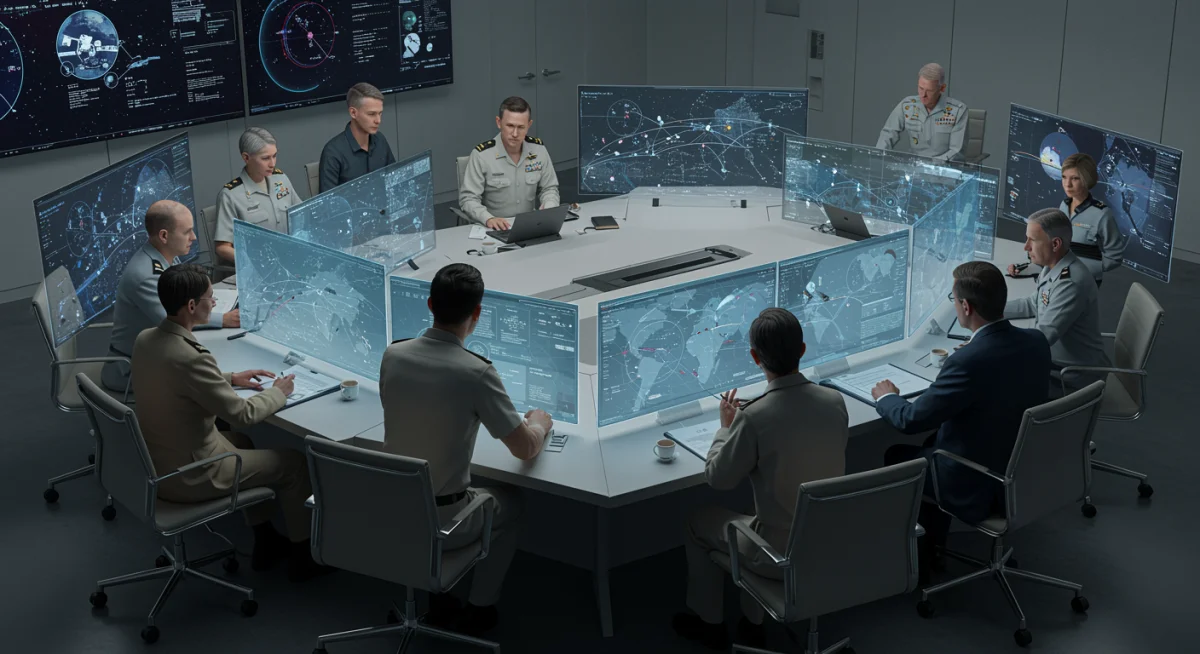
The integration of commercial space capabilities is not merely about cost-saving; it’s about harnessing a powerful engine of innovation that can adapt quickly to the evolving demands of space geopolitics, ensuring sustained US advantage.
Future Challenges and Ethical Considerations
As the United States pursues US space dominance, it must navigate a complex array of future challenges and ethical considerations. The decisions made today will shape the long-term sustainability and morality of operations in this critical domain.
The pursuit of dominance must be balanced with the responsibility to ensure space remains a safe and accessible environment for all nations, avoiding actions that could lead to irreversible damage or escalation.
Space Debris and Sustainability
The increasing number of objects in orbit, both operational satellites and space debris, poses a significant threat to all space activities. The US faces the challenge of:
- Developing and implementing effective space debris mitigation strategies.
- Investing in technologies for active debris removal.
- Promoting international adherence to debris reduction guidelines.
Failure to address the space debris problem could render certain orbital regimes unusable, impacting not only US operations but global space access. Sustainability is a shared responsibility that requires global cooperation.
Ethical Dilemmas of Space Weaponization
The development of offensive counter-space capabilities raises profound ethical questions. The US must grapple with:
- Defining clear red lines for the use of force in space.
- Ensuring that deterrence strategies do not inadvertently provoke an arms race.
- Maintaining transparency regarding its intentions and capabilities to reduce misperception.
The potential for miscalculation and rapid escalation in space conflict is high. Therefore, the US must exercise extreme caution and prioritize diplomatic solutions while maintaining a credible deterrent.
Navigating these challenges requires thoughtful policy-making, robust international engagement, and a commitment to responsible stewardship of the space environment. The future of space, and indeed global stability, depends on these considerations.
| Key Strategy | Brief Description |
|---|---|
| Enhanced Resilience | Developing distributed, agile satellite constellations to resist attacks and ensure continuous operation. |
| International Partnerships | Strengthening alliances and promoting norms for responsible behavior in space to deter aggression. |
| Counter-Space Capabilities | Investing in both defensive and offensive measures to protect US assets and deter adversaries. |
| Commercial Integration | Leveraging private sector innovation and agility to accelerate technology development and deployment. |
Frequently Asked Questions About US Space Dominance
Space is a geopolitical domain because nations increasingly rely on space assets for military, economic, and societal functions. Control or influence over space capabilities grants strategic advantages, impacting national security, intelligence, and global power dynamics, making it a critical area of international competition and cooperation.
The US aims to ensure its freedom of action in space, protect its space-based assets from interference, deter aggression, and maintain a technological edge. These goals support national security, economic prosperity, and scientific advancement, securing America’s leading role in the global space arena.
Commercial space companies drive innovation, reduce costs, and accelerate technology development. By integrating commercial services and products, the US government can access advanced capabilities more quickly and efficiently, enhancing its overall space architecture and fostering a robust domestic space economy, crucial for long-term leadership.
International partnerships strengthen collective security, facilitate intelligence sharing, and promote responsible behavior in space. Collaborating with allies enhances interoperability, shares the burden of defense, and creates a unified front against potential adversaries, reinforcing a rules-based order in the space domain.
Key challenges include the rapid proliferation of adversary counter-space capabilities, the growing threat of space debris, cybersecurity vulnerabilities, and the difficulty in establishing universal international norms for responsible space conduct. Navigating these complexities requires continuous adaptation and strategic foresight to maintain a secure and stable space environment.
Conclusion
The pursuit of US space dominance over the next five years is a dynamic and multifaceted endeavor, critical for national security, economic prosperity, and global influence. It involves not only technological superiority and robust defense capabilities but also sophisticated diplomatic engagement and strategic integration with the burgeoning commercial space sector. The challenges are substantial, ranging from the proliferation of anti-satellite technologies and the increasing threat of space debris to the complex ethical considerations of potential space weaponization. However, by continually investing in resilient space architectures, fostering strong international alliances, leveraging commercial innovation, and advocating for responsible norms of behavior, the United States aims to secure its leading position in this vital geopolitical domain. The future of global stability will, in no small part, be written in the stars, and the US is committed to shaping that narrative responsibly and effectively.