US Geopolitical Stances: Reshaping International Law by 2025
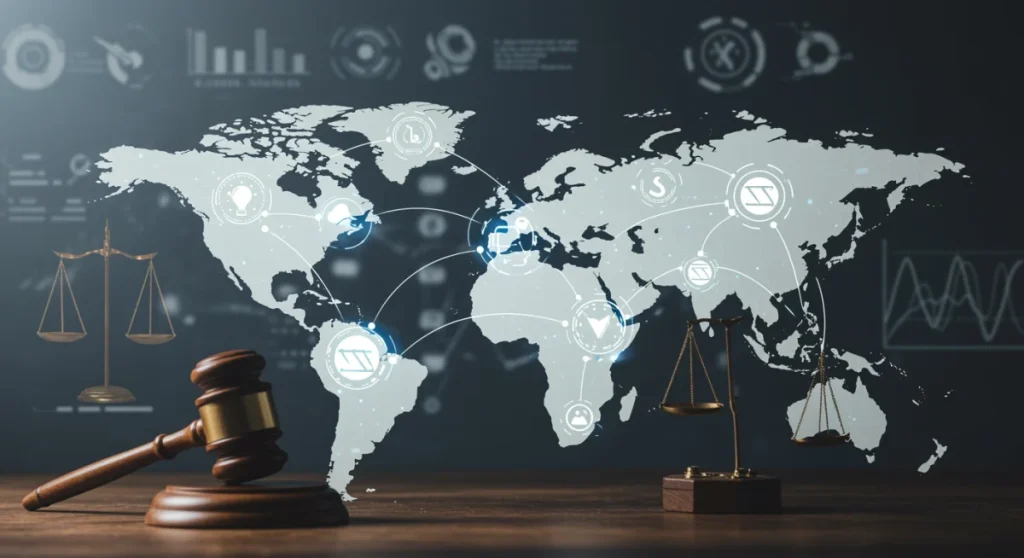
The future of international law by 2025 will be significantly reshaped by the United States’ evolving geopolitical stances, influencing global norms, treaty adherence, and the effectiveness of international institutions.
As we approach 2025, the landscape of global governance is in constant flux, with the actions of major powers playing a pivotal role. The question of The Future of International Law: How US Geopolitical Stances Will Reshape Global Norms by 2025 is not merely academic; it’s a critical inquiry into the very fabric of our interconnected world. How will shifts in American foreign policy, trade relations, and security doctrines redefine the rules that govern nations?
The evolving role of US foreign policy in global governance
The United States has historically been a cornerstone of the international legal order, championing multilateralism and the rule of law. However, recent shifts in its foreign policy doctrines suggest a more pragmatic, and at times unilateral, approach. This evolution is not a sudden departure but a gradual recalibration influenced by domestic priorities, economic pressures, and a changing global power dynamic.
Understanding these shifts is crucial for predicting the trajectory of international law. The US withdrawal from certain treaties or its selective engagement with international bodies can create vacuums or necessitate new frameworks. This impacts everything from climate agreements to human rights conventions, challenging existing norms and prompting other nations to react, often by forming new alliances or strengthening regional blocs.
Challenges to multilateralism
The traditional pillars of international law, such as the United Nations, the World Trade Organization, and various human rights conventions, have faced increasing scrutiny. US foreign policy under different administrations has sometimes questioned the efficacy and fairness of these institutions, leading to a re-evaluation of their roles.
- Reduced funding or participation in international organizations.
- Skepticism towards global treaties and conventions.
- Emphasis on bilateral agreements over multilateral frameworks.
The impact of this approach is multifaceted. While some argue it allows for greater national sovereignty and flexibility, others fear it could erode the foundational principles of international cooperation and lead to a more fragmented global order. The balance between national interest and collective security remains a central tension.
Ultimately, the evolving role of US foreign policy will continue to be a primary driver in how international law is perceived, interpreted, and enforced. The coming years will likely see a complex interplay of continuity and change, as nations adapt to a more fluid geopolitical environment.
Impact on international treaties and agreements
International treaties form the backbone of global legal order, establishing norms and obligations that govern state behavior. The US approach to these agreements, whether through ratification, withdrawal, or non-compliance, holds immense weight due to its economic and military power. By 2025, we anticipate continued scrutiny and potential renegotiation of several key international accords.
Areas such as arms control, environmental protection, and trade are particularly vulnerable to shifts in US policy. A more isolationist stance could lead to a decline in the enforcement of existing treaties, while a renewed commitment to multilateralism could reinvigorate international cooperation. The implications for global stability and sustainable development are profound.
Key treaty areas under review
Several critical international agreements are likely to be directly affected by US geopolitical stances. These include those related to climate change, nuclear proliferation, and global trade, each carrying significant geopolitical implications.
- Climate Accords: The Paris Agreement, despite widespread international support, has seen fluctuating US commitment. Future administrations could either strengthen or weaken this commitment, impacting global climate action.
- Arms Control Treaties: Agreements like the New START Treaty face ongoing challenges. US decisions regarding missile defense and nuclear modernization will directly influence the future of these crucial instruments.
- Trade Pacts: The World Trade Organization (WTO) and various regional trade agreements are continually being re-evaluated. US protectionist or free-trade policies will shape global economic governance.
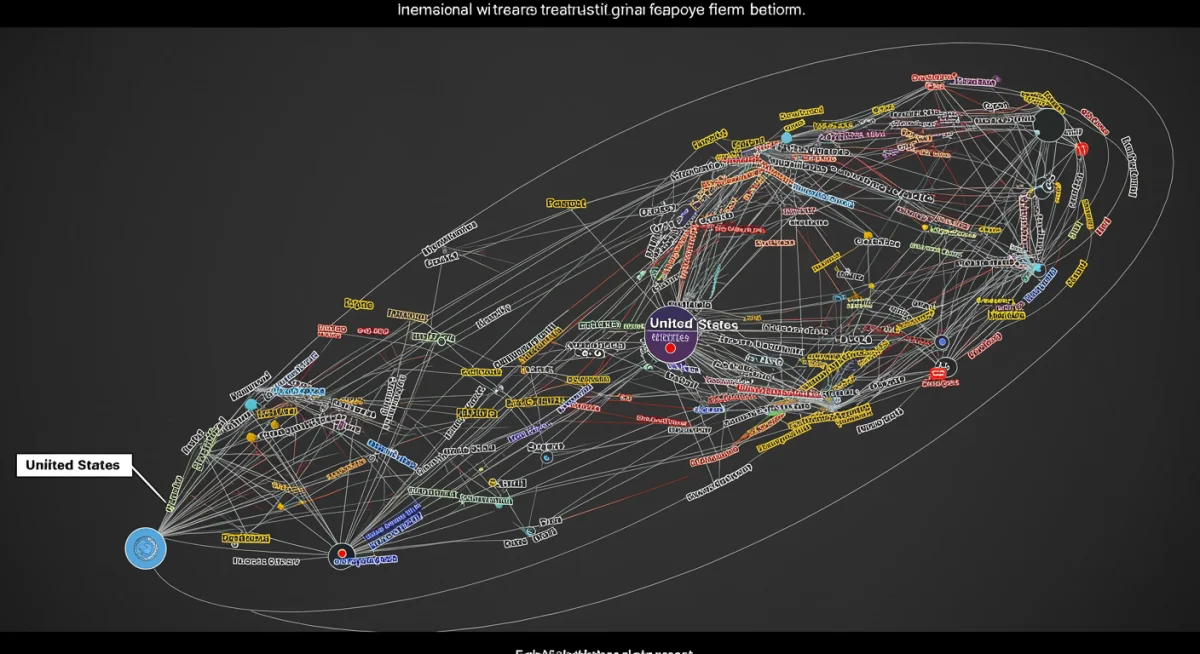
The credibility of international law hinges on the willingness of powerful states to adhere to their commitments. When a major player like the US signals a shift, it creates a ripple effect, prompting other nations to reconsider their own positions and potentially leading to a fragmentation of global legal consensus. The period leading up to 2025 will be critical for observing these dynamics.
The future of human rights and humanitarian law
Human rights and humanitarian law are fundamental components of international law, protecting individuals during both peace and conflict. The US has traditionally been a vocal advocate for human rights, leveraging its diplomatic and economic influence to promote these values globally. However, the application and enforcement of these principles are increasingly complex in a multipolar world.
By 2025, US geopolitical stances will likely continue to shape the trajectory of human rights and humanitarian law, particularly in regions experiencing conflict or political instability. The balance between national sovereignty and the responsibility to protect remains a contentious issue, with different states interpreting these obligations in varied ways. The US position can either bolster or undermine international efforts to uphold these universal rights.
The rise of new technologies, such as artificial intelligence and autonomous weapons systems, also presents novel challenges to existing humanitarian law. The US’s stance on regulating these technologies will set precedents for their ethical and legal use, influencing global debates and potential international agreements.
US influence on international criminal justice
International criminal justice, embodied by institutions like the International Criminal Court (ICC), aims to hold individuals accountable for genocide, war crimes, crimes against humanity, and aggression. The US’s relationship with these bodies has been complex, characterized by periods of both support and strong opposition, particularly regarding its own citizens.
By 2025, the US geopolitical stance will continue to profoundly impact the effectiveness and legitimacy of international criminal justice mechanisms. Its decisions on cooperation, jurisdiction, and resource allocation can either empower or constrain these institutions. A more cooperative approach could strengthen global accountability; conversely, continued resistance could undermine their universal reach.
Challenges to universal jurisdiction
The concept of universal jurisdiction, allowing states to prosecute certain international crimes regardless of where they occurred or the nationality of the perpetrator, is a powerful tool for justice. However, its application often faces political hurdles.
- Sovereignty Concerns: Some nations, including the US, express reservations about universal jurisdiction infringing on national sovereignty.
- Political Will: The actual exercise of universal jurisdiction often depends on the political will of individual states, which can be influenced by their relations with the US.
- Resource Limitations: Prosecuting complex international crimes is resource-intensive, requiring significant legal and investigative capabilities.
The US’s position on prosecuting war crimes and other atrocities, whether through international courts or domestic mechanisms, sends a clear signal to the world. Its engagement, or lack thereof, directly affects the ability of international criminal justice to deter future crimes and provide redress for victims. The coming years will be crucial in determining the future effectiveness of these vital legal frameworks.
Economic sanctions and their legal implications
Economic sanctions have become a prominent tool in the US foreign policy arsenal, used to pressure states, entities, or individuals deemed to be violating international norms or posing a threat to national security. While often effective in achieving policy objectives, their widespread use raises significant questions about their legality under international law and their humanitarian impact.
By 2025, the US’s continued reliance on sanctions will likely intensify debates over their extraterritorial application and their compliance with principles of state sovereignty and non-intervention. The proliferation of secondary sanctions, targeting third-party entities that do business with sanctioned countries, further complicates the international legal landscape, often placing foreign companies in a difficult position between US law and their own national laws.
Debates on legality and effectiveness
The legality of certain US sanctions under international law is a recurring point of contention. Critics argue that some unilateral sanctions violate international trade rules or humanitarian principles, especially when they disproportionately affect civilian populations.
- WTO Challenges: Sanctions impacting trade can be challenged before the WTO, though political considerations often overshadow legal outcomes.
- Humanitarian Concerns: Sanctions affecting essential goods like food and medicine can lead to humanitarian crises, prompting calls for greater oversight and adherence to international humanitarian law.
- Extraterritorial Reach: The application of US law beyond its borders continues to be a source of tension with allies and adversaries alike.
The future of international law in this domain will depend on whether a global consensus emerges regarding the legitimate scope and limitations of unilateral economic coercion. The US’s approach to these tools will not only shape its own foreign relations but also influence how other powerful nations perceive and potentially adopt similar measures, leading to a more fragmented and complex global economic order.
Cyber warfare and the challenges to existing law
The digital realm has introduced an entirely new dimension to international relations, presenting unprecedented challenges to existing international law. Cyber warfare, state-sponsored hacking, and the use of digital tools for espionage or disruption blur the lines between peace and conflict, and between state and non-state actors. The US, as a leading technological power, holds a significant position in shaping the legal norms that will govern this burgeoning domain.
By 2025, US geopolitical stances on cyber operations will be pivotal in establishing precedents for how international law applies to cyberspace. This includes defining acts of aggression in the digital sphere, determining accountability for cyberattacks, and establishing rules of engagement. The absence of universally accepted norms in this area creates a dangerous vacuum, ripe for miscalculation and escalation.
Developing cyber norms and accountability
The international community is grappling with how to adapt traditional legal frameworks to the unique characteristics of cyberspace. Key questions revolve around attribution, proportionality, and the application of the laws of armed conflict.
- Attribution Challenges: Identifying the true perpetrators of cyberattacks is notoriously difficult, complicating efforts to hold states accountable.
- Laws of Armed Conflict: Applying principles like necessity and proportionality to cyber warfare requires new interpretations and consensus.
- Norm Development: Efforts are underway in various international forums to develop voluntary norms of responsible state behavior in cyberspace, often led by or heavily influenced by US proposals.
The US’s doctrine on cyber warfare, its defensive and offensive capabilities, and its diplomatic efforts to forge international agreements will be instrumental in determining the future legal landscape of cyberspace. A proactive and principled approach could lead to a more stable and predictable digital environment, while a fragmented or overly aggressive stance could exacerbate tensions and increase the risk of digital conflict.
The rise of new alliances and regional blocs
The traditional post-World War II international order, largely shaped by US leadership, is undergoing significant transformation. The emergence of new global powers and evolving geopolitical interests are leading to the formation of new alliances and the strengthening of regional blocs. This shift directly impacts the application and development of international law, as these new configurations often seek to establish their own norms and challenge existing ones.
By 2025, US geopolitical stances will play a crucial role in shaping the dynamics of these emerging alliances. Whether the US seeks to reinforce existing partnerships, forge new ones, or adopt a more isolationist approach will determine the extent to which these blocs either reinforce or fragment the international legal order. The balance of power is diversifying, requiring more nuanced and adaptable foreign policy approaches.
Implications for international legal frameworks
The formation of new alliances and regional blocs has several key implications for international law:
- Alternative Norms: New blocs may develop and promote alternative legal norms that challenge Western-centric international law.
- Regional Governance: Increased focus on regional governance structures can sometimes bypass broader international institutions.
- Competing Interpretations: Different blocs may offer competing interpretations of international law, leading to legal fragmentation.
The US’s engagement with these new and existing alliances, such as NATO, AUKUS, or the Quad, will be critical. Its ability to foster cooperation and consensus among diverse partners will be key to maintaining a coherent and effective international legal system. Conversely, a failure to adapt to these changing dynamics could lead to a more fractured global landscape, where international law struggles to maintain its universal authority and application.
| Key Aspect | Impact by 2025 |
|---|---|
| Treaty Adherence | US selectivity may weaken global treaty enforcement and legitimacy. |
| Human Rights | US advocacy or withdrawal could significantly alter global human rights protection. |
| Economic Sanctions | Increased use by the US could challenge international trade law and sovereignty norms. |
| Cyber Norms | US leadership crucial for establishing new international laws governing cyber warfare. |
Frequently asked questions about US geopolitical impact on international law
US withdrawal from treaties can weaken their global legitimacy and enforcement, encouraging other nations to reconsider their commitments. This could lead to a more fragmented international legal system and greater uncertainty in areas like arms control or environmental protection.
US economic sanctions will likely continue to be a dominant foreign policy tool. Their extraterritorial application and humanitarian impact will fuel ongoing debates about their legality and compliance with international trade and human rights law, potentially leading to new legal challenges.
Absolutely. The strategic competition between the US and China will significantly influence international law. Divergent approaches to maritime law, cybersecurity, and human rights could lead to competing legal interpretations and the formation of distinct, ideologically aligned blocs, challenging universal norms.
Cyber warfare is forcing a re-evaluation of international law, particularly regarding sovereignty, aggression, and the laws of armed conflict. US stances on attribution and response will be critical in establishing new global norms for state behavior in cyberspace, aiming to prevent escalation and ensure stability.
US geopolitical stances will critically influence international humanitarian law. Its approach to conflicts, humanitarian aid, and emerging technologies like AI in warfare will either reinforce existing protections or create new challenges, potentially affecting civilian populations and the accountability for war crimes.
Conclusion
The journey towards 2025 reveals a complex and dynamic future for international law, inextricably linked to the evolving geopolitical stances of the United States. From its engagement with multilateral institutions to its approach on critical issues like human rights, economic sanctions, and cyber warfare, US policy decisions will continue to reverberate across the global legal landscape. While challenges to established norms are evident, there is also an opportunity for renewed commitment to cooperation and the development of new frameworks to address contemporary issues. The international community, including the United States, faces a collective imperative to navigate these shifts responsibly, ensuring that international law remains a robust and relevant instrument for peace, justice, and stability in an increasingly interconnected world.