US-EU Geopolitical Alignment: 3 Joint Strategies for Global Influence in 2025
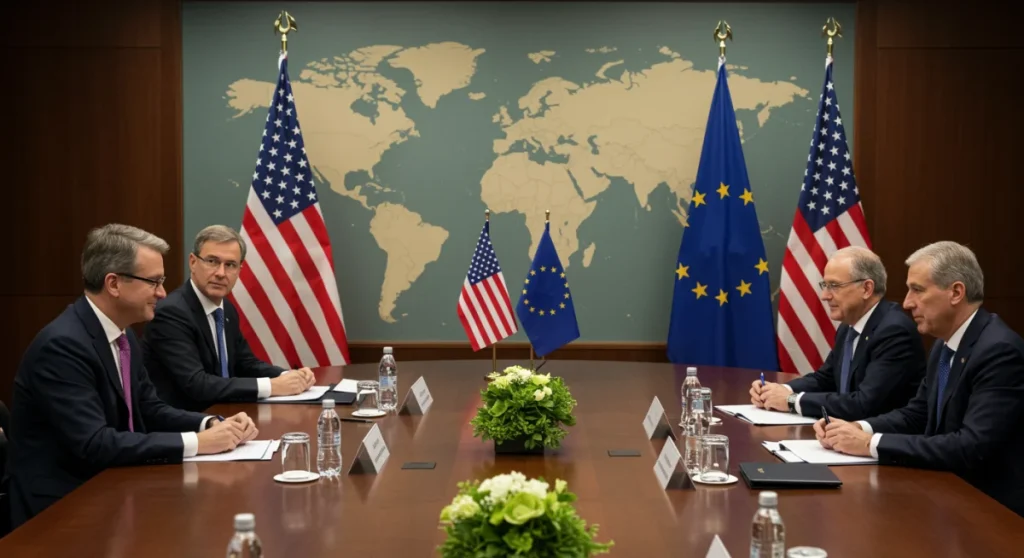
The US-EU geopolitical alignment is critical for shaping international affairs, focusing on joint strategies to bolster economic resilience, fortify security cooperation, and champion democratic governance globally in 2025.
The year 2025 stands as a critical juncture for global stability, and the
US-EU geopolitical alignment is poised to play an indispensable role in shaping the international landscape.
As complex challenges emerge, understanding the joint strategies being forged by these two influential entities becomes paramount.
This article delves into the core initiatives that will define their collaborative approach.
Strengthening Economic Resilience and Supply Chain Security
In an increasingly interconnected yet volatile global economy, the United States and the European Union recognize the urgent need to enhance economic resilience. This means not only safeguarding their own markets but also ensuring the stability of global supply chains against disruptions, whether from geopolitical tensions, natural disasters, or cyberattacks. Their joint efforts in 2025 will focus on creating more robust and diversified economic infrastructures.
The transatlantic partners aim to reduce dependencies on single sources for critical goods and technologies. This proactive stance is designed to prevent future vulnerabilities that could be exploited by adversaries or exacerbate crises. By fostering greater self-sufficiency and diversifying trade partners, both economies can better withstand external pressures.
Diversifying Critical Supply Chains
The reliance on a limited number of suppliers for essential components, especially in sectors like semiconductors, rare earth minerals, and pharmaceuticals, has exposed significant vulnerabilities. Both the US and the EU are actively working to map these dependencies and develop strategies for diversification.
- Semiconductor Production: Investing heavily in domestic and allied manufacturing capabilities to reduce reliance on East Asian production.
- Rare Earth Elements: Exploring new mining and processing technologies and forging partnerships with countries that offer alternative sources.
- Medical Supplies: Building robust stockpiles and encouraging localized production to avoid shortages during health emergencies.
- Energy Transition Materials: Securing reliable access to minerals vital for renewable energy technologies and electric vehicles.
Enhancing Trade and Investment Frameworks
Beyond diversification, the US and EU are committed to strengthening their bilateral trade and investment relationships. This involves streamlining regulatory processes, promoting fair competition, and addressing trade barriers that hinder mutual growth. They are also exploring new avenues for collaboration in emerging technologies, such as artificial intelligence and quantum computing, to maintain their competitive edge.
This strategic economic alignment is not just about protection; it’s also about opportunity. By collaborating on research and development, setting common standards, and fostering innovation, they can drive economic growth and create new jobs on both sides of the Atlantic. The goal is to build a resilient economic bloc that can lead global economic recovery and set benchmarks for responsible and sustainable trade practices.
The joint commitment to economic resilience underscores a shared understanding that economic security is inextricably linked to national security. By proactively addressing vulnerabilities and fostering robust partnerships, the US and EU are laying the groundwork for a more stable and prosperous future, capable of navigating the complex economic currents of the 21st century.
Fortifying Security Cooperation and Defense Posture
The evolving global security landscape, marked by persistent conflicts, cyber threats, and the rise of revisionist powers, necessitates a robust and coordinated security response from the US and EU. In 2025, their joint strategies will significantly deepen defense cooperation, enhance intelligence sharing, and strengthen collective security mechanisms.
This enhanced collaboration moves beyond traditional military alliances to encompass a broader spectrum of security challenges. It includes joint training exercises, coordinated responses to hybrid warfare, and a unified front against state-sponsored disinformation campaigns. The aim is to present a cohesive and formidable deterrent to any threats to international peace and stability.
Integrated Defense Planning and Exercises
Both the US and EU recognize the importance of interoperability between their armed forces. This involves not only sharing equipment and technology but also aligning strategic planning and operational doctrines. Joint military exercises will become more frequent and complex, simulating responses to a wide range of scenarios.
- NATO Reinforcement: Strengthening NATO’s eastern flank and enhancing readiness to deter aggression.
- Cybersecurity Drills: Conducting joint exercises to test and improve defenses against sophisticated cyberattacks on critical infrastructure.
- Maritime Security Operations: Coordinating naval patrols and surveillance in strategic waterways to counter piracy and ensure freedom of navigation.
- Rapid Response Capabilities: Developing agile forces capable of swift deployment to crisis zones.
Countering Hybrid Threats and Disinformation
Hybrid warfare, which blends conventional military tactics with cyberattacks, disinformation, and economic coercion, poses a unique challenge. The US and EU are developing joint frameworks to identify, analyze, and counter these multifaceted threats. This includes sharing best practices in media literacy, supporting independent journalism, and sanctioning actors engaged in malicious influence operations.
Intelligence sharing will be significantly enhanced, allowing for a more comprehensive understanding of emerging threats and more effective preventative measures. This includes sharing real-time data on cyber threats, terrorist activities, and foreign interference in democratic processes. By working together, they can create a more resilient information environment and protect their societies from manipulation.
The commitment to fortifying security cooperation is a testament to the enduring transatlantic bond. In an era of complex and interconnected threats, a unified and coordinated approach is not merely beneficial but essential for safeguarding shared values, protecting national interests, and ensuring global security. The strategies for 2025 are designed to build a more secure and stable world for all.
Promoting Democratic Values and Multilateralism
At the heart of the US-EU geopolitical alignment is a shared commitment to democratic values, human rights, and the rules-based international order. In 2025, their joint strategies will intensify efforts to promote these principles globally, counter authoritarianism, and strengthen multilateral institutions.
This involves actively supporting nascent democracies, advocating for free and fair elections, and holding regimes accountable for human rights abuses. The transatlantic partners understand that the erosion of democratic norms anywhere poses a threat to democracy everywhere. Their collective voice carries significant weight on the international stage, making their coordinated advocacy particularly impactful.
Supporting Democratic Transitions and Governance
The US and EU will ramp up their assistance to countries undergoing democratic transitions, providing expertise in institutional building, electoral reform, and civil society development. This support is crucial for ensuring that these transitions are successful and lead to stable, democratic governance.
- Electoral Observation Missions: Deploying joint missions to monitor elections and ensure transparency and fairness.
- Rule of Law Initiatives: Providing technical assistance to judicial reforms and anti-corruption efforts.
- Civil Society Empowerment: Funding and supporting non-governmental organizations working on human rights and democratic accountability.
- Digital Democracy Initiatives: Promoting open internet access and combating digital authoritarianism.
Strengthening Multilateral Institutions
The rules-based international order relies heavily on effective multilateral institutions such as the United Nations, the World Trade Organization, and the International Criminal Court. The US and EU will work together to reform and revitalize these institutions, ensuring they are fit for purpose in addressing 21st-century challenges.
This includes advocating for greater transparency, accountability, and inclusivity within these bodies. They will also push for stronger international norms on issues like climate change, nuclear non-proliferation, and pandemic preparedness. By presenting a united front, they can effectively counter attempts to undermine these institutions and promote a more cooperative global governance framework.
The joint commitment to promoting democratic values and multilateralism is a cornerstone of the US-EU relationship. In a world grappling with growing authoritarian tendencies and a fragmentation of international cooperation, their combined efforts are essential for upholding the principles of freedom, justice, and respect for international law. These strategies for 2025 aim to reinforce a global order where democracy can thrive and disputes are resolved peacefully.

Addressing Climate Change and Energy Transition
Climate change remains one of the most pressing global challenges, demanding concerted action from leading international actors. The US and EU, recognizing their significant roles as major economies and innovators, are committed to accelerating the global energy transition and implementing ambitious climate policies. Their joint strategies for 2025 will focus on driving decarbonization, fostering green technologies, and supporting climate adaptation efforts worldwide.
This collaboration extends beyond domestic policy to international advocacy, aiming to galvanize global action and ensure the successful implementation of the Paris Agreement. They seek to demonstrate leadership by example, investing in sustainable solutions and encouraging other nations to follow suit. The urgency of the climate crisis dictates a need for rapid and transformative change, which the US and EU are poised to champion together.
Accelerating Green Technology Development and Deployment
Innovation in green technology is crucial for achieving climate goals. The US and EU plan to pool resources and expertise to accelerate research, development, and deployment of renewable energy sources, energy storage solutions, and carbon capture technologies. This includes joint funding initiatives and collaborative research programs.
- Renewable Energy Investments: Prioritizing solar, wind, and geothermal energy projects through shared investment funds.
- Battery Technology: Collaborating on advanced battery research to improve efficiency and reduce costs for electric vehicles and grid storage.
- Green Hydrogen: Jointly developing infrastructure and policies to scale up green hydrogen production and utilization.
- Sustainable Agriculture: Promoting climate-smart agricultural practices and innovations to reduce emissions from the food sector.
Global Climate Diplomacy and Carbon Pricing
The US and EU will intensify their diplomatic efforts to encourage ambitious climate action from other major emitters. This involves advocating for stronger national climate commitments, promoting international carbon pricing mechanisms, and providing financial and technical assistance to developing countries for their climate mitigation and adaptation efforts.
They will also work to align their carbon border adjustment mechanisms, ensuring that climate policies do not inadvertently create competitive disadvantages or encourage carbon leakage. This coordinated approach aims to create a level playing field for industries committed to decarbonization and to incentivize global emissions reductions. Their combined diplomatic weight can significantly influence international climate negotiations and foster a more equitable and effective global response.
Addressing climate change and transitioning to a green economy is not just an environmental imperative but also an economic opportunity. By aligning their strategies, the US and EU aim to lead the global shift towards sustainability, creating new industries, jobs, and a healthier planet for future generations. Their joint actions in 2025 will be pivotal in setting the trajectory for global climate action.
Fostering Digital Cooperation and Governance
The digital realm has become a new frontier for geopolitical competition, with profound implications for economic prosperity, national security, and individual freedoms. The US and EU recognize the necessity of a unified approach to digital cooperation and governance in 2025, aiming to shape global norms for technology and data in line with democratic values.
Their joint efforts will focus on promoting an open, secure, and reliable internet, addressing challenges posed by emerging technologies like AI, and ensuring data privacy and ethical use. This collaboration is crucial to prevent the fragmentation of the internet and to counter authoritarian models of digital control.
Setting Global Standards for Emerging Technologies
As artificial intelligence, quantum computing, and other advanced technologies rapidly evolve, establishing common ethical and regulatory standards becomes paramount. The US and EU aim to lead this effort, advocating for human-centric approaches that prioritize privacy, transparency, and accountability.
- AI Ethics and Regulation: Developing harmonized frameworks for responsible AI development and deployment, focusing on preventing bias and ensuring human oversight.
- Data Governance: Collaborating on cross-border data flows, ensuring privacy protections while facilitating legitimate data exchange for economic and scientific purposes.
- Cyber Norms: Working together to establish international norms for responsible state behavior in cyberspace and deterring malicious cyber activities.
- Platform Governance: Addressing the challenges of online disinformation, hate speech, and content moderation through shared principles and policies.
Enhancing Cybersecurity and Digital Infrastructure
The increasing sophistication of cyber threats necessitates a robust and coordinated defense. The US and EU will deepen their cooperation on cybersecurity, sharing threat intelligence, best practices, and developing joint capabilities to protect critical digital infrastructure.
This includes investments in secure 5G networks, promoting trusted technology vendors, and fostering a skilled cybersecurity workforce. By strengthening their collective digital resilience, they aim to safeguard their economies, democratic processes, and the privacy of their citizens from state-sponsored and criminal cyberattacks. Their aligned digital strategies are vital for securing the future of the internet as a force for good.
The joint commitment to fostering digital cooperation and governance reflects a shared understanding that the digital future must be shaped by democratic principles. By working together, the US and EU aim to ensure that technology serves humanity, promotes innovation, and upholds fundamental rights, rather than being used as a tool for repression or control. These strategies for 2025 are critical for securing a free and open digital world.
Humanitarian Aid and Global Health Initiatives
The US and EU share a profound commitment to addressing global humanitarian crises and advancing public health worldwide. In 2025, their joint strategies will significantly bolster humanitarian aid efforts, strengthen global health security, and enhance preparedness for future pandemics and health emergencies.
This collaboration is rooted in a shared belief in human dignity and the responsibility to alleviate suffering, regardless of geographic boundaries. By combining their resources, expertise, and diplomatic influence, they can provide more effective and widespread assistance to vulnerable populations and build more resilient health systems globally.
Coordinated Humanitarian Response
In the face of escalating conflicts, natural disasters, and displacement crises, a coordinated humanitarian response is essential. The US and EU will align their aid policies, streamline funding mechanisms, and enhance logistical cooperation to ensure rapid and efficient delivery of assistance to those in need.
- Emergency Relief Operations: Jointly funding and coordinating operations for food, shelter, and medical supplies in crisis zones.
- Refugee Support: Collaborating on resettlement programs and providing aid to host countries managing large refugee populations.
- Disaster Preparedness: Investing in early warning systems and capacity building in vulnerable regions to mitigate the impact of natural disasters.
- Protection of Civilians: Advocating for adherence to international humanitarian law and ensuring humanitarian access in conflict areas.
Strengthening Global Health Security
The COVID-19 pandemic underscored the critical need for robust global health security infrastructure. The US and EU will intensify their efforts to prevent, detect, and respond to infectious disease outbreaks, strengthening global surveillance systems and vaccine development capabilities.
This includes supporting the World Health Organization (WHO) and other international health bodies, investing in research for new vaccines and treatments, and ensuring equitable access to essential medical supplies globally. They will also work to build local health capacities in developing countries, empowering them to manage their own health challenges more effectively. Their combined leadership is vital for creating a world that is better prepared for future health crises.
The joint commitment to humanitarian aid and global health initiatives reflects a fundamental aspect of the US-EU partnership: a shared dedication to human well-being and global solidarity. By working together, they aim to address the most urgent humanitarian needs and build a healthier, more secure world for all. These strategies for 2025 demonstrate their leadership in responding to global challenges with compassion and efficacy.
Innovating for Future Challenges and Opportunities
The dynamic nature of global affairs means that new challenges and opportunities are constantly emerging. The US and EU recognize the importance of foresight and continuous innovation to maintain their leadership and effectively address future complexities. In 2025, their joint strategies will emphasize collaborative research, technological advancement, and adaptive policymaking to stay ahead of the curve.
This forward-looking approach involves investing in cutting-edge science, fostering a culture of innovation, and developing flexible governance frameworks that can adapt to rapid technological and geopolitical shifts. Their combined intellectual and economic power provides a unique advantage in tackling unforeseen issues and harnessing new potential.
Collaborative Research and Development Initiatives
Pooling scientific talent and resources is a powerful way to accelerate progress. The US and EU will launch new joint research programs across a range of critical fields, from advanced materials and biotechnology to space exploration and climate modeling. These initiatives aim to produce breakthroughs that benefit humanity and strengthen their competitive edge.
- Frontier Technologies: Funding joint ventures in areas like quantum computing, synthetic biology, and advanced robotics.
- Space Exploration: Collaborating on scientific missions, satellite technology, and responsible space governance.
- Ocean Science: Jointly researching marine ecosystems, sustainable fisheries, and the impact of climate change on oceans.
- Pandemic Preparedness Research: Investing in interdisciplinary research to understand emerging pathogens and develop rapid response tools.
Adaptive Policy and Regulatory Frameworks
As technology evolves, so too must the policies and regulations that govern its use. The US and EU will work together to develop agile and forward-thinking regulatory frameworks that promote innovation while safeguarding ethical principles, privacy, and security. This involves continuous dialogue and harmonization of standards where appropriate.
They will also focus on anticipating geopolitical shifts and developing flexible diplomatic strategies to respond effectively. This includes scenario planning, horizon scanning, and investing in expertise that can provide early warnings and insightful analysis of emerging trends. By remaining adaptable and proactive, the transatlantic partners can navigate an uncertain future with greater confidence and influence.
The joint commitment to innovating for future challenges and opportunities underscores the enduring vitality of the US-EU relationship. By embracing collaboration in research, technology, and policy adaptation, they aim to not only address present-day complexities but also to proactively shape a future that is more secure, prosperous, and aligned with democratic values. These strategies for 2025 highlight their role as global leaders in progress and foresight.
| Key Strategy | Brief Description |
|---|---|
| Economic Resilience | Diversifying supply chains and enhancing trade frameworks to mitigate global economic shocks. |
| Security Cooperation | Deepening defense planning, intelligence sharing, and countering hybrid threats. |
| Democratic Values | Promoting good governance, supporting democratic transitions, and strengthening multilateralism. |
| Climate & Digital | Accelerating green tech, digital governance, and cybersecurity cooperation. |
Frequently Asked Questions About US-EU Geopolitical Alignment
The primary goal is to enhance global stability and influence through coordinated action. This includes strengthening economic resilience, fortifying security cooperation, promoting democratic values, and addressing global challenges like climate change and digital governance collaboratively.
They plan to diversify critical supply chains, particularly in semiconductors and rare earth minerals, and enhance bilateral trade and investment frameworks. The objective is to reduce dependencies on single sources and build more robust, resilient economic infrastructures.
Key aspects include integrated defense planning, joint military exercises, and significantly enhanced intelligence sharing. They also focus on countering hybrid threats, such as cyberattacks and disinformation campaigns, to ensure collective security.
They intend to support democratic transitions, provide assistance for governance reforms, and empower civil society organizations. Additionally, they aim to strengthen multilateral institutions to uphold the rules-based international order and combat authoritarianism.
For climate change, they will accelerate green technology development and engage in global climate diplomacy. In digital governance, they will set global standards for emerging technologies and enhance cybersecurity measures to ensure a free and open internet.
Conclusion
The US-EU geopolitical alignment in 2025 is set to be a cornerstone of global stability and progress. Through their concerted efforts in strengthening economic resilience, fortifying security cooperation, and actively promoting democratic values, the transatlantic partners are not merely reacting to an evolving world but proactively shaping it. Their collaborative strategies, extending to climate action, digital governance, and humanitarian aid, underscore a shared vision for a more secure, prosperous, and equitable international order. This enduring partnership remains vital for addressing the multifaceted challenges of our time, demonstrating that unity and shared purpose can effectively navigate the complexities of global influence.