2025 Outlook: Global Conflicts, US Security & Economic Stability
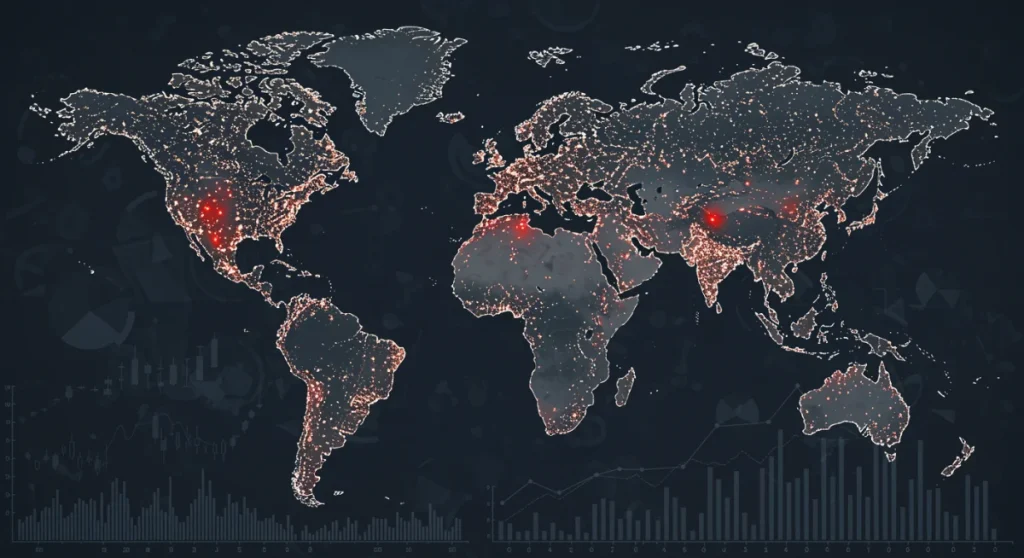
The 2025 outlook indicates that escalating global regional conflicts are poised to profoundly impact US national security and economic stability, necessitating a strategic reassessment of foreign policy and domestic resilience.
The year 2025 looms as a critical juncture for international relations, where escalating global regional conflicts could significantly reshape the geopolitical landscape. This analysis delves into global regional conflicts 2025, examining how these flashpoints will impact US national security and economic stability, offering an insider’s perspective on the complex challenges ahead.
The evolving geopolitical landscape and its US implications
The global arena is experiencing a rapid recalibration of power dynamics, with traditional alliances being tested and new spheres of influence emerging. This fluidity creates both opportunities and significant risks for the United States, demanding a nuanced and adaptable foreign policy approach.
Understanding these shifts is paramount for anticipating the challenges to US national security and economic interests. From the rise of revisionist powers to the persistent threat of non-state actors, the complexity of international relations has never been greater, requiring constant vigilance and strategic foresight.
Shifting global power dynamics
- Multipolar world order: The decline of unipolarity and the rise of multiple global powers, each with distinct interests and capabilities.
- Regional power consolidation: Emerging regional hegemons asserting greater influence, often challenging established norms and US interests.
- Technological competition: The race for technological supremacy, particularly in AI, quantum computing, and cyber warfare, as a new battleground for global power.
The shift towards a multipolar world necessitates a re-evaluation of US diplomatic and military strategies. Engaging with a diverse set of actors, including those with adversarial stances, becomes crucial for de-escalation and maintaining a semblance of global order. The implications for US national security are profound, demanding a retooling of military capabilities and a renewed focus on intelligence gathering.
Flashpoint 1: Eastern Europe and the enduring Russian threat
Eastern Europe remains a crucible of geopolitical tension, primarily due to Russia’s persistent assertiveness and its ongoing conflict with Ukraine. The implications for NATO, European stability, and US security commitments are substantial, requiring continuous strategic adaptation.
The conflict has not only reshaped regional security architectures but has also exposed vulnerabilities in global energy markets and supply chains, directly affecting US economic stability through inflationary pressures and increased defense spending.
NATO’s evolving role and US commitments
NATO’s eastern flank has been significantly reinforced in response to Russian aggression, leading to increased US troop deployments and military exercises. This commitment is vital for deterrence but also carries inherent risks of escalation. The alliance’s unity and resolve are continuously tested, making the region a focal point for US foreign policy.
- Enhanced military presence: Increased deployment of US and allied forces to bolster deterrence against potential Russian expansion.
- Cyber warfare and disinformation: Russia’s continued use of hybrid warfare tactics, including cyber-attacks and disinformation campaigns, targeting Western democracies.
- Energy security implications: Europe’s efforts to decouple from Russian energy sources, impacting global energy prices and necessitating US support for alternative supplies.
The enduring Russian threat in Eastern Europe forces the US to balance its commitment to allies with the need to avoid direct confrontation. The economic impact includes increased defense budgets, potential trade disruptions, and the long-term costs of supporting Ukraine’s reconstruction and security. This flashpoint underscores the interconnectedness of security and economic stability.
Flashpoint 2: The South China Sea and Indo-Pacific rivalry
The South China Sea continues to be a hotbed of territorial disputes and strategic competition, primarily involving China and several Southeast Asian nations, with significant implications for global trade and freedom of navigation. The US maintains a strong presence in the Indo-Pacific, viewing it as crucial for its economic and security interests.
China’s assertive claims and militarization of artificial islands challenge international law and regional stability, compelling the US to reinforce its alliances and partnerships in the area. The economic stakes are immense, given that a substantial portion of global trade transits through these waters.
Navigating escalating tensions
The US strategy in the Indo-Pacific focuses on strengthening alliances with countries like Japan, South Korea, Australia, and the Philippines, alongside fostering new partnerships through initiatives like the Quad. These efforts aim to counterbalance China’s growing influence and maintain a free and open Indo-Pacific.
- Freedom of navigation operations: US naval presence challenging excessive maritime claims and upholding international law.
- Economic competition: Intense rivalry for technological dominance and market access, with significant implications for global supply chains and innovation.
- Regional military buildup: Increased defense spending and modernization efforts by regional powers, raising the risk of miscalculation and accidental escalation.
The South China Sea flashpoint directly impacts US economic stability through potential disruptions to vital shipping lanes and increased costs for maintaining a robust naval presence. Any major conflict could severely cripple global trade, leading to widespread economic repercussions. National security concerns revolve around protecting allies and projecting power in a strategically vital region.
Flashpoint 3: The Middle East – Iran, Israel, and regional instability
The Middle East remains a complex tapestry of interconnected conflicts, with Iran’s nuclear ambitions, its proxy networks, and the Israeli-Palestinian conflict acting as central destabilizing forces. The US has deep historical interests in the region, encompassing energy security, counter-terrorism, and regional stability.
The ongoing tensions pose significant risks of broader regional conflagration, which could disrupt global oil markets, fuel extremism, and necessitate direct US intervention, with substantial human and economic costs.
Intertwined conflicts and US policy
US policy in the Middle East is a delicate balancing act, aiming to deter Iranian aggression, support key allies like Israel and Saudi Arabia, and counter terrorist organizations. The Abraham Accords represented a step towards regional normalization, but persistent conflicts continue to undermine broader peace efforts.
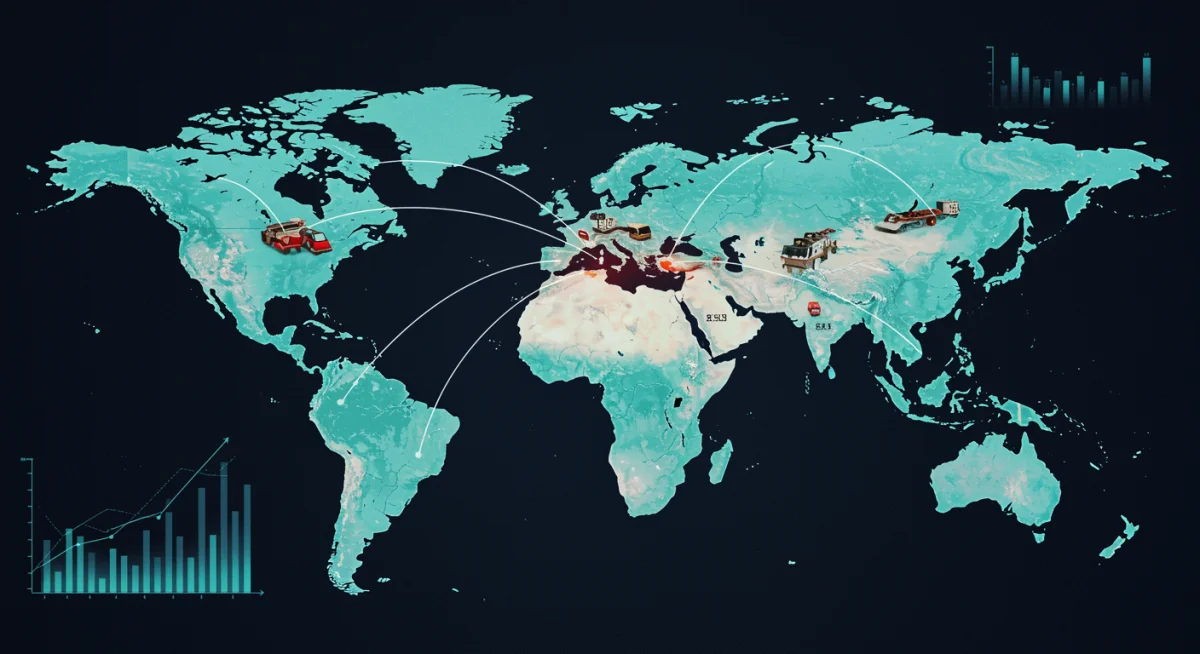
The economic ramifications include volatile oil prices, which directly affect US consumers and industries, and the financial burden of military deployments and aid. National security is tied to preventing the proliferation of weapons of mass destruction and combating terrorism that could spill over into the homeland.
- Iran’s nuclear program: The ongoing challenge of preventing Iran from acquiring nuclear weapons, leading to diplomatic efforts and potential military options.
- Proxy conflicts: Iranian-backed militias and non-state actors destabilizing countries like Yemen, Iraq, and Syria, threatening regional security.
- Israeli-Palestinian conflict: Persistent tensions and periodic escalations that have broader regional and international implications, often drawing US diplomatic involvement.
The volatile nature of the Middle East means that US national security and economic stability are perpetually exposed to sudden shocks. Managing these intricate dynamics requires sustained diplomatic engagement, robust intelligence, and a willingness to adapt to rapidly changing circumstances.
Flashpoint 4: The Sahel region and rising extremism
The Sahel region of Africa is experiencing a severe and escalating crisis, marked by the proliferation of extremist groups, political instability, and humanitarian catastrophes. This vast and impoverished region has become a new frontier in the global fight against terrorism, with significant implications for international security.
The collapse of governance in several Sahelian states, coupled with climate change impacts and ethnic tensions, provides fertile ground for groups like ISIS and Al-Qaeda affiliates to thrive. While seemingly distant, the instability in the Sahel has direct national security implications for the US, including the potential for outward migration and the export of extremism.
Counter-terrorism and humanitarian challenges
The US has been involved in counter-terrorism efforts in the Sahel for years, providing training and intelligence to local forces. However, recent military coups and the withdrawal of French forces have complicated these efforts, creating a vacuum that extremist groups are eager to fill.
- Terrorist expansion: The increasing reach and sophistication of extremist groups, threatening regional stability and international security.
- Humanitarian crisis: Mass displacement, food insecurity, and widespread violence leading to a severe humanitarian emergency.
- Geopolitical competition: Growing influence of Russia and China in the region, challenging traditional Western partnerships and resource access.
The economic impact on the US, while not as direct as other flashpoints, includes the costs associated with humanitarian aid, counter-terrorism operations, and the potential for increased migration flows. National security concerns revolve around preventing the Sahel from becoming a safe haven for groups planning attacks against Western interests.
Flashpoint 5: The Arctic – a new frontier for great power competition
The Arctic, once a relatively stable and overlooked region, is rapidly emerging as a new theatre for great power competition, driven by climate change, resource potential, and strategic waterways. The melting ice caps are opening new shipping routes and exposing vast reserves of natural resources, attracting the attention of global powers.
The US, as an Arctic nation, has significant interests in ensuring stability, environmental protection, and freedom of navigation in the region. The increasing militarization by Russia and China’s growing presence pose complex challenges to these objectives.
Strategic implications and resource rivalry
The US Arctic strategy emphasizes cooperation with allies, responsible resource development, and maintaining a military presence to deter aggression. However, the vastness and harsh conditions of the Arctic make these efforts particularly challenging and costly.
- New shipping routes: The Northern Sea Route and Northwest Passage offering shorter transit times, reshaping global trade patterns.
- Resource extraction: Untapped oil, gas, and mineral reserves becoming more accessible, leading to competition and environmental concerns.
- Military buildup: Increased military presence and infrastructure development by Russia and, to a lesser extent, China, raising security concerns.
The economic implications for the US include potential new trade opportunities through Arctic shipping lanes, but also significant investments required for infrastructure, resource extraction, and military capabilities. National security concerns are centered on maintaining sovereignty, protecting strategic interests, and preventing conflicts in this increasingly vital region.
| Key Flashpoint | US Impact |
|---|---|
| Eastern Europe | Increased defense spending, energy market volatility, NATO reinforcement. |
| South China Sea | Trade route disruption risk, alliance strengthening, economic competition. |
| Middle East | Oil price volatility, counter-terrorism efforts, diplomatic challenges. |
| Arctic Region | New trade routes, resource competition, strategic military presence. |
Frequently asked questions about global conflicts and US stability
Global conflicts can disrupt supply chains, leading to inflation and shortages. They also impact energy prices, increase defense spending, and affect international trade agreements, all of which have direct economic consequences for US businesses and consumers, potentially slowing economic growth.
Primary concerns include the rise of hostile powers, the proliferation of weapons of mass destruction, increased international terrorism, and threats to critical infrastructure through cyber warfare. These conflicts demand continuous intelligence gathering and robust defense strategies.
The US responds by conducting freedom of navigation operations, strengthening alliances with regional partners like Japan and the Philippines, and engaging in diplomatic efforts to uphold international law. The goal is to deter aggression and maintain stability without direct military confrontation.
Climate change exacerbates conflicts by increasing resource scarcity, particularly water and arable land, leading to mass displacements and migration. This creates competition and instability, especially in vulnerable regions like the Sahel, where extremist groups exploit humanitarian crises.
The Arctic’s melting ice opens new shipping routes and exposes vast resources, attracting increased military presence from nations like Russia and China. This necessitates a heightened US military and diplomatic presence to protect national interests, ensure freedom of navigation, and prevent conflict in a strategically vital region.
Conclusion
The 2025 outlook on escalating global regional conflicts presents a complex and dynamic challenge to US national security and economic stability. From the persistent tensions in Eastern Europe and the Indo-Pacific to the volatile Middle East, the crisis in the Sahel, and the emerging competition in the Arctic, each flashpoint carries unique risks and demands tailored responses. The interconnectedness of these global issues means that a comprehensive and adaptable US foreign policy, supported by robust economic resilience and strong alliances, will be paramount in navigating the uncertainties of the coming years. Understanding these dynamics is not merely an academic exercise but a critical imperative for safeguarding American interests and promoting global stability.