Strengthening Alliances: US 4-Point Plan for Regional Conflicts
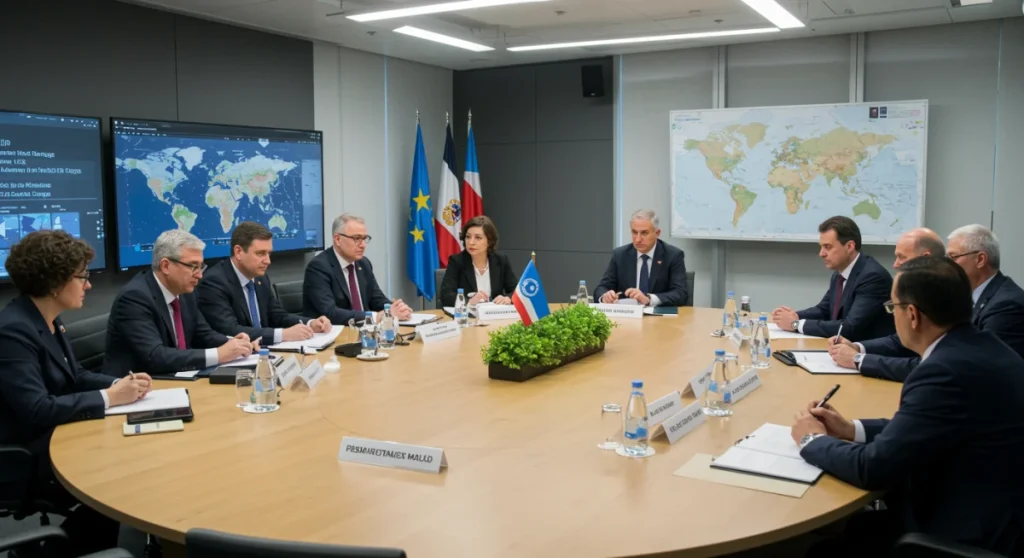
The US can significantly enhance international cooperation in addressing persistent regional conflicts by December 2025 through a focused 4-point plan emphasizing revitalized diplomacy, shared intelligence, economic incentives, and multilateral security frameworks.
In an increasingly interconnected yet volatile world, the imperative for the United States to foster robust international partnerships has never been clearer. This article delves into strengthening US alliances, outlining a practical 4-point plan designed to enhance international cooperation and address persistent regional conflicts effectively by December 2025. This strategy moves beyond traditional approaches, embracing adaptive diplomacy and collaborative security measures to build a more stable global landscape.
Revitalizing Diplomatic Engagement and Trust
Effective conflict resolution begins with strong diplomatic foundations. The United States must prioritize renewing its commitment to multilateral institutions and bilateral relationships, not merely as forums for discussion but as active platforms for collaborative problem-solving. This involves a sustained effort to rebuild trust, which has been eroded in various instances over the past years. Reaffirming diplomatic norms, engaging in respectful dialogue, and demonstrating consistent reliability are crucial steps in this revitalization process. The goal is to move beyond transactional diplomacy towards a more principled and enduring engagement that recognizes the shared interests and mutual respect inherent in true partnerships.
Rebuilding Credibility Through Consistent Policy
One of the cornerstones of effective diplomacy is consistency. Allies and adversaries alike observe US foreign policy for signs of reliability and commitment. Erratic shifts in policy or rhetoric can undermine trust and make international cooperation more challenging. Therefore, a critical component of revitalizing diplomatic engagement is the establishment of clear, consistent policy objectives that are communicated effectively and adhered to over time. This approach allows partners to anticipate US actions and build long-term strategies in conjunction with American initiatives.
- Establish clear, long-term foreign policy objectives.
- Communicate policy changes transparently and consultatively.
- Uphold international agreements and commitments.
- Invest in diplomatic training and expertise.
Furthermore, investing in diplomatic infrastructure and personnel is paramount. A well-resourced and skilled diplomatic corps can navigate complex international environments, foster understanding, and build crucial relationships. This includes supporting foreign service officers, promoting cultural exchange programs, and ensuring that diplomatic missions are adequately staffed and funded to execute their vital functions. Such investments are not merely expenditures but strategic assets that yield significant returns in terms of global influence and stability.
Ultimately, revitalizing diplomatic engagement is about demonstrating leadership through collaboration. It means listening as much as speaking, understanding diverse perspectives, and working alongside partners to forge common solutions. This approach builds a collective sense of ownership over international challenges, making solutions more sustainable and broadly supported. It signifies a return to the principles of shared responsibility and mutual benefit that underpin successful global governance.
Enhancing Shared Intelligence and Information Exchange
In the face of evolving and complex regional conflicts, timely and accurate intelligence is indispensable. Strengthening alliances mandates a significant enhancement of shared intelligence capabilities and information exchange protocols. This goes beyond simply sharing raw data; it involves collaborative analysis, joint threat assessments, and the development of integrated intelligence frameworks that allow partners to understand and respond to threats in a coordinated manner. The aim is to create a seamless flow of critical information, enabling all parties to make informed decisions and act decisively.

One of the primary challenges in intelligence sharing is establishing trust and ensuring data security. Partners must be confident that shared information will be protected and used responsibly. This requires robust cybersecurity measures, clear agreements on data handling, and a commitment to mutual respect for intelligence sources and methods. Building these safeguards is a continuous process that involves technical upgrades, procedural refinements, and ongoing dialogue among intelligence agencies.
Developing Integrated Analytical Capabilities
Beyond raw data, the ability to collectively analyze and interpret intelligence is crucial. This involves fostering environments where intelligence analysts from different nations can work side-by-side, sharing expertise and perspectives. Joint analytical centers or regular collaborative workshops can facilitate this process, leading to more comprehensive and nuanced understandings of regional dynamics. Such integration helps to overcome national biases and provides a more holistic picture of complex situations.
- Establish secure, interoperable intelligence sharing platforms.
- Conduct regular joint threat assessments and scenario planning.
- Promote personnel exchanges between allied intelligence agencies.
- Invest in advanced data analytics and AI for threat detection.
Furthermore, leveraging technological advancements in data analytics and artificial intelligence can significantly enhance shared intelligence efforts. These tools can process vast amounts of information quickly, identify patterns, and predict potential developments, offering invaluable insights for conflict prevention and resolution. Implementing these technologies collaboratively ensures that all allies benefit from the most advanced capabilities, fostering a more equitable and effective intelligence landscape.
Ultimately, enhancing shared intelligence and information exchange transforms individual national strengths into a collective advantage. It builds a network of informed decision-makers capable of anticipating and mitigating regional conflicts more effectively. This collaborative intelligence paradigm is a powerful deterrent and a crucial enabler of peaceful resolution, fostering a sense of collective security and shared responsibility.
Strategic Economic Incentives and Development Aid
Economic stability and opportunity are often direct antidotes to the root causes of regional conflicts, such as poverty, inequality, and lack of governance. A strategic approach to strengthening alliances must therefore include the judicious use of economic incentives and targeted development aid. This is not merely about providing financial assistance but about fostering sustainable economic growth, building resilient institutions, and creating pathways to prosperity that empower communities and reduce the appeal of extremist ideologies or conflict. The US can leverage its economic power to stabilize volatile regions and reinforce allied relationships.
Targeted Aid for Conflict-Prone Regions
Development aid should be tailored to the specific needs of conflict-prone regions, focusing on projects that address fundamental drivers of instability. This includes investments in education, healthcare, infrastructure, and job creation, particularly for youth. Such initiatives not only improve living standards but also build local capacity for self-governance and economic independence, reducing reliance on external actors and fostering a sense of agency within affected communities.
- Prioritize aid for education and vocational training.
- Support infrastructure development in critical sectors.
- Promote fair trade practices and market access for developing economies.
- Encourage private sector investment in stable regions.
Moreover, economic incentives can be used to reward cooperation and adherence to international norms. This could involve preferential trade agreements, investment partnerships, or debt relief for nations actively working towards peace and stability. Such incentives create a positive feedback loop, encouraging governments to prioritize diplomatic solutions over confrontational approaches and reinforcing the benefits of international cooperation.
Another crucial aspect is combating corruption and promoting good governance. Economic aid and incentives are most effective when they are channeled through transparent and accountable systems. The US should work with allies to strengthen anti-corruption measures, support judicial reform, and promote civil society organizations that advocate for accountability. This ensures that resources reach their intended beneficiaries and contribute to genuine development, rather than exacerbating existing inequalities.
In essence, strategic economic incentives and development aid are powerful tools for conflict prevention and alliance building. They address the underlying conditions that fuel instability, foster economic resilience, and create a shared stake in peace and prosperity. By investing in the economic well-being of its partners, the US strengthens its alliances and contributes to a more secure and equitable global environment.
Strengthening Multilateral Security Frameworks
While bilateral alliances remain vital, many regional conflicts transcend national borders and require a multilateral response. The US must therefore commit to strengthening existing multilateral security frameworks and exploring new mechanisms for collective security. This involves active participation in organizations like NATO, the UN, and regional bodies, enhancing their capabilities, and ensuring their relevance in addressing contemporary threats. The goal is to build a robust, interconnected system of security cooperation that can effectively deter aggression, manage crises, and promote lasting peace.
Modernizing Collective Defense Mechanisms
Existing security alliances, such as NATO, need continuous adaptation to meet evolving threats. This includes modernizing military capabilities, enhancing interoperability among allied forces, and developing comprehensive strategies for hybrid warfare and cyber threats. Regular joint exercises and training programs are essential to ensure that these frameworks remain effective and responsive to new challenges. The US should lead in these modernization efforts, sharing expertise and resources to bolster collective defense.
- Increase interoperability in military operations and technology.
- Develop joint responses to cyber and hybrid threats.
- Strengthen UN peacekeeping and conflict mediation capacities.
- Support regional security dialogues and confidence-building measures.
Furthermore, the US should champion the role of the United Nations in conflict prevention and resolution. This involves providing robust financial and political support for UN peacekeeping missions, strengthening its mediation capabilities, and advocating for reforms that enhance its effectiveness. By working through the UN, the US can legitimize international interventions and mobilize broader global support for peace efforts, making them more impactful and sustainable.
Beyond traditional military alliances, fostering regional security dialogues and confidence-building measures is crucial. These initiatives bring together diverse actors, including those with historical tensions, to discuss common security concerns and build mutual understanding. The US can play a facilitating role in these dialogues, providing platforms for engagement and encouraging collaborative solutions to shared challenges, thereby reducing the likelihood of escalation.
Ultimately, strengthening multilateral security frameworks is about recognizing that global security is a shared responsibility. It requires a commitment to collective action, a willingness to share burdens, and a belief in the power of cooperation to overcome even the most intractable conflicts. By investing in these frameworks, the US not only protects its own interests but also contributes to a more stable and peaceful international order.
Promoting Human Rights and Democratic Values
At the heart of sustainable peace and stability lies the respect for human rights and the promotion of democratic values. Regional conflicts often stem from authoritarian rule, suppression of dissent, and widespread human rights abuses. Therefore, a comprehensive plan to strengthen alliances and address these conflicts must integrate a robust commitment to advocating for these fundamental principles. The US can leverage its influence to support civil society, promote free and fair elections, and hold perpetrators of human rights violations accountable, thereby fostering environments less prone to internal strife and external aggression.
Supporting Democratic Transitions and Institutions
When nations transition from authoritarianism to democracy, they often face significant challenges. The US and its allies can provide crucial support through technical assistance for electoral processes, capacity building for judicial systems, and training for civil society organizations. This support helps to solidify democratic institutions, ensuring that governance is inclusive, responsive, and respectful of the rule of law. A stable democracy is inherently less likely to engage in aggressive regional conflicts and more likely to seek peaceful resolutions.
- Fund programs that support independent media and civil society.
- Provide technical assistance for free and fair elections.
- Advocate for the protection of minority rights and freedoms.
- Impose targeted sanctions on human rights abusers.
Moreover, the promotion of human rights extends to advocating for freedom of expression, assembly, and religion. These freedoms are essential for a vibrant civil society, which acts as a check on governmental power and provides avenues for peaceful dissent. By championing these rights globally, the US reinforces its own values and encourages partners to uphold similar standards, creating a stronger ethical foundation for allied cooperation.
Holding perpetrators of human rights abuses accountable is another critical component. This includes supporting international justice mechanisms and imposing targeted sanctions on individuals and entities responsible for atrocities. Such actions send a clear message that violations of human rights will not be tolerated and reinforce the international legal framework designed to protect vulnerable populations. Accountability is a powerful deterrent against future abuses and a crucial step towards healing fractured societies.
Ultimately, promoting human rights and democratic values is not just a moral imperative but a strategic necessity. It builds more stable, just, and peaceful societies that are better equipped to resolve internal disputes and contribute constructively to regional stability. By aligning its foreign policy with these core principles, the US strengthens its alliances with like-minded nations and creates a more resilient global order.
Investing in Conflict Prevention and Early Warning Systems
The most effective way to address regional conflicts is to prevent them from escalating in the first place. This necessitates a significant investment in conflict prevention mechanisms and early warning systems. The US, in collaboration with its allies, can develop sophisticated tools and processes to identify potential flashpoints, analyze underlying grievances, and deploy preventative diplomatic or economic measures before violence erupts. This proactive approach saves lives, reduces humanitarian suffering, and is ultimately more cost-effective than intervening in full-blown conflicts.
Developing Predictive Analytics for Instability
Leveraging advancements in big data and artificial intelligence, the US can work with partners to develop predictive analytics models that identify indicators of instability. These models can integrate various data points, including economic trends, social grievances, political rhetoric, and environmental factors, to forecast areas at high risk of conflict. Such tools provide policymakers with crucial lead time to implement preventative strategies, from targeted development aid to diplomatic mediation.
- Establish joint research initiatives on conflict dynamics.
- Deploy diplomatic missions to mediate nascent disputes.
- Support local peacebuilding initiatives and community dialogues.
- Create rapid response teams for humanitarian crises.
Early warning systems must also be coupled with rapid response capabilities. This means having diplomatic channels open for immediate mediation efforts, pre-positioned humanitarian aid for potential crises, and flexible economic instruments that can be deployed quickly to stabilize volatile situations. The speed and coordination of these responses are paramount in de-escalating tensions and preventing conflicts from spiraling out of control.
Furthermore, supporting local peacebuilding initiatives and community dialogues is essential. Conflicts often have deep-seated local roots, and sustainable solutions require the active participation of affected communities. The US can empower local leaders, civil society organizations, and peace advocates by providing funding, training, and platforms for dialogue. These grassroots efforts build resilience, foster reconciliation, and create a bottom-up approach to peace that complements top-down diplomatic efforts.
In conclusion, investing in conflict prevention and early warning systems represents a paradigm shift from reactive intervention to proactive engagement. It embodies a commitment to foresight, collaboration, and the belief that peace can be built and sustained through diligent effort. By prioritizing these measures, the US and its allies can significantly reduce the incidence of regional conflicts and contribute to a more stable and secure world for all.
| Key Focus Area | Brief Description |
|---|---|
| Revitalize Diplomacy | Rebuild trust and consistent engagement with allies through multilateral institutions and bilateral relationships. |
| Enhance Shared Intelligence | Develop integrated frameworks for collaborative analysis and secure information exchange among partners. |
| Strategic Economic Incentives | Utilize targeted aid and economic tools to foster stability, growth, and reduce conflict drivers in vulnerable regions. |
| Strengthen Security Frameworks | Modernize multilateral defense mechanisms and support UN roles in conflict prevention and resolution. |
Frequently asked questions about strengthening US alliances
Strengthening US alliances is crucial due to increasing global interconnectedness and the complex nature of modern regional conflicts. Collective action and shared responsibility are essential for effectively addressing transnational threats and ensuring global stability, making alliances invaluable for security and diplomatic efforts.
Revitalizing diplomatic engagement helps by rebuilding trust, fostering mutual understanding, and establishing clear, consistent policy objectives. This creates a stable foundation for collaborative problem-solving, allowing the US and its partners to address regional conflicts through dialogue and shared strategies.
Economic incentives and development aid play a vital role by addressing root causes of conflict like poverty and inequality. They foster sustainable growth, build resilient institutions, and create opportunities, reducing the appeal of extremism and stabilizing vulnerable regions, thereby reinforcing allied relationships.
Shared intelligence improves conflict response by enabling collaborative analysis, joint threat assessments, and integrated information exchange. This provides all partners with timely, accurate insights, allowing for coordinated decision-making and more effective, decisive action against evolving regional threats.
Multilateral security frameworks are international organizations or agreements, like NATO or the UN, that facilitate collective defense and security cooperation. They are important because they enable coordinated responses to transnational threats, deter aggression, manage crises, and promote lasting peace through shared responsibility.
Conclusion
The path to a more stable and peaceful world is paved with robust alliances and proactive international cooperation. The 4-point plan outlined—revitalizing diplomatic engagement, enhancing shared intelligence, employing strategic economic incentives, and strengthening multilateral security frameworks—offers a comprehensive and practical framework for the US to address persistent regional conflicts effectively by December 2025. By committing to these strategies, the United States can not only safeguard its own interests but also cultivate a global environment where peace and prosperity are attainable for all, leveraging collective strength to overcome shared challenges.