Space as the Next Frontier: 2026 U.S. Geopolitical Dominance

The United States must strategically address its geopolitical imperatives in space by 2026, focusing on three policy directives: enhancing resilience, driving technological innovation, and forging robust international collaborations to solidify its dominance in this critical domain.
In an increasingly interconnected and competitive world, U.S. space policy stands at a pivotal juncture. The cosmos, once a realm of scientific curiosity, has rapidly transformed into the next critical geopolitical frontier, demanding immediate and strategic attention from the United States to secure its long-term interests and maintain global leadership.
The Evolving Landscape of Space Geopolitics
The space domain is no longer the exclusive purview of a few state actors; it is now a bustling arena with commercial enterprises, emerging space powers, and a growing array of capabilities. This proliferation introduces both unprecedented opportunities and complex challenges, fundamentally reshaping the global geopolitical balance. Nations are increasingly recognizing space as essential for economic prosperity, national security, and scientific advancement.
The strategic value of space assets, from communication satellites to global positioning systems, cannot be overstated. These systems underpin modern economies, military operations, and daily life. As such, vulnerabilities in space infrastructure pose significant risks, making the protection and resilience of these assets a paramount concern for the United States. The competition for influence and resources in space is intensifying, with rival nations actively developing counter-space capabilities.
Understanding this evolving landscape is the first step toward formulating effective policy. The U.S. must remain agile, adapting its strategies to address new threats and capitalize on emerging technologies. This requires a comprehensive approach that integrates diplomatic, economic, and military instruments to safeguard American interests in the final frontier. The stakes are incredibly high, influencing everything from global security to technological progress.
Imperative 1: Bolstering Space Domain Resilience and Security
Ensuring the resilience and security of U.S. space assets is not merely a defensive measure; it is a fundamental pillar of national security and economic stability. The dependency on space-based services means any disruption, whether accidental or malicious, could have catastrophic consequences. Therefore, proactive measures to fortify space infrastructure against a spectrum of threats are essential for maintaining strategic advantage.
Cybersecurity in Space Systems
Threats to space systems are multifaceted, ranging from kinetic anti-satellite weapons to sophisticated cyberattacks. Cybersecurity, in particular, represents a critical vulnerability. The interconnected nature of ground control, satellite operations, and data transmission networks provides numerous entry points for adversaries seeking to disrupt or degrade American capabilities.
- Enhanced Encryption Protocols: Implementing advanced encryption across all space-related data links to protect against interception and manipulation.
- Redundant Ground Systems: Developing and deploying geographically dispersed and hardened ground control stations to ensure continuous operation even if some are compromised.
- AI-Powered Threat Detection: Utilizing artificial intelligence and machine learning to rapidly identify and mitigate cyber threats in real-time, adapting to evolving attack vectors.
Physical and Operational Resilience
Beyond cyber threats, the physical security of space assets and their operational resilience against conventional and unconventional attacks demand robust strategies. This includes designing satellites with inherent protection mechanisms and developing protocols for rapid response and recovery.
- Distributed Architectures: Moving towards constellations of smaller, more numerous satellites rather than a few large, high-value targets, making them less susceptible to single-point failure.
- On-Orbit Servicing Capabilities: Investing in technologies for refueling, repairing, and upgrading satellites in space, extending their lifespan and enhancing their adaptability.
- Space Situational Awareness (SSA): Improving capabilities to track objects in orbit, identify potential threats, and predict collisions, ensuring safer and more secure operations.
The imperative to bolster resilience and security is an ongoing commitment. It requires continuous investment in research and development, robust intelligence gathering, and agile policy adjustments to stay ahead of evolving threats. A secure space domain is the bedrock upon which all other U.S. space ambitions will be built.
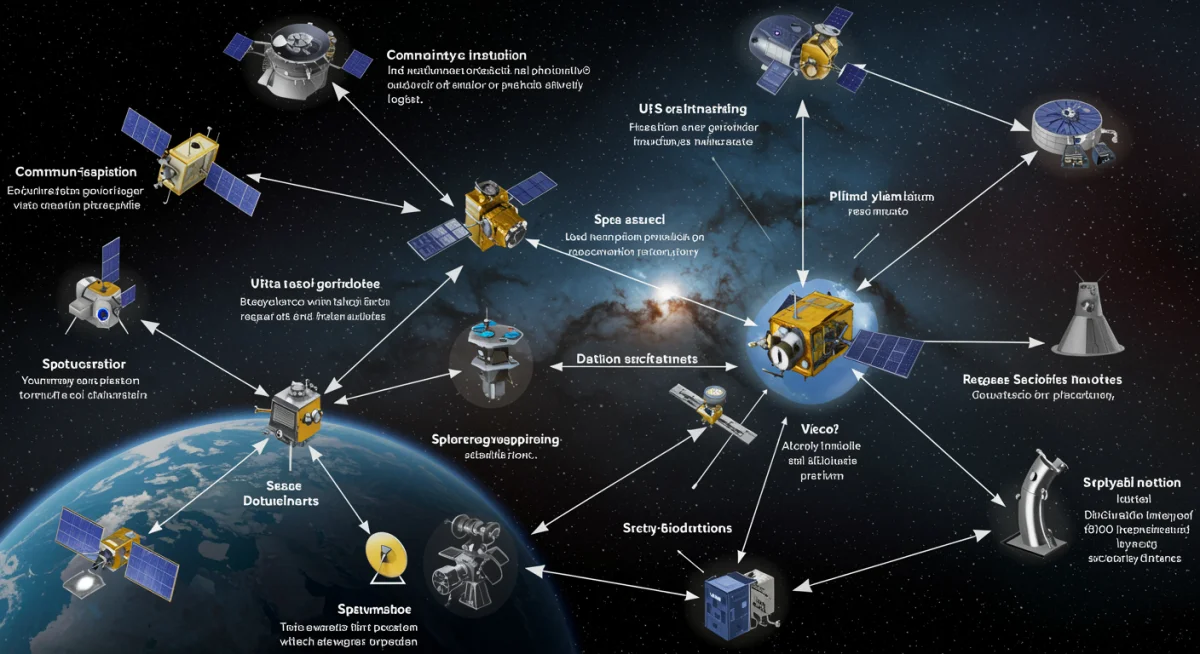
Imperative 2: Fostering Innovation and Technological Superiority
Maintaining a qualitative edge in space requires a relentless pursuit of innovation and technological superiority. History shows that leadership in critical domains is often secured by those who push the boundaries of what is possible. For the U.S., this means investing heavily in cutting-edge research, nurturing a vibrant space economy, and attracting top talent to drive the next generation of space technologies.
The pace of technological change in space is accelerating, driven by both governmental and commercial sectors. The U.S. must foster an environment that encourages breakthroughs in areas such as propulsion systems, advanced materials, artificial intelligence for autonomous operations, and quantum communication. These advancements will not only enhance national security but also create new economic opportunities and improve quality of life on Earth.
Driving Advanced Research and Development
Government funding and strategic partnerships are crucial for fueling foundational research that can lead to transformative technologies. This involves collaborating with universities, national labs, and private industry to leverage diverse expertise and resources.
- Next-Generation Propulsion: Investing in technologies like nuclear thermal propulsion or electric propulsion to enable faster, more efficient travel within the solar system, reducing mission times and costs.
- In-Space Manufacturing: Developing capabilities to manufacture and assemble structures in orbit, reducing the need for costly and complex launches from Earth and enabling larger, more sophisticated space assets.
- Quantum Computing and Communication: Exploring the application of quantum technologies for secure communication and advanced data processing in space, offering unparalleled levels of security and computational power.
Nurturing a Dynamic Space Economy
The commercial space sector is a powerful engine of innovation. By reducing barriers to entry, providing regulatory clarity, and fostering competition, the U.S. can unleash the full potential of private enterprise to develop new services and capabilities.
- Public-Private Partnerships: Establishing robust collaboration models where government agencies provide strategic guidance and initial funding, while private companies drive rapid development and commercialization.
- Regulatory Streamlining: Modernizing licensing and regulatory frameworks to keep pace with technological advancements, ensuring safety and security without stifling innovation.
- Workforce Development: Investing in STEM education and training programs to cultivate a skilled workforce capable of meeting the demands of a rapidly expanding space industry.
Ultimately, sustained innovation and technological superiority are not merely about developing new gadgets; they are about creating a strategic advantage that ensures the U.S. remains at the forefront of space exploration, utilization, and defense. This requires a long-term vision and consistent investment.
Imperative 3: Strengthening International Partnerships and Norms
Space is a global commons, and its sustainable and peaceful use requires international cooperation. While competition is inherent, the U.S. recognizes that many challenges and opportunities in space transcend national borders. Strengthening international partnerships and establishing clear norms of behavior are vital for preventing conflict, promoting responsible conduct, and achieving shared goals in the cosmos.
Diplomacy and collaboration can foster stability, build trust, and address critical issues such as space debris, resource utilization, and the peaceful exploration of celestial bodies. Unilateral action, while sometimes necessary, can lead to mistrust and escalate tensions. A multilateral approach, guided by shared principles, is often the most effective path forward for complex global challenges.
Building Alliances for Space Security
Working with allies to enhance collective space security capabilities and share intelligence is crucial. This collaborative defense posture deters potential adversaries and strengthens the overall resilience of space infrastructure.
- Joint Exercises and Training: Conducting combined space operations exercises with key allies to improve interoperability and response capabilities in crisis scenarios.
- Information Sharing Agreements: Establishing formal mechanisms for sharing space situational awareness data and threat intelligence to enhance collective awareness and early warning.
- Coordinated Diplomacy: Presenting a united front in international forums to advocate for responsible behavior in space and condemn destabilizing actions by other actors.
Developing Norms of Responsible Behavior
The absence of universally accepted rules of the road in space creates ambiguity and increases the risk of miscalculation. The U.S. must lead efforts to establish and promote norms that ensure the long-term sustainability and peaceful use of outer space.
- Anti-Satellite Weapon Ban: Advocating for international agreements that prohibit the testing and use of destructive direct-ascent anti-satellite weapons, reducing the generation of hazardous space debris.
- Transparency and Confidence-Building Measures: Promoting voluntary measures such as pre-notification of launches and orbital maneuvers to increase transparency and reduce the potential for misinterpretation.
- Resource Utilization Frameworks: Initiating discussions and frameworks for the responsible and equitable utilization of space resources, preventing future conflicts over valuable assets on the Moon or asteroids.
International cooperation is not a sign of weakness but a strategic imperative. By forging strong partnerships and championing responsible norms, the U.S. can create a more secure, stable, and prosperous space environment for all.
Policy Directive 1: Integrated Space Strategy and Governance
To effectively address the geopolitical imperatives and capitalize on the opportunities in space, the U.S. needs a cohesive, integrated space strategy and streamlined governance framework. Currently, responsibilities for space policy are often distributed across multiple government agencies, leading to potential redundancies, gaps, or conflicting priorities. A more unified approach is essential for agility and efficiency.
An integrated strategy would ensure that all elements of national power—diplomatic, informational, military, and economic—are harmonized to achieve strategic objectives in space. This involves not only coordination between federal agencies but also robust engagement with the private sector, academia, and international partners.
Streamlining Interagency Coordination
Breaking down bureaucratic silos is paramount. A dedicated, high-level body with clear authority could oversee and synchronize all U.S. space activities, ensuring a unified national vision.
- National Space Council Reinvigoration: Granting enhanced authority and resources to the National Space Council to serve as the principal forum for developing and coordinating national space policy across all government departments.
- Unified Budgeting Process: Implementing a more integrated budgeting process for space-related programs, ensuring resources are allocated effectively to support strategic priorities rather than fragmented departmental interests.
- Cross-Departmental Working Groups: Establishing permanent working groups composed of experts from different agencies to address specific space challenges, fostering collaboration and comprehensive solutions.
Enhancing Public-Private Dialogue
The dynamism of the commercial space sector requires constant dialogue and collaboration with government. Policy decisions must consider the rapid advancements and unique capabilities offered by private industry.
- Regular Industry Consultations: Instituting formal mechanisms for regular engagement with space industry leaders to gather input on policy formulation, regulatory impacts, and emerging technological trends.
- Joint Innovation Initiatives: Creating programs that co-fund or co-develop critical space technologies with the private sector, accelerating deployment and leveraging commercial efficiencies.
- Talent Exchange Programs: Facilitating temporary exchanges of personnel between government agencies and private space companies to foster mutual understanding and share best practices.
An integrated space strategy and governance model will provide the clarity, coordination, and resources necessary for the U.S. to navigate the complexities of the space domain and maintain its leadership position effectively.
Policy Directive 2: Investing in Advanced Space Capabilities
To secure its geopolitical standing and ensure dominance in space, the United States must make sustained and strategic investments in advanced space capabilities. This goes beyond merely maintaining existing systems; it involves pushing the boundaries of technology and developing systems that offer a decisive advantage over potential adversaries. The future of space dominance will be defined by superior technology and robust infrastructure.
These investments must span a broad spectrum, from foundational research and development to the deployment of operational systems. The goal is not just to react to current threats but to anticipate future challenges and opportunities, ensuring the U.S. possesses the tools and platforms needed to operate effectively across the full range of space activities.
Developing Resilient and Adaptive Architectures
Future space systems must be inherently resilient, capable of operating in contested environments, and adaptable to rapidly changing technological landscapes and mission requirements.
- Proliferated Low Earth Orbit (LEO) Constellations: Investing in large constellations of small, networked satellites in LEO for enhanced communication, Earth observation, and missile warning, offering redundancy and global coverage.
- Defensive Counterspace Capabilities: Developing technologies that can protect U.S. assets from attack, including active defense systems, electronic warfare capabilities, and highly maneuverable spacecraft.
- Modular and Upgradable Satellites: Designing satellites with modular components that can be easily swapped out or upgraded in orbit, extending their operational life and allowing for rapid technological insertion.
Pioneering Deep Space Exploration and Utilization
Beyond Earth orbit, the exploration and eventual utilization of resources in deep space, such as the Moon and Mars, represent the next frontier. Establishing a presence and developing capabilities in these regions will have profound geopolitical implications.
- Lunar Gateway and Surface Infrastructure: Continuing investment in the Lunar Gateway and developing sustainable human presence capabilities on the Moon, serving as a proving ground for Mars missions and a hub for scientific and commercial activities.
- Resource Prospecting and Extraction: Funding research and development into technologies for identifying, extracting, and utilizing resources like water ice on the Moon and asteroids, enabling long-duration missions and in-situ resource utilization.
- Advanced Life Support Systems: Innovations in closed-loop life support and radiation shielding to enable human missions of extended duration to distant destinations, ensuring crew safety and mission success.
Strategic investment in advanced space capabilities is a long-term commitment that will define the U.S.’s role as a leading space power. It ensures the nation has the technological edge required to protect its interests, explore new frontiers, and inspire future generations.
Policy Directive 3: Cultivating a Skilled Space Workforce and Public Engagement
The U.S.’s enduring leadership in space ultimately depends on its human capital—a highly skilled, diverse workforce capable of innovating, building, and operating complex space systems. Beyond the technical experts, broad public engagement and support are crucial for sustaining long-term investment and national commitment to space endeavors. Cultivating this talent pipeline and fostering public enthusiasm are strategic imperatives.
The demand for space professionals, from engineers and scientists to policy analysts and mission controllers, is rapidly increasing. Ensuring a robust supply of these skilled individuals requires comprehensive educational initiatives, talent retention strategies, and efforts to inspire the next generation to pursue careers in space-related fields.
Developing the Next Generation of Space Professionals
A multi-pronged approach is needed to educate, train, and retain a diverse and highly capable space workforce, addressing both current and future skill gaps.
- STEM Education Enhancement: Investing in K-12 STEM programs with a strong focus on space-related topics, making science and engineering exciting and accessible to young students.
- University Research Grants and Scholarships: Providing increased funding for university research in space science and engineering, along with scholarships to attract top talent to relevant academic programs.
- Experiential Learning Opportunities: Creating more internships, apprenticeships, and hands-on training programs with NASA, defense contractors, and commercial space companies to provide practical experience.
Fostering Public Understanding and Support
Public support is critical for sustaining the political will and financial investment necessary for ambitious space programs. Effective communication and engagement can highlight the tangible benefits of space activities.
- Transparent Communication: Clearly articulating the national security, economic, and scientific benefits of space programs to the public through various media channels.
- Inspiring Educational Outreach: Utilizing national space missions and discoveries to inspire students and the general public, demonstrating the wonders and possibilities of space exploration.
- Community Engagement Initiatives: Partnering with local communities, science museums, and educational institutions to host events and programs that promote space literacy and engagement.
By investing in its people and fostering widespread public support, the U.S. can ensure a sustainable pipeline of talent and a strong national consensus for its ambitious objectives in the space domain, solidifying its leadership for decades to come.
| Key Imperative | Brief Description |
|---|---|
| Resilience & Security | Protecting U.S. space assets from cyber and physical threats through robust defenses and distributed architectures. |
| Innovation & Superiority | Driving technological advancements in propulsion, manufacturing, and AI to maintain a decisive qualitative edge. |
| International Partnerships | Fostering alliances and establishing norms of behavior for stable and peaceful use of outer space. |
| Workforce & Engagement | Cultivating a skilled space workforce and ensuring public support for long-term space endeavors. |
Frequently Asked Questions About U.S. Space Policy
Space is critical due to its direct impact on national security, economic stability, and technological advancement. Control and influence in space enable superior communication, navigation, intelligence gathering, and scientific breakthroughs, making it a key arena for global power projection and competition among nations.
Primary threats include kinetic anti-satellite weapons, sophisticated cyberattacks targeting ground and orbital systems, electromagnetic interference, and the growing problem of space debris. These threats can disrupt critical services and pose significant risks to national infrastructure and defense capabilities.
Innovation ensures technological superiority, providing the U.S. with advanced capabilities in propulsion, manufacturing, defense, and communication. This qualitative edge is crucial for maintaining a strategic advantage, driving economic growth, and enabling new forms of exploration and scientific discovery.
International partnerships are vital for collective security, sharing the burden of space exploration, and establishing norms of responsible behavior. Collaboration prevents conflict, promotes stability, and addresses global challenges like space debris and resource utilization, fostering a more secure and peaceful space environment.
The private sector is a key driver of innovation, bringing agility, efficiency, and new capabilities to the space domain. Through public-private partnerships, commercial companies accelerate technological development, reduce costs, and expand access to space, complementing government efforts in exploration and national security.
Conclusion
The year 2026 marks a critical juncture for U.S. space policy, demanding a proactive and integrated approach to secure its geopolitical interests in the burgeoning space domain. By rigorously focusing on bolstering resilience and security, fostering unparalleled innovation and technological superiority, and strengthening strategic international partnerships, the United States can navigate the complex challenges and seize the immense opportunities that space presents. These three key policy directives, underpinned by robust governance and a skilled workforce, are not merely aspirational but essential for ensuring continued American leadership and prosperity in the final frontier, safeguarding its national security and economic vitality for generations to come. The future of global power will undoubtedly be written among the stars, and the U.S. is poised to lead that narrative.