Data Privacy in the Age of AI: A 5-Step Guide for U.S. Companies to Ensure CCPA and GDPR Compliance in 2025

Ensuring robust AI data privacy compliance in 2025 requires U.S. companies to proactively integrate CCPA and GDPR frameworks into their AI strategies, safeguarding consumer trust and avoiding significant legal penalties.
In an increasingly data-driven world, the convergence of artificial intelligence (AI) and personal information presents both immense opportunities and significant challenges. For U.S. companies, navigating the complex landscape of Data Privacy in the Age of AI: A 5-Step Guide for U.S. Companies to Ensure CCPA and GDPR Compliance in 2025 is not merely a legal obligation, but a cornerstone of maintaining consumer trust and competitive advantage. As AI technologies become more sophisticated, processing vast amounts of data at unprecedented speeds, the need for stringent privacy measures has never been more critical. This guide provides a clear pathway for businesses to not only meet but exceed the evolving expectations of privacy regulations like the California Consumer Privacy Act (CCPA) and the General Data Protection Regulation (GDPR) by the year 2025.
Understanding the Evolving AI Privacy Landscape
The rapid advancement of AI technologies has fundamentally reshaped how data is collected, processed, and utilized. This evolution introduces novel privacy challenges that traditional regulatory frameworks were not initially designed to address. From predictive analytics to generative AI, the ways in which personal data can be inferred, synthetized, and exploited require a proactive and adaptive approach to compliance.
Companies must recognize that AI systems, by their very nature, are voracious consumers of data. This data often includes sensitive personal information, making the potential for privacy breaches or misuse a significant concern. The regulatory bodies behind CCPA and GDPR are keenly aware of these emerging risks, and future amendments or new legislations are expected to further tighten the reins on AI-driven data processing. Staying ahead of these changes is paramount for any U.S. company operating in this space.
The Interplay of CCPA and GDPR with AI
While CCPA and GDPR were enacted prior to the widespread adoption of advanced AI, their core principles remain highly relevant. Both regulations emphasize data minimization, purpose limitation, transparency, and individual rights. Applying these principles to AI systems involves:
- Data Minimization: Ensuring AI models are trained and operate with only the essential data.
- Purpose Limitation: Defining clear, explicit, and legitimate purposes for AI data processing.
- Transparency: Articulating how AI uses personal data, especially in automated decision-making.
Understanding these foundational requirements is the first step toward building a resilient AI privacy framework. The complexities arise when these regulations meet the dynamic, often opaque, nature of AI algorithms. Companies must meticulously document their AI data flows and processing activities to demonstrate compliance effectively. This initial understanding forms the bedrock for all subsequent steps in ensuring robust data privacy.
Step 1: Conduct a Comprehensive AI Data Inventory and Risk Assessment
Before any meaningful compliance efforts can begin, U.S. companies must gain a complete understanding of their AI data ecosystem. This involves a meticulous inventory of all data types, sources, and flows associated with AI systems. Without this foundational knowledge, it’s impossible to identify potential vulnerabilities or non-compliance points.
Begin by mapping every piece of personal data that interacts with your AI models, from collection to deletion. This includes data used for training, inference, and performance monitoring. Document where the data originates, how it’s transformed, where it’s stored, and who has access to it. This granular view is crucial for uncovering hidden risks and ensuring accountability.
Identifying and Categorizing Data Elements
A critical component of this step is categorizing data based on its sensitivity and regulatory implications. For example, biometric data, health information, or financial records require a higher level of protection under both CCPA and GDPR. Understanding these distinctions allows for tailored security measures.
- Personal Identifiable Information (PII): Direct identifiers like names, addresses, Social Security numbers.
- Sensitive Personal Information (SPI): Health data, racial or ethnic origin, political opinions, religious beliefs.
- Pseudonymized Data: Data where direct identifiers have been replaced, but re-identification is still possible.
Once data elements are categorized, perform a thorough risk assessment for each AI system. This assessment should evaluate the likelihood and impact of potential privacy breaches, unauthorized access, or algorithmic bias. Consider how data is anonymized or pseudonymized, and whether these techniques are robust enough to meet regulatory standards. The goal is to proactively identify and mitigate risks before they manifest into serious compliance issues or reputational damage.
Step 2: Implement Data Governance and Privacy-by-Design Principles
With a clear understanding of your AI data landscape, the next critical step is to embed data governance and privacy-by-design (PbD) principles into every stage of your AI development lifecycle. This proactive approach ensures that privacy considerations are not an afterthought but an integral part of your AI strategy from inception.
Data governance for AI involves establishing clear policies, procedures, and responsibilities for managing data throughout its lifecycle. This includes defining roles for data owners, stewards, and custodians, as well as setting standards for data quality, access, and retention. A robust governance framework provides the structure necessary to maintain compliance in a dynamic AI environment.
Integrating Privacy-by-Design in AI Development
Privacy-by-Design, a core tenet of GDPR and increasingly relevant for CCPA, advocates for building privacy protections directly into AI systems and processes. This means anticipating privacy risks and designing solutions that minimize data collection, maximize data security, and empower individuals with control over their data.
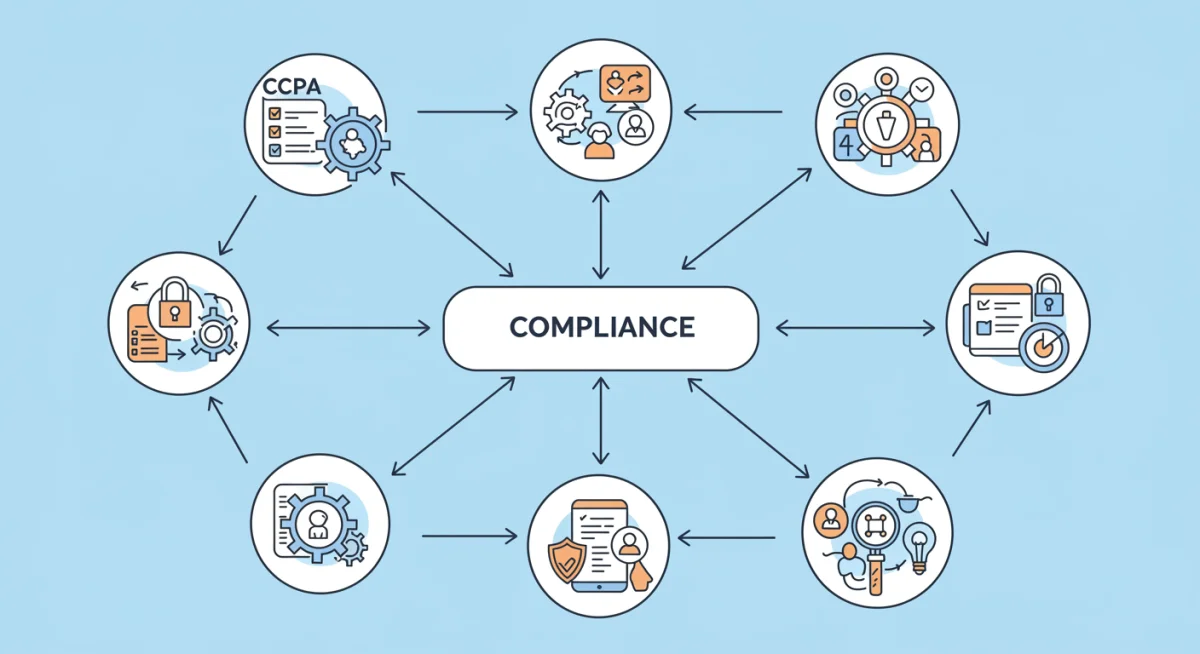
Key PbD principles for AI include:
- Proactive, not reactive: Address privacy issues before they arise.
- Privacy as default: Ensure personal data is automatically protected.
- End-to-end security: Secure data throughout its entire lifecycle.
- Visibility and transparency: Keep data processing operations visible and understandable to stakeholders.
By adopting PbD, U.S. companies can significantly reduce their compliance burden and enhance consumer trust. It fosters a culture where privacy is a shared responsibility, not just a legal department’s concern. This approach not only helps meet regulatory mandates but also positions companies as leaders in ethical AI development.
Step 3: Enhance Transparency and User Control Mechanisms
Transparency and user control are fundamental pillars of both CCPA and GDPR, and their importance is amplified in the context of AI. U.S. companies must provide clear, concise, and accessible information about how AI systems collect, use, and share personal data. This goes beyond standard privacy policies and requires a deliberate effort to demystify AI’s operations for the average consumer.
This step involves developing comprehensive privacy notices that specifically address AI data processing activities. These notices should explain in plain language what data is collected by AI, why it’s collected, how it’s used, and with whom it might be shared. Avoid legal jargon and ensure the information is easily discoverable on your platforms.
Empowering Data Subjects with Control
Beyond transparency, companies must empower individuals with meaningful control over their data in AI contexts. This means facilitating the exercise of various data subject rights, such as the right to access, rectify, erase, or port their data. For AI, this also extends to the right to object to automated decision-making and to receive human intervention.
- Right to Know: Consumers can request information about data collected and used by AI.
- Right to Delete: Individuals can ask for their personal data to be removed from AI systems.
- Right to Opt-Out: Users can refuse the sale or sharing of their personal data for AI-driven purposes.
- Right to Non-Discrimination: Companies cannot penalize consumers for exercising their privacy rights.
Implementing user-friendly dashboards or portals where individuals can manage their privacy preferences for AI-driven services is an effective way to meet these requirements. These mechanisms not only fulfill regulatory obligations but also build trust by demonstrating a genuine commitment to individual privacy rights.
Step 4: Develop Robust Security Measures and Incident Response Plans
Even with the most stringent data governance and privacy-by-design principles in place, the risk of data breaches or security incidents remains. Therefore, U.S. companies must establish robust security measures specifically tailored to the unique vulnerabilities of AI systems and develop comprehensive incident response plans to mitigate potential damage.
AI systems can introduce new attack vectors, such as adversarial attacks on machine learning models or vulnerabilities in AI-specific software libraries. Implementing multi-layered security controls, including encryption, access controls, and regular security audits, is essential. Furthermore, ensure that third-party vendors and partners involved in your AI data processing adhere to equally high security standards.
Crafting an AI-Specific Incident Response Plan
An effective incident response plan for AI data breaches should go beyond general cybersecurity protocols. It needs to address the specific challenges posed by AI, such as identifying if an AI model itself was compromised or if sensitive data was inadvertently exposed through algorithmic outputs. Key components of such a plan include:
- Clear Communication Protocols: Define who communicates what, when, and to whom (internally and externally).
- Forensic Capabilities: Ability to analyze AI system logs and data flows to pinpoint the breach’s origin and scope.
- Regulatory Reporting Procedures: Detailed steps for reporting breaches to relevant authorities (e.g., California AG, EU supervisory authorities) within mandated timeframes.
- Data Recovery and Restoration: Strategies to restore compromised data and AI systems to a secure state.
Regular testing and updating of these incident response plans are crucial. Conducting tabletop exercises that simulate AI data breach scenarios can help identify weaknesses and improve response efficacy. Proactive security and a well-rehearsed response plan are critical for minimizing the impact of any privacy or security incident related to AI.
Step 5: Ensure Continuous Monitoring, Auditing, and Training for AI Compliance
Compliance with CCPA and GDPR in the AI era is not a one-time project; it’s an ongoing commitment. U.S. companies must establish mechanisms for continuous monitoring, regular auditing, and comprehensive training to ensure that their AI systems remain compliant as regulations evolve and technologies advance.
Continuous monitoring involves tracking AI data processing activities, reviewing access logs, and assessing the effectiveness of privacy controls in real time. Automated tools can assist in this process, flagging anomalies or potential compliance deviations. This proactive surveillance allows for immediate corrective action, preventing minor issues from escalating into major problems.
Regular Audits and Employee Training
Periodic independent audits of AI systems and data processing practices are essential for validating compliance. These audits should assess:
- Algorithm Fairness and Bias: Ensuring AI models do not perpetuate or amplify discrimination.
- Data Lineage and Provenance: Verifying the source and integrity of data used by AI.
- Consent Management: Confirming that consent mechanisms are robust and user-friendly.
Furthermore, comprehensive and ongoing employee training is non-negotiable. All personnel involved in AI development, deployment, or data handling must understand their responsibilities regarding data privacy. Training should cover the latest regulatory updates, company policies, and best practices for secure AI development and operation. This cultural shift towards privacy awareness is as important as any technical control. By integrating continuous monitoring, regular audits, and thorough training, companies can build a sustainable framework for AI data privacy compliance that adapts to future challenges.
| Key Compliance Step | Brief Description |
|---|---|
| AI Data Inventory | Map all data types, sources, and flows within AI systems to identify risks. |
| Privacy-by-Design | Embed privacy protections into AI systems from the initial development phase. |
| User Control | Provide clear transparency and mechanisms for individuals to manage their data. |
| Continuous Monitoring | Regularly track, audit, and update AI systems and employee training for compliance. |
Frequently Asked Questions About AI Data Privacy Compliance
While both aim to protect data, GDPR has a broader scope, applying to any company processing EU citizens’ data, regardless of location. CCPA specifically covers California residents. GDPR also has stricter requirements for explicit consent and automated decision-making in AI contexts, whereas CCPA focuses more on the ‘sale’ of personal information.
Privacy-by-Design in AI means embedding privacy protections directly into the AI system’s architecture from the outset. This includes techniques like data minimization during training, differential privacy to protect individual data points, and ensuring transparent explainability of AI decisions, rather than adding privacy features as an afterthought.
Non-compliance can lead to severe penalties, including substantial fines (e.g., up to 4% of global annual turnover for GDPR, significant statutory damages for CCPA). Beyond financial repercussions, companies risk reputational damage, loss of consumer trust, legal battles, and potential operational restrictions that could severely impact their business.
Achieving true anonymization with AI is challenging. While techniques like pseudonymization and aggregation reduce direct identifiability, advanced AI can sometimes re-identify individuals from seemingly anonymous datasets. Companies must regularly reassess their anonymization methods and consider the context of data use to ensure they meet regulatory standards for protecting individual privacy.
Employee training is crucial. Human error remains a leading cause of data breaches. Regular, comprehensive training ensures that all personnel involved in AI development, deployment, and data handling understand their privacy responsibilities, company policies, and the latest regulatory requirements, thereby fostering a culture of privacy awareness and reducing risks.
Conclusion
The journey to robust AI data privacy compliance for U.S. companies by 2025 is multifaceted, requiring a strategic and continuous commitment. By meticulously following this 5-step guide—from comprehensive data inventory and risk assessment to embedding privacy-by-design, enhancing transparency, fortifying security, and ensuring perpetual monitoring—organizations can effectively navigate the intricate demands of CCPA and GDPR. This proactive approach not only mitigates significant legal and financial risks but also cultivates invaluable consumer trust, positioning companies as responsible and ethical leaders in the rapidly evolving AI landscape. The future of AI success hinges on a foundation of unwavering data privacy.