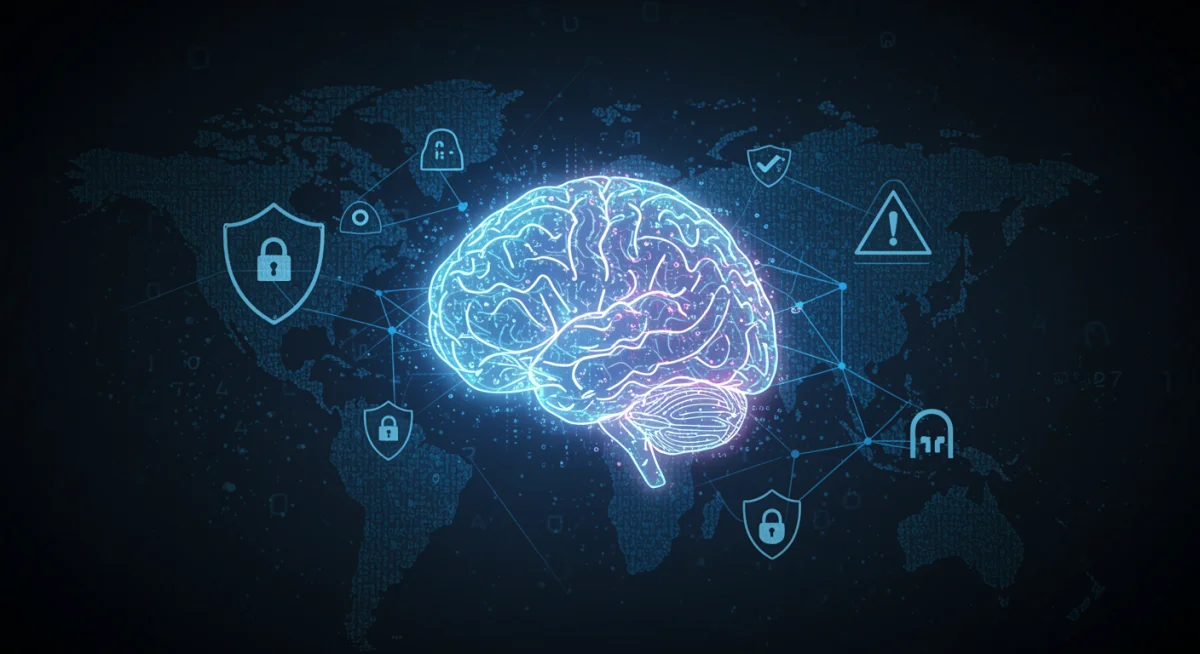
Endpoint Security in 2025: A Deep Dive into AI-Driven EDR and XDR Solutions for U.S. Businesses highlights how integrated artificial intelligence will revolutionize cyber defense, offering unparalleled threat detection and automated response capabilities for organizations.
The digital landscape is evolving at an unprecedented pace, presenting both opportunities and significant challenges for U.S. businesses. As cyber threats become more sophisticated, the need for robust defense mechanisms has never been more critical. This article will delve into how Endpoint Security in 2025: A Deep Dive into AI-Driven EDR and XDR Solutions for U.S. Businesses is set to transform the cybersecurity paradigm, offering proactive and adaptive protection against an ever-growing array of malicious actors.
The Evolving Threat Landscape for U.S. Businesses
U.S. businesses face a constantly shifting threat landscape, characterized by increasingly organized and advanced cyber adversaries. From nation-state sponsored attacks to sophisticated ransomware gangs, the methods employed to compromise systems are becoming more evasive and destructive. Traditional security measures, while foundational, often struggle to keep pace with these rapid innovations in attack vectors.
The sheer volume of endpoints—laptops, mobile devices, IoT sensors, cloud workloads—in modern enterprises presents a vast attack surface. Each of these points can serve as an entry for a breach, making comprehensive protection a complex undertaking. Furthermore, the rise of hybrid work models has distributed these endpoints geographically, complicating centralized monitoring and response efforts. Organizations require solutions that can not only detect known threats but also predict and neutralize novel, polymorphic attacks before they can inflict damage.
Understanding these challenges is the first step toward implementing effective future-proof strategies. The transition from reactive defense to proactive threat hunting and automated response is essential for maintaining business continuity and protecting sensitive data in this hostile environment.
Understanding Endpoint Detection and Response (EDR) in 2025
Endpoint Detection and Response (EDR) has emerged as a cornerstone of modern cybersecurity, moving beyond traditional antivirus by providing continuous monitoring and recording of endpoint activity. In 2025, EDR solutions will be significantly enhanced by artificial intelligence, transforming their capabilities from mere detection to intelligent threat analysis and automated remediation.
AI’s Role in Next-Gen EDR
AI algorithms are revolutionizing EDR by enabling systems to learn from vast datasets of threat intelligence and normal behavior patterns. This allows for the identification of subtle anomalies that might indicate a zero-day attack or sophisticated insider threat, which would typically bypass signature-based defenses.
- Behavioral Analytics: AI-powered EDR analyzes user and entity behavior to detect deviations from established baselines.
- Threat Hunting Automation: AI assists security analysts by automating the identification of suspicious activities across endpoints, reducing manual effort.
- Predictive Capabilities: Machine learning models can predict potential attack paths and vulnerabilities, allowing for preemptive patching and policy adjustments.
- Contextual Awareness: AI integrates context from various endpoint activities to provide a holistic view of an incident, improving response accuracy.
The integration of AI into EDR systems means that U.S. businesses can expect more accurate threat detection, faster incident response times, and a significant reduction in false positives. This evolution empowers security teams to focus on strategic initiatives rather than being overwhelmed by alert fatigue.
The Rise of Extended Detection and Response (XDR)
While EDR focuses on endpoints, Extended Detection and Response (XDR) takes a broader, more integrated approach. XDR consolidates security data from various sources—endpoints, networks, cloud environments, email, and identities—to provide a unified view of an organization’s security posture. This comprehensive visibility is critical for detecting complex, multi-stage attacks that span across different layers of an IT infrastructure.
In 2025, XDR platforms will be the preferred solution for many U.S. businesses, offering unparalleled insights into threat activities. By correlating data from disparate sources, XDR can uncover hidden attack patterns and provide a more complete narrative of an incident, enabling more effective and coordinated responses.

Key Advantages of XDR for Holistic Security
XDR’s ability to ingest and analyze data from across the entire digital ecosystem offers several distinct advantages. It eliminates data silos, providing security teams with a single pane of glass to manage and respond to threats efficiently. This integration is vital for detecting sophisticated threats that often leverage multiple attack vectors to achieve their objectives.
- Unified Visibility: Consolidates alerts and telemetry from endpoints, network, cloud, and email into a single platform.
- Accelerated Investigation: Automates data correlation and context enrichment, drastically reducing investigation times.
- Improved Detection Fidelity: AI-powered analytics identify advanced threats that might be missed by siloed security tools.
- Streamlined Operations: Reduces the number of tools security teams need to manage, improving operational efficiency.
The proactive nature of XDR, combined with its ability to orchestrate responses across multiple security layers, positions it as a critical component for U.S. businesses aiming to build resilient cyber defenses in the coming years. It represents a significant leap forward from traditional Security Information and Event Management (SIEM) systems by offering deeper context and automated actions.
AI’s Transformative Impact on EDR and XDR Solutions
The integration of artificial intelligence is not merely an enhancement; it is a fundamental transformation of EDR and XDR capabilities. AI allows these solutions to move beyond static rules and signatures, enabling dynamic, adaptive, and predictive security. This shift is crucial for combating the increasingly intelligent and autonomous threats that will characterize the 2025 cyber landscape.
AI algorithms, particularly machine learning and deep learning, empower EDR and XDR systems to analyze vast quantities of data in real-time, identify complex patterns, and make informed decisions at speeds impossible for human analysts. This includes detecting subtle indicators of compromise, predicting potential attack vectors, and even automating remediation steps.
How AI Elevates Threat Intelligence and Response
AI significantly enhances threat intelligence by continuously learning from global threat data, adapting to new attack techniques, and providing actionable insights. This continuous learning cycle ensures that security systems remain effective against evolving threats.
- Automated Threat Prioritization: AI ranks threats based on severity and potential impact, helping security teams focus on the most critical issues.
- Adaptive Security Policies: AI-driven systems can automatically adjust security policies in response to detected threats or changes in the environment.
- Root Cause Analysis: AI helps quickly identify the origin and scope of an attack, facilitating comprehensive remediation.
- Reduced Human Error: Automation of repetitive tasks and initial analysis frees up human experts for more complex problem-solving.
For U.S. businesses, the AI-driven evolution of EDR and XDR means a more resilient and responsive security posture. The ability to automatically detect, analyze, and respond to threats reduces the window of opportunity for attackers and minimizes potential damage, ensuring business continuity and data integrity.
Implementing AI-Driven EDR/XDR: Best Practices for U.S. Businesses
Adopting AI-driven EDR and XDR solutions requires careful planning and strategic implementation to maximize their benefits. U.S. businesses should consider several best practices to ensure a smooth transition and optimal performance of these advanced security platforms. It is not enough to simply deploy the technology; successful integration depends on alignment with organizational goals and a robust operational framework.
Start with a thorough assessment of your current security infrastructure and identify critical gaps that AI-driven solutions can address. Phased implementation is often recommended, allowing teams to adapt to new tools and workflows gradually. Continuous monitoring and fine-tuning of the AI models are also essential to ensure they remain effective against emerging threats and accurately reflect your organization’s unique environment.
Strategic Considerations for Deployment
Successful deployment of AI-driven EDR and XDR involves more than just selecting the right vendor. It requires a holistic approach that encompasses people, processes, and technology.
- Define Clear Objectives: Clearly articulate what you aim to achieve with the new solution, whether it’s faster response times, reduced false positives, or broader visibility.
- Integrate with Existing Systems: Ensure seamless integration with other security tools like firewalls, identity management, and SIEM for a unified security ecosystem.
- Invest in Training: Provide comprehensive training for your security team to effectively utilize the advanced features of AI-driven platforms.
- Establish Incident Response Playbooks: Develop and regularly update automated and manual incident response playbooks that leverage the capabilities of EDR/XDR.
- Regular Reviews and Updates: Continuously review the performance of your EDR/XDR system and apply updates to keep pace with evolving threats and technology.
By following these best practices, U.S. businesses can effectively leverage AI-driven EDR and XDR to build a stronger, more resilient cybersecurity defense, significantly enhancing their ability to detect and respond to advanced threats.
Challenges and Future Outlook for AI in Cybersecurity
While AI-driven EDR and XDR offer immense promise, their implementation is not without challenges. U.S. businesses must navigate issues such as data privacy concerns, the potential for adversarial AI attacks, and the need for skilled personnel to manage these complex systems. The ethical implications of AI in security also warrant careful consideration, ensuring that automated decisions are fair and transparent.
Despite these hurdles, the future outlook for AI in cybersecurity is overwhelmingly positive. Continuous advancements in machine learning, coupled with increasing data availability, will further refine AI’s ability to detect and mitigate threats. We can expect more sophisticated predictive capabilities, self-healing networks, and even autonomous threat response systems that can operate with minimal human intervention.
Anticipating the Next Wave of Innovation
The cybersecurity landscape in 2025 will be defined by a dynamic interplay between human expertise and AI-powered defense. The focus will shift towards even greater automation and intelligent orchestration of security functions.
- AI-Powered Orchestration: Future systems will orchestrate responses across an even wider array of security tools and infrastructure components.
- Explainable AI (XAI): Developments in XAI will provide greater transparency into how AI models make decisions, addressing concerns about ‘black box’ algorithms.
- Quantum-Resistant Cryptography: As quantum computing advances, AI will play a role in developing and implementing new cryptographic standards.
- Proactive Threat Emulation: AI will be used to simulate attacks against an organization’s own defenses, identifying weaknesses before adversaries do.
The journey towards fully autonomous and intelligent cybersecurity is ongoing, but AI-driven EDR and XDR solutions represent a crucial step in preparing U.S. businesses for the challenges of 2025 and beyond. Adapting to these innovations will be key to maintaining a competitive edge and safeguarding critical assets.
| Key Aspect | Brief Description |
|---|---|
| AI’s Role in EDR | Enhances threat detection, behavioral analytics, and predictive capabilities on endpoints. |
| XDR Integration | Unifies security data from endpoints, network, cloud, and email for holistic visibility. |
| Automated Response | AI enables faster, more accurate automated remediation of detected threats. |
| Future Challenges | Addresses data privacy, adversarial AI, and the need for skilled cybersecurity professionals. |
Frequently Asked Questions About AI-Driven Endpoint Security
The primary benefit of AI in EDR is its ability to detect advanced, unknown threats by analyzing behavioral anomalies rather than just relying on signatures. This leads to more proactive threat hunting, reduced false positives, and faster, more accurate incident response, significantly bolstering defense against sophisticated cyberattacks.
XDR extends beyond EDR by integrating security data across endpoints, networks, cloud, email, and identity sources, providing a holistic view. Unlike SIEM, XDR offers deeper context and automated response capabilities, streamlining investigations and enhancing the detection of multi-stage attacks more effectively than siloed tools.
AI-driven solutions excel at combating sophisticated threats like zero-day attacks, polymorphic malware, fileless attacks, and advanced persistent threats (APTs). Their ability to detect subtle behavioral deviations and learn from evolving attack patterns makes them highly effective against threats that evade traditional signature-based detection methods.
Yes, challenges include managing data privacy, the potential for adversarial AI attacks that try to trick the AI, and the need for cybersecurity professionals with specialized skills to configure and manage these complex systems. Ensuring transparent and ethical AI decision-making is also a significant consideration for organizations.
U.S. businesses should prioritize defining clear security objectives, ensuring seamless integration with existing IT infrastructure, investing in comprehensive staff training, and establishing robust incident response playbooks. Regular reviews and updates are also crucial to maintain optimal performance against evolving cyber threats.
Conclusion
The landscape of cybersecurity is undergoing a profound transformation, with AI-driven EDR and XDR solutions emerging as indispensable tools for U.S. businesses in 2025. These advanced platforms offer a robust defense against increasingly sophisticated cyber threats by providing unparalleled visibility, intelligent threat detection, and automated response capabilities. While challenges such as data privacy and the need for skilled personnel remain, the strategic adoption of these technologies is crucial for maintaining business continuity and securing critical assets in an ever-evolving digital world. The future of endpoint security is intelligent, integrated, and proactive, empowering organizations to stay one step ahead of adversaries.