U.S. corporations are increasingly deploying advanced AI technologies for insider threat detection, enabling the rapid identification and mitigation of malicious activities within a critical 24-hour window.
The landscape of corporate security is constantly evolving, and one of the most insidious threats organizations face comes from within.
Insider threat detection: leveraging AI to identify malicious activity within 24 hours in U.S. corporations
is no longer a luxury but a fundamental necessity. In an era where data breaches can cripple businesses, understanding and mitigating the risks posed by employees, contractors, or partners has become paramount.
This article explores how artificial intelligence is revolutionizing the ability of U.S. companies to preemptively identify and neutralize these internal dangers with unprecedented speed and accuracy.
The Evolving Threat Landscape: Why Insiders Matter More Than Ever
Insider threats represent a complex and often underestimated challenge for U.S. corporations. Unlike external attacks, which often leave distinct digital footprints, malicious insider activities can be carefully disguised, leveraging legitimate access to systems and data. This makes them particularly difficult to detect using traditional security measures alone.
The motivations behind insider threats are diverse, ranging from financial gain and corporate espionage to disgruntled employees seeking revenge or simply negligence. Regardless of the intent, the consequences can be devastating, leading to intellectual property theft, data manipulation, system sabotage, and severe reputational damage. The sheer volume of data processed daily by modern enterprises further complicates the task of sifting through legitimate and illicit activities.
The Human Element in Cybersecurity Vulnerabilities
Humans are often considered the weakest link in the security chain. This isn’t necessarily due to malicious intent but rather a combination of factors that create vulnerabilities. Understanding these factors is crucial for developing effective detection strategies.
- Unintentional Errors: Accidental data exposure, misconfigurations, or falling victim to phishing scams can unknowingly compromise security.
- Negligence: Poor security hygiene, such as using weak passwords or sharing credentials, opens doors for exploitation.
- Lack of Awareness: Insufficient training on security protocols and the latest threats can leave employees unprepared.
- Social Engineering: Insiders can be tricked into revealing sensitive information or granting unauthorized access through sophisticated manipulation tactics.
The challenge lies in distinguishing between benign human error and deliberate malicious actions. This is where advanced analytics and AI capabilities become indispensable, providing the nuanced insights needed to make critical distinctions within vast datasets. The evolving nature of work, with remote access and cloud-based systems, only amplifies these internal vulnerabilities, making real-time monitoring and rapid response more critical than ever.
The AI Advantage: Beyond Traditional Security Measures
Traditional security systems, while essential, often struggle to keep pace with the subtlety and sophistication of insider threats. They are typically rule-based, designed to flag known patterns of attack. However, insider threats frequently involve legitimate user accounts performing actions that, in isolation, might appear normal. This is where artificial intelligence offers a transformative advantage.
AI systems, particularly those employing machine learning and deep learning, can analyze massive quantities of behavioral data to establish baselines of normal activity for each user and system. They can then identify deviations from these baselines, even if those deviations don’t conform to predefined malicious signatures. This behavioral anomaly detection is a game-changer in the realm of insider threat mitigation.
How AI Transforms Detection Capabilities
The power of AI in insider threat detection stems from its ability to process, analyze, and learn from complex data patterns at a scale impossible for human analysts. This leads to more precise and proactive security postures.
- Behavioral Analytics: AI continuously monitors user behavior, including login times, data access patterns, application usage, and network activity, to build comprehensive profiles.
- Contextual Analysis: It correlates disparate data points, understanding the context of actions rather than just isolated events, to discern suspicious sequences.
- Predictive Modeling: AI can identify early indicators of potential insider threats by recognizing subtle shifts in behavior that precede malicious actions.
- Reduced False Positives: By learning what constitutes normal behavior, AI significantly reduces the number of false alarms, allowing security teams to focus on genuine threats.
The shift from reactive, signature-based detection to proactive, behavior-based anomaly detection powered by AI fundamentally changes how U.S. corporations approach internal security. It moves the focus from identifying known threats to predicting and flagging unknown or evolving risks, thereby significantly shortening the detection window.
Real-Time Monitoring and Anomaly Detection
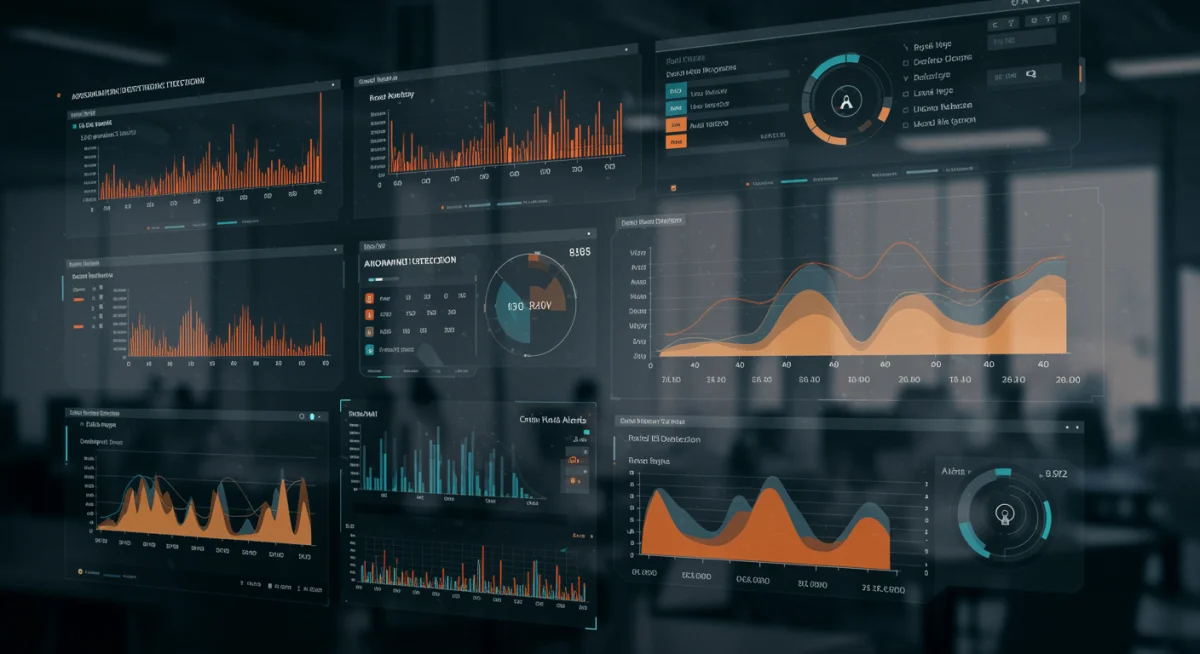
For U.S. corporations, the ability to identify malicious insider activity within a 24-hour timeframe is not merely an aspiration; it’s a critical operational imperative. Achieving this speed relies heavily on real-time monitoring capabilities combined with sophisticated AI-driven anomaly detection engines. These systems continuously ingest data from various sources, processing it instantaneously to identify deviations from established normal behavior.
Real-time monitoring involves collecting logs and activity data from endpoints, networks, applications, and cloud services as they happen. This constant stream of information feeds into AI algorithms that are trained to recognize patterns indicative of unusual or potentially malicious activity. The goal is to catch threats before they can escalate and cause significant damage, turning a potential disaster into a manageable incident.
Key Data Sources for AI-Driven Monitoring
Effective real-time monitoring requires a comprehensive view of an organization’s digital ecosystem. AI systems leverage a multitude of data sources to build a complete picture of user and system behavior.
- Endpoint Activity: Monitoring file access, application usage, USB device connections, and process execution on individual computers.
- Network Traffic: Analyzing data flows, connection destinations, protocol usage, and bandwidth consumption for unusual patterns.
- Application Logs: Tracking actions within critical business applications, databases, and collaboration tools.
- Access Management Systems: Observing login attempts, authentication failures, and privilege escalation requests.
- Cloud Service Logs: Monitoring activities within SaaS applications and cloud infrastructure for unauthorized access or data exfiltration.
By correlating these diverse data streams, AI can paint a holistic picture of user behavior, identifying subtle anomalies that might otherwise go unnoticed. For instance, a user suddenly accessing sensitive files outside their usual working hours, attempting to connect to an unfamiliar external IP address, or downloading an unusually large volume of data could trigger an alert. The speed of this detection is crucial for meeting the 24-hour response target.
Implementing AI: Challenges and Best Practices
While the benefits of AI in insider threat detection are clear, implementing these solutions within U.S. corporations comes with its own set of challenges. It’s not simply a matter of deploying software; it requires a strategic approach that addresses technical, operational, and even cultural hurdles.
One of the primary challenges is data privacy. Monitoring employee behavior, even for security purposes, raises concerns about surveillance and trust. Corporations must carefully balance security needs with employee privacy rights, ensuring transparency and adherence to regulations. Another challenge is the complexity of integrating AI solutions with existing security infrastructure, which can be fragmented and siloed.
Strategic Considerations for AI Deployment
To successfully leverage AI for insider threat detection, organizations must adopt best practices that go beyond mere technological implementation. A holistic strategy is essential for maximizing effectiveness.
- Clear Policies and Communication: Establish clear, transparent policies regarding monitoring and data usage, communicating them effectively to all employees.
- Phased Implementation: Start with pilot programs in specific departments to refine the AI models and processes before a broader rollout.
- Data Quality and Integration: Ensure high-quality, comprehensive data feeds from all relevant sources and seamless integration with existing SIEM (Security Information and Event Management) systems.
- Continuous Training and Tuning: AI models require ongoing training with new data and fine-tuning to adapt to evolving threats and organizational changes, minimizing false positives and negatives.
Furthermore, the success of AI-driven insider threat programs also depends on adequate staffing. Security teams need to be trained in interpreting AI-generated insights and responding effectively to alerts. It’s a collaborative effort where AI augments human capabilities rather than replaces them, allowing security professionals to focus on investigation and mitigation rather than manual data sifting.
The 24-Hour Response Imperative: From Detection to Mitigation
Detecting a malicious insider activity is only half the battle; the true measure of an effective security program lies in the speed and efficacy of its response. For U.S. corporations, the goal of identifying malicious activity within 24 hours directly translates into a parallel imperative for rapid mitigation. This aggressive timeline minimizes potential damage, limits data exfiltration, and preserves operational integrity.
Once an AI system flags a high-confidence anomaly, a well-defined incident response plan must swing into action. This involves a coordinated effort between security operations, human resources, legal, and often executive leadership. The initial 24 hours post-detection are critical for containment, forensic investigation, and decision-making regarding the appropriate actions to take.
Streamlining the Incident Response Workflow
Achieving a sub-24-hour response time requires more than just fast detection; it demands an optimized and agile incident response workflow. Every minute counts when dealing with an active insider threat.
- Automated Alert Triage: AI can help prioritize alerts, distinguishing critical threats from less urgent events, ensuring security teams focus on the most pressing issues.
- Pre-defined Playbooks: Having clear, documented procedures for different types of insider incidents allows for rapid, consistent, and effective responses.
- Cross-Functional Collaboration: Establishing clear communication channels and roles for all stakeholders (security, HR, legal) ensures a unified and swift approach.
- Containment Strategies: Implementing immediate measures like revoking access, isolating systems, or freezing accounts to prevent further damage.
The synergy between AI-powered detection and a robust, well-practiced incident response framework is what truly enables U.S. corporations to meet the demanding 24-hour window. This not only limits the financial and reputational impact of an insider breach but also sends a strong deterrent message to potential malicious actors within the organization.
The Future of Insider Threat Detection: AI and Beyond
The continuous evolution of AI technologies promises an even more sophisticated future for insider threat detection in U.S. corporations. As AI models become more adept at understanding nuanced human behavior and predicting intent, the capabilities for preemptive security will only grow. This includes advancements in areas like natural language processing (NLP) to analyze communications and sentiment analysis to identify potential disgruntled employees.
Beyond AI, the integration of other emerging technologies will further strengthen defenses. Blockchain could offer immutable audit trails, while quantum-resistant cryptography might protect against future computational attacks. The convergence of these technologies, led by AI, will create a multi-layered, intelligent defense system capable of adapting to increasingly complex threats.
Emerging Trends and Technologies
The cybersecurity landscape is dynamic, and staying ahead requires constant innovation. Several key trends are shaping the next generation of insider threat detection.
- Federated Learning: Allowing AI models to learn from decentralized data sources without centralizing sensitive information, enhancing privacy and collaboration.
- Explainable AI (XAI): Developing AI systems that can articulate their reasoning for flagging an anomaly, building trust and aiding human analysts in investigations.
- Digital Twin Technology: Creating virtual replicas of an organization’s IT environment to simulate attacks and test defenses without impacting live systems.
- Integration with Zero Trust Architectures: Embedding AI into Zero Trust frameworks to continuously verify every user and device, regardless of location.
The future will see AI not just as a detection tool but as an integral part of a proactive, self-healing security ecosystem. It will move towards predicting vulnerabilities and even self-correcting security postures, further reducing the window for malicious activity and solidifying the defense against insider threats. This continuous innovation is paramount for U.S. corporations aiming to maintain a competitive edge and safeguard their most valuable assets.
| Key Aspect | Brief Description |
|---|---|
| AI’s Core Advantage | Enables behavioral anomaly detection, moving beyond traditional rule-based security to identify subtle, unknown threats. |
| 24-Hour Imperative | Rapid detection and mitigation within a day are crucial to minimize damage from insider threats. |
| Implementation Challenges | Balancing privacy, integrating systems, and continuous model training are key hurdles. |
| Future Outlook | AI will evolve towards predictive capabilities, XAI, and integration with other advanced security technologies. |
Frequently Asked Questions About AI in Insider Threat Detection
An insider threat refers to a security risk that originates from within the targeted organization. This can include current or former employees, contractors, or business partners who have authorized access to an organization’s networks, systems, or data and misuse that access, whether maliciously or unintentionally, to compromise security.
AI, particularly machine learning, analyzes vast datasets of user behavior to establish normal patterns. It can then identify subtle deviations or anomalies in real-time that might indicate malicious activity, even if those actions don’t match known threat signatures, allowing for much quicker detection than manual review or rule-based systems.
AI systems analyze a wide range of data, including endpoint activity (file access, application use), network traffic, email communications, access logs, and cloud service activity. By correlating these diverse sources, AI builds a comprehensive behavioral profile for each user and system, spotting unusual patterns.
Key challenges include ensuring data privacy and compliance, integrating AI solutions with existing legacy systems, managing high volumes of data, and continuously training and tuning AI models to reduce false positives while effectively identifying genuine threats. Organizational culture and employee trust are also significant factors.
A 24-hour detection window is critical because it significantly limits the potential damage an insider can inflict. Rapid identification allows corporations to quickly contain the threat, prevent further data exfiltration or system sabotage, and initiate forensic investigations, thereby minimizing financial losses, reputational harm, and regulatory penalties.
Conclusion
The imperative for U.S. corporations to enhance their cybersecurity defenses against internal threats has never been more urgent.
Insider threat detection: leveraging AI to identify malicious activity within 24 hours in U.S. corporations
represents a pivotal shift in this ongoing battle. By harnessing the power of artificial intelligence, organizations can move beyond reactive security postures to proactive, behavior-based detection, significantly reducing the time to identify and mitigate risks. This strategic embrace of AI not only fortifies defenses against sophisticated internal adversaries but also underpins the resilience and trustworthiness essential for thriving in today’s interconnected digital economy. As technology continues to advance, the symbiotic relationship between human expertise and AI capabilities will remain the cornerstone of robust corporate security.