The 2026 U.S. policy adjustments in the South China Sea are expected to significantly reshape regional geopolitical dynamics, influencing maritime security, economic partnerships, and strategic competition among major global powers.
The South China Sea remains a critical flashpoint in global geopolitics, a complex arena where economic interests, territorial claims, and strategic ambitions converge. As we approach 2026, anticipating the next phase of U.S. engagement in this vital region becomes paramount. Understanding the nuances of future policy shifts is key to grasping the profound implications for international stability and regional power balances. This article delves into the potential South China Sea US Policy adjustments expected in 2026 and their far-reaching geopolitical ramifications.
The evolving landscape of the South China Sea
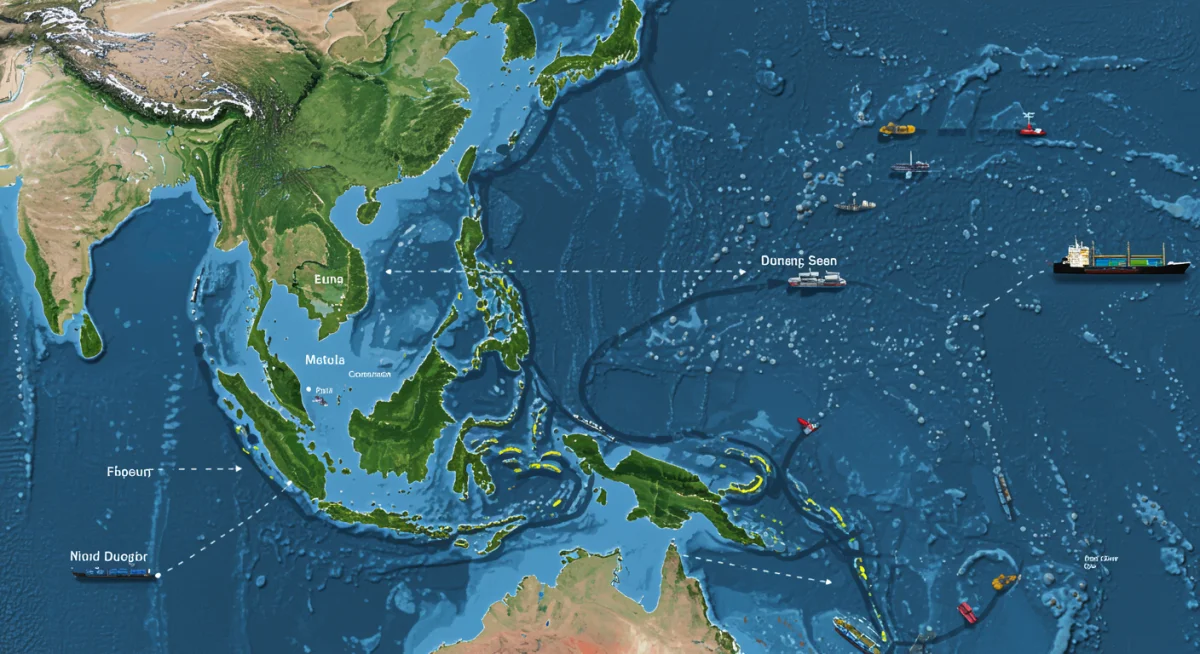
The South China Sea, a body of water rich in natural resources and vital for global trade, has been a theater of escalating tensions for decades. Its strategic importance as a major shipping lane, carrying an estimated one-third of global maritime trade, cannot be overstated. Beyond trade, the sea is believed to hold vast reserves of oil and natural gas, making control over its waters and islands a high-stakes endeavor for claimant states and external powers alike. Understanding this dynamic backdrop is crucial for analyzing any future policy shifts.
Various nations, including China, Vietnam, the Philippines, Malaysia, Brunei, and Taiwan, maintain overlapping territorial claims over islands, reefs, and maritime zones within the South China Sea. These claims, often rooted in historical narratives and international law interpretations, fuel persistent disputes. China’s expansive claims, particularly its ‘nine-dash line,’ have been a central point of contention, leading to increased militarization of artificial islands and a more assertive presence in the region.
Key regional actors and their interests
- China: Aims to solidify its territorial claims, secure energy resources, and project naval power, viewing the region as central to its national security and economic growth.
- ASEAN nations: Seek to protect their sovereign rights, ensure freedom of navigation, and maintain regional stability, often balancing between major powers.
- United States: Prioritizes freedom of navigation, upholding international law, and supporting its allies and partners in the region to maintain a free and open Indo-Pacific.
The interplay of these diverse interests creates a volatile environment. Any significant policy adjustment by a major power like the United States inevitably sends ripples across this intricate web of relationships, potentially altering alliances, economic dependencies, and strategic calculations. The South China Sea is not merely a regional issue; it is a global barometer for international law and power dynamics.
In conclusion, the South China Sea is a nexus of geopolitical importance, driven by economic interests, territorial claims, and strategic competition. The actions of key regional actors, particularly China and the United States, continuously shape its volatile landscape, making future policy adjustments a subject of intense scrutiny.
Historical context of U.S. engagement
The United States has long held a vested interest in the stability and freedom of navigation in the South China Sea, a stance rooted in its broader Indo-Pacific strategy. Historically, U.S. policy has been characterized by a dual approach: maintaining a strong military presence to deter aggression and uphold international law, while simultaneously engaging in diplomatic efforts to de-escalate tensions and promote peaceful resolutions to disputes. This balancing act has defined its role as an external power with significant stakes in the region.
From the post-World War II era, the U.S. has been a dominant naval power in the Pacific, ensuring open sea lanes vital for global commerce. Its treaty alliances with countries like the Philippines have provided a framework for security cooperation and a strategic foothold in the region. However, as China’s economic and military power grew, particularly in the early 21st century, the nature of U.S. engagement began to evolve, shifting towards a more explicit challenge to China’s expansive claims and construction activities.
Milestones in U.S. policy
- Freedom of Navigation Operations (FONOPs): Regular naval and air transits through disputed waters, challenging excessive maritime claims and asserting international law.
- Alliance Reinforcement: Strengthening military ties and joint exercises with allies like the Philippines, Japan, and Australia to enhance collective security.
- Diplomatic Pressure: Advocating for a rules-based international order and urging peaceful dispute resolution through bodies like ASEAN and the UN.
These initiatives underscore a consistent U.S. commitment to the region, albeit with varying degrees of assertiveness depending on the administration. The shift from a more ambiguous stance on sovereignty claims to a clearer opposition to China’s actions has marked recent years. This historical trajectory sets the stage for understanding how 2026 policy adjustments might build upon, or depart from, established approaches. The core principle remains safeguarding international norms and supporting allies against coercion.
To summarize, U.S. engagement in the South China Sea has a rich history, characterized by a commitment to freedom of navigation, international law, and supporting regional allies. This historical context is vital for interpreting future policy directions and their potential impact.
Anticipated U.S. policy adjustments for 2026
As 2026 approaches, analysts and policymakers are keenly observing potential shifts in U.S. strategy concerning the South China Sea. Several factors could drive these adjustments, including the evolving geopolitical landscape, domestic political priorities, and the actions of other key players. While the fundamental goals of maintaining regional stability and freedom of navigation are likely to remain, the methods and emphasis might undergo significant changes. Expect a more nuanced and perhaps more robust approach.
One potential adjustment could involve an increased focus on multilateral cooperation, moving beyond bilateral alliances to foster a more unified front among like-minded nations. This could manifest in enhanced joint patrols, intelligence sharing, and coordinated diplomatic initiatives. The aim would be to distribute the burden of regional security and present a stronger, collective voice against actions that undermine international law. Another area of focus might be economic statecraft, using trade agreements and investment incentives to strengthen partnerships and reduce reliance on single dominant powers in the region.
Key areas of potential change
- Enhanced multilateralism: Greater collaboration with regional partners like Australia, Japan, India, and European allies on maritime security.
- Technological superiority: Investment in advanced naval and aerial capabilities to maintain a deterrent edge and improve domain awareness.
- Economic resilience: Diversifying supply chains and promoting alternative economic frameworks to counter coercive economic practices.
Furthermore, there might be a re-evaluation of the U.S. military footprint in the region, potentially involving the deployment of new assets or the repositioning of existing forces to optimize response capabilities. This would be coupled with a strong emphasis on cyber security and information warfare, recognizing the evolving nature of modern conflict. The policy adjustments in 2026 are likely to be comprehensive, addressing not only military aspects but also diplomatic, economic, and technological dimensions of competition. The goal is to create a resilient and adaptable strategy capable of responding to complex and dynamic challenges.
In conclusion, U.S. policy adjustments for 2026 in the South China Sea are expected to emphasize multilateral cooperation, technological superiority, and economic resilience. These shifts aim to bolster regional stability and counter assertive actions while maintaining a strong strategic presence.
Geopolitical ramifications of policy shifts
The anticipated U.S. policy adjustments in the South China Sea for 2026 carry significant geopolitical ramifications, potentially reshaping alliances, escalating or de-escalating tensions, and influencing the broader balance of power in the Indo-Pacific. Every move by a major player like the United States is closely watched and analyzed by other nations, leading to consequential reactions and counter-reactions. The region is a delicate ecosystem where even minor shifts can have widespread effects.
An assertive U.S. stance, for instance, might embolden some claimant states to take a firmer position against China, potentially leading to increased skirmishes or diplomatic standoffs. Conversely, it could provoke a stronger backlash from Beijing, resulting in further militarization, more frequent patrols, or heightened rhetoric. The risk of miscalculation, always present in such contested regions, could rise. The diplomatic sphere would also be heavily impacted, with nations choosing sides or attempting to maintain neutrality amidst increased pressure.
Impact on regional alliances and partnerships
U.S. policy adjustments could:
- Strengthen existing alliances: Allies like the Philippines and Australia might see increased security assurances and closer military cooperation.
- Foster new partnerships: Nations previously hesitant to align might be drawn closer to the U.S. orbit, seeking protection or economic benefits.
- Challenge China’s influence: A more unified front could limit China’s ability to exert unilateral control over disputed areas, forcing a re-evaluation of its strategies.
Economically, shifts in U.S. policy could affect trade routes, investment flows, and supply chain resilience. Companies might reconsider their operational strategies in the region, potentially leading to diversification away from areas perceived as high-risk. The long-term implications for global commerce and energy security are substantial, given the South China Sea’s role as a conduit for vast amounts of international trade. Ultimately, the geopolitical ramifications will depend on the specific nature of the policy adjustments and the reactions of all involved parties, creating a complex and ever-changing scenario.
In summary, U.S. policy adjustments in the South China Sea will have profound geopolitical ramifications, affecting regional alliances, potentially escalating tensions, and influencing global power dynamics. These shifts demand careful consideration and strategic foresight from all stakeholders.
Challenges and opportunities for U.S. policy
Formulating and executing effective policy in the South China Sea presents both significant challenges and unique opportunities for the United States. The intricate web of historical claims, economic dependencies, and nationalistic sentiments makes it a diplomatic minefield, yet also an arena where strategic leadership can yield substantial influence. Navigating these complexities requires a nuanced approach that balances assertiveness with diplomatic flexibility, avoiding both appeasement and unnecessary provocation.
One of the primary challenges is managing the delicate balance with China. While the U.S. aims to counter China’s assertive actions, it also seeks to avoid direct military confrontation and maintain open lines of communication on other global issues, such as climate change and trade. This requires a sophisticated diplomatic strategy that clearly delineates areas of cooperation from areas of competition. Furthermore, garnering sustained support from regional allies, who often have their own complex relationships with China, can be difficult. They seek U.S. security guarantees but are also wary of being caught in a great power rivalry.
Overcoming key challenges
To address these challenges, U.S. policy could focus on:
- Strategic communication: Clearly articulating U.S. intentions and adherence to international law to avoid misinterpretations.
- Capacity building: Assisting regional partners in enhancing their maritime domain awareness and defense capabilities.
- De-escalation mechanisms: Establishing clear protocols and channels for communication with China to manage incidents and prevent escalation.
On the opportunity front, a well-calibrated U.S. policy can reinforce its leadership in promoting a rules-based international order, strengthening democratic alliances, and fostering economic prosperity. By actively supporting international law and freedom of navigation, the U.S. can enhance its credibility and demonstrate its commitment to global norms. This also presents an opportunity to deepen economic ties with Indo-Pacific nations, offering alternatives to China-centric supply chains and investment models. Successful navigation of these challenges and opportunities will determine the long-term effectiveness of U.S. strategy in this critical region.
In conclusion, U.S. policy in the South China Sea faces challenges in balancing relations with China and maintaining allied support. However, opportunities exist to reinforce international law, strengthen alliances, and promote economic resilience through strategic communication and capacity building.
The role of international law and diplomacy
In the highly contested waters of the South China Sea, international law and diplomatic efforts play a pivotal, though often challenging, role in managing disputes and preventing conflict. While military presence and economic leverage are undeniable factors, the framework of international law, particularly the United Nations Convention on the Law of the Sea (UNCLOS), provides the legal basis for claims and counter-claims, offering a pathway for peaceful resolution. However, the interpretation and adherence to these laws vary significantly among claimant states, complicating diplomatic endeavors.
The U.S. has consistently advocated for adherence to UNCLOS, despite not being a signatory itself, emphasizing freedom of navigation and overflight. This stance underscores the importance of a rules-based order for global maritime commerce and security. Diplomatic initiatives, such as those through ASEAN and direct bilateral talks, are crucial for de-escalating tensions, fostering trust, and exploring avenues for joint resource development, even amidst unresolved territorial issues. These platforms provide vital channels for dialogue and negotiation, preventing disputes from spiraling into open conflict.
Key diplomatic and legal mechanisms
- UNCLOS: Provides the legal framework for maritime zones, navigation rights, and the resolution of disputes, although interpretations differ.
- ASEAN-led forums: Promote regional dialogue and cooperation, including efforts towards a Code of Conduct in the South China Sea.
- International arbitration: Though China rejects the 2016 arbitral ruling in favor of the Philippines, such rulings underscore the international legal perspective on claims.
For 2026, U.S. policy adjustments are likely to further emphasize the diplomatic and legal track, potentially pushing for stronger regional consensus on adherence to international law. This could involve increased support for capacity building in maritime law for regional partners, facilitating expert dialogues, and using multilateral platforms to highlight violations of international norms. The goal is to strengthen the legal framework surrounding maritime activities and encourage all parties to engage in good-faith negotiations. The effectiveness of these efforts will largely depend on the willingness of all nations, particularly China, to engage constructively within established legal and diplomatic parameters, making international law a crucial tool for stability.
In conclusion, international law and diplomacy are essential for managing South China Sea disputes, with UNCLOS providing a legal framework and ASEAN forums facilitating dialogue. U.S. policy in 2026 is expected to reinforce these mechanisms, promoting peaceful resolution and adherence to a rules-based order.
Future outlook and strategic considerations
Looking ahead to the post-2026 era, the South China Sea will undoubtedly remain a focal point of global strategic competition. The U.S. policy adjustments, while aiming to stabilize the region, will likely set in motion a series of reactions that could either lead to greater cooperation or intensified rivalry. Understanding these potential trajectories and developing adaptive strategies will be paramount for all stakeholders. The future outlook is inherently uncertain, shaped by the interplay of economic growth, technological advancements, and shifting geopolitical alignments.
One possible scenario involves a more robust and unified regional response, where U.S. allies and partners, emboldened by clearer U.S. policy, present a stronger front against unilateral actions. This could lead to a more balanced power dynamic, encouraging greater adherence to international law and a more peaceful approach to resource sharing. Conversely, a more aggressive U.S. posture could be perceived by China as an attempt at containment, potentially sparking a more assertive and confrontational response, leading to increased militarization and a higher risk of incidents. The path chosen by both major powers will dictate the stability of the entire Indo-Pacific.
Long-term strategic considerations
- Technological arms race: Continued investment in advanced military technologies, including AI and unmanned systems, will reshape naval warfare.
- Climate change impact: Rising sea levels and extreme weather events could exacerbate territorial disputes and impact resource availability.
- Cyber warfare: The South China Sea could become a significant theater for cyber operations, targeting critical infrastructure and communication networks.
The strategic considerations extend beyond traditional military capabilities. Economic interdependence, while a source of potential leverage, also creates vulnerabilities. Nations will increasingly seek to diversify their supply chains and develop resilient economic frameworks to mitigate risks associated with geopolitical tensions. The role of emerging technologies, from artificial intelligence in surveillance to advanced missile systems, will also profoundly influence strategic calculations. Ultimately, the future of the South China Sea will be a testament to global leadership, diplomatic skill, and the collective commitment to a rules-based international order, demanding continuous vigilance and adaptive strategies from all involved parties.
In conclusion, the future outlook for the South China Sea post-2026 involves potential shifts towards either greater cooperation or intensified rivalry, influenced by U.S. policy adjustments. Strategic considerations include technological advancements, climate change, and cyber warfare, demanding adaptive and vigilant approaches from all nations.
| Key Point | Brief Description |
|---|---|
| Policy Adjustments | Expected shifts in U.S. strategy for the South China Sea, focusing on multilateralism and technological superiority. |
| Geopolitical Impact | Ramifications on regional alliances, potential for escalation, and broader power dynamics in the Indo-Pacific. |
| Challenges & Opportunities | Balancing deterrence with diplomacy, strengthening alliances, and countering coercive practices. |
| International Law Role | Emphasizing UNCLOS and diplomatic efforts for peaceful resolution and rules-based order. |
Frequently asked questions about South China Sea policy
The main drivers include safeguarding freedom of navigation, upholding international law, supporting regional allies against coercion, and maintaining a stable Indo-Pacific for global commerce and security. These principles guide U.S. engagement in the contested waters.
Policy adjustments could strengthen existing alliances through increased security cooperation and joint exercises. They might also foster new partnerships with nations seeking security assurances, potentially creating a more unified regional front against assertive actions.
International law, particularly UNCLOS, is central to U.S. strategy. The U.S. advocates for its principles to promote peaceful dispute resolution, challenge excessive maritime claims, and ensure a rules-based order for global maritime activities.
Economic ramifications could include shifts in trade routes, investment patterns, and supply chain strategies. Companies might diversify operations to reduce risks, potentially impacting global commerce and energy security due to the region’s critical role.
China typically responds to increased U.S. assertiveness with heightened rhetoric, further militarization of disputed features, and more frequent patrols. This often leads to increased tensions and a more complex strategic environment in the region.
Conclusion
The South China Sea remains a crucible of geopolitical tension, where the 2026 U.S. policy adjustments are poised to significantly influence regional and global dynamics. These shifts, driven by a commitment to freedom of navigation and a rules-based international order, will likely emphasize multilateral cooperation, technological superiority, and economic resilience. While presenting challenges in managing great power rivalry, they also offer opportunities to strengthen alliances and promote peaceful resolutions. The complex interplay of national interests, international law, and strategic considerations ensures that the region will continue to be a critical barometer for global stability, demanding sustained diplomatic efforts and adaptive strategies from all involved parties.