The United States is actively developing robust countermeasures and enhancing its resilience against economic coercion, which increasingly serves as a potent geopolitical tool, to safeguard its national interests and maintain global stability in 2025.
The global landscape is continuously reshaped by complex geopolitical dynamics, where economic leverage often supplants traditional military might. Understanding economic coercion as a geopolitical tool: US countermeasures and resilience in 2025 is crucial for grasping the subtle yet powerful ways nations exert influence. This article delves into the evolving nature of economic coercion and the strategic responses the United States is forging to protect its economy and allies from such pressures.
Understanding economic coercion in the modern era
Economic coercion, in its essence, involves a state using its economic power to compel another state to take or refrain from taking certain actions. Far from being a new phenomenon, its methods and intensity have evolved significantly in the digital and interconnected global economy of the 21st century. It’s a sophisticated form of statecraft, often preferred over military intervention due to its less direct and potentially deniable nature.
In 2025, economic coercion manifests through a variety of tactics, targeting vulnerabilities in trade, finance, technology, and critical supply chains. These actions can range from imposing tariffs and sanctions to manipulating currency or restricting access to essential goods and services. The ultimate goal is to generate economic pain sufficient to alter the target country’s political or strategic behavior, without necessarily resorting to kinetic conflict.
The subtle art of economic pressure
Unlike overt military threats, economic coercion often operates in a grey zone, making it difficult to precisely define and counter. Perpetrators frequently frame their actions as legitimate trade disputes or domestic policy decisions, complicating international responses and collective action against them. This ambiguity is a key feature, allowing actors to test boundaries without immediate, severe repercussions.
- Tariff manipulation: Imposing punitive tariffs on specific goods to harm a target country’s industries.
- Export/import restrictions: Limiting access to crucial resources or markets, creating economic distress.
- Investment controls: Blocking or scrutinizing foreign investments to prevent strategic acquisitions or technology transfers.
- Cyber-economic attacks: Disrupting financial systems or critical infrastructure through digital means.
The modern understanding of economic coercion acknowledges its multifaceted nature, extending beyond traditional trade wars to encompass digital vulnerabilities and the weaponization of interdependence. Recognizing these varied forms is the first step in developing effective countermeasures and building robust resilience. The capacity to identify these actions, even when disguised, is paramount for national security.
The US perspective: identifying and assessing threats
For the United States, identifying and assessing economic coercion threats is a complex, ongoing process that requires sophisticated intelligence gathering and analysis. Given the interconnectedness of the global economy, actions that appear purely commercial can have profound strategic implications. The US approach in 2025 involves a multi-agency effort to monitor global economic activities for signs of coercive practices.
This assessment goes beyond tracking direct trade measures to include monitoring technology flows, investment patterns, and even propaganda campaigns designed to influence economic behavior. The goal is to anticipate potential coercive acts and understand their likely impact on US interests, its allies, and the broader international economic order. Early warning systems and advanced data analytics play a critical role in this endeavor.
Key areas of vulnerability
Several sectors are particularly susceptible to economic coercion, necessitating focused attention from US policymakers. These vulnerabilities can be exploited to create leverage, making these areas prime targets for adversaries seeking to exert influence.
- Critical minerals and rare earths: Dependence on foreign sources for essential components in high-tech industries.
- Semiconductor supply chains: Global reliance on a few key manufacturers, creating bottlenecks and strategic vulnerabilities.
- Energy resources: Geopolitical manipulation of oil, natural gas, and renewable energy supplies.
- Advanced technology sectors: Efforts to restrict access to crucial software, hardware, or intellectual property.
The US administration and intelligence community are working diligently to map these vulnerabilities, assess their potential impact, and develop strategies to mitigate risks. This involves not only understanding the economic implications but also the broader geopolitical ramifications of such dependencies. A comprehensive threat assessment is the bedrock upon which effective countermeasures are built.
Strategic countermeasures: a multi-pronged US approach
In response to the growing threat of economic coercion, the United States is developing and implementing a sophisticated, multi-pronged strategy. This approach recognizes that no single measure will suffice, and a combination of defensive, offensive, and collaborative actions is necessary to deter and mitigate coercive acts. The emphasis is on proactive engagement rather than reactive responses.
A core component of this strategy involves strengthening domestic economic foundations and reducing critical dependencies. This includes initiatives to onshore manufacturing, diversify supply chains, and invest in domestic research and development. Simultaneously, the US is working to enhance its ability to impose costs on perpetrators of economic coercion, making such actions less attractive.
Tools in the US arsenal
The US employs a range of tools, both individually and in concert with allies, to counter economic coercion. These instruments are designed to provide flexibility and scalability, allowing for tailored responses to specific coercive acts.
- Sanctions and export controls: Targeted economic penalties against entities or states engaged in coercion.
- Investment screening mechanisms: Reviewing foreign investments to prevent national security risks.
- Diplomatic engagement: Building international consensus against coercive practices and coordinating responses with allies.
- Economic statecraft: Using economic incentives and aid to bolster allies’ resilience and reduce their susceptibility to coercion.
The development of new legal frameworks and legislative tools is also underway to provide the executive branch with greater authority and flexibility in responding to economic coercion. These measures aim to ensure that the US can act decisively and effectively, while upholding international norms and legal principles. The strategic goal is to create a credible deterrent against future coercive attempts.
Building resilience: strengthening domestic and allied economies
Beyond direct countermeasures, a crucial aspect of the US strategy is building resilience within its own economy and among its allies. Resilience means the ability to withstand economic shocks, recover quickly, and adapt to changing geopolitical realities. This involves both internal strengthening and fostering a network of economically robust partners.
Domestically, this includes initiatives to bolster critical infrastructure, promote technological innovation, and ensure a skilled workforce. Investments in areas like renewable energy, advanced manufacturing, and biotechnology are seen as vital for reducing reliance on potentially hostile foreign sources. The aim is to create an economy that is less vulnerable to external pressures.
Pillars of resilience
Building resilience is not a singular effort but a comprehensive strategy encompassing various economic and strategic domains. These pillars are designed to create a robust defense against diverse forms of economic coercion.
- Supply chain diversification: Reducing reliance on single sources for critical goods and components.
- Strategic stockpiling: Maintaining reserves of essential raw materials and finished products.
- Technological sovereignty: Investing in domestic R&D to reduce dependence on foreign technology.
- Financial stability: Strengthening domestic financial systems against external manipulation.
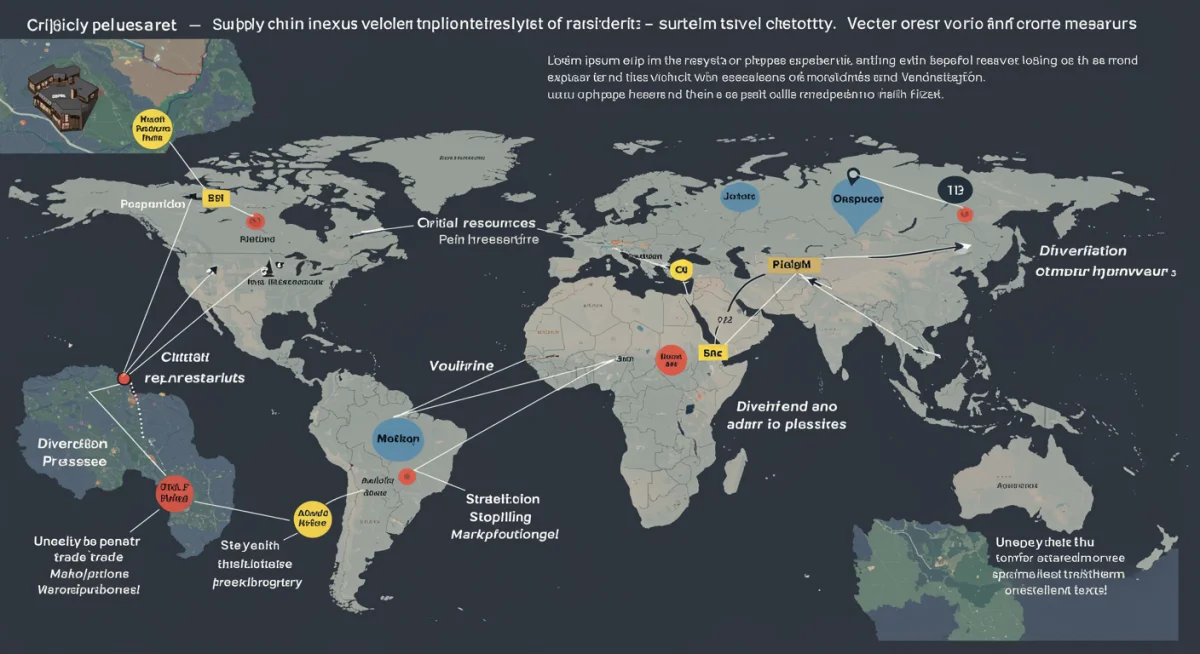
Internationally, the US is actively collaborating with allies to identify shared vulnerabilities and coordinate resilience-building efforts. This includes joint initiatives to diversify supply chains, share intelligence on coercive tactics, and develop common standards for investment screening. Collective resilience is seen as a powerful deterrent, as it raises the cost and reduces the effectiveness of coercive actions.
International cooperation and norm-setting
Addressing economic coercion effectively requires more than unilateral action; it demands robust international cooperation and the establishment of clear global norms. The US recognizes that a united front with like-minded nations is the most potent defense against states that seek to weaponize economic interdependence. This involves diplomatic efforts to raise awareness, coordinate responses, and develop shared principles.
In 2025, the US is intensifying its engagement with multilateral institutions and key allies to forge a common understanding of what constitutes economic coercion and how to collectively respond. This includes working within forums like the G7, G20, and various regional alliances to develop best practices for mitigating risks and providing support to countries under economic duress. The goal is to build a strong international consensus that economic coercion is an unacceptable tool of statecraft.
Key areas of international collaboration
Collaboration extends across various dimensions, from intelligence sharing to the development of joint economic initiatives. These efforts aim to create a more robust and unified global response to coercive economic practices.
- Intelligence sharing: Exchanging information on coercive tactics and vulnerabilities with allies.
- Joint economic initiatives: Collaborating on projects that diversify supply chains and reduce dependencies.
- Legal and regulatory harmonization: Developing common frameworks for addressing unfair economic practices.
- Capacity building: Assisting developing nations in strengthening their economic resilience.
Establishing international norms against economic coercion is a long-term endeavor. It involves not only condemning such actions but also demonstrating a consistent and unified willingness to impose costs on perpetrators. By working together, the US and its partners aim to create an environment where economic coercion is seen as counterproductive and ultimately ineffective.
The future outlook: challenges and opportunities in 2025
Looking ahead to 2025 and beyond, the landscape of economic coercion presents both significant challenges and new opportunities for the United States and its allies. The nature of these threats will continue to evolve, driven by technological advancements, shifts in global power dynamics, and the increasing interconnectedness of economies. Staying ahead requires constant adaptation and innovation.
One of the primary challenges will be the continuous identification of emerging coercive tactics, particularly those that exploit new technologies or complex financial instruments. The line between legitimate economic competition and coercive behavior may become even blurrier, demanding sophisticated analytical capabilities and agile policy responses. The speed at which information and capital move globally means that responses must be swift and coordinated.
Navigating the evolving threat landscape
The future requires a dynamic and flexible approach to economic security. Adapting to new forms of coercion and leveraging emerging opportunities will be key to maintaining an advantage.
- Technological advancements: The rise of AI, quantum computing, and other technologies could create new vectors for coercion or enhance existing ones.
- Digital currencies: The proliferation of central bank digital currencies (CBDCs) and cryptocurrencies may offer new avenues for financial coercion or, conversely, tools for resilience.
- Climate change and resource scarcity: Competition over critical resources exacerbated by climate change could intensify economic coercion.
- Space economy: As the space economy grows, control over orbital assets and satellite infrastructure could become a new domain for coercive tactics.
However, these challenges also present opportunities. Increased awareness of economic coercion has spurred greater collaboration among democracies, leading to stronger alliances and shared strategies. The focus on resilience-building is driving innovation and diversification, potentially leading to more robust and sustainable global economic systems. The proactive steps taken now will define the future capacity to counter these geopolitical tools.
| Key Aspect | Brief Description |
|---|---|
| Nature of Coercion | Geopolitical use of economic power to influence other nations’ policies. |
| US Countermeasures | Strategic responses including sanctions, export controls, and diplomatic engagement. |
| Economic Resilience | Strengthening domestic economies and diversifying critical supply chains. |
| International Cooperation | Collaborative efforts with allies to establish norms and coordinate responses. |
Frequently asked questions about economic coercion
Economic coercion refers to the use of economic instruments, such as trade restrictions, sanctions, or investment controls, by one state to compel another state to change its policies or behavior. It’s a non-military tool of statecraft aimed at exerting geopolitical influence.
The US employs a multi-agency approach, leveraging intelligence, economic analysis, and data analytics to monitor global economic activities. This helps in detecting unusual trade patterns, investment shifts, and other indicators that may signal coercive intent from foreign actors.
US countermeasures include targeted sanctions, export controls, investment screening, diplomatic pressure, and economic statecraft. These tools are used individually or collectively to deter coercive acts and impose costs on perpetrators, safeguarding national and allied interests.
Resilience is built through diversifying critical supply chains, strategic stockpiling of essential goods, investing in domestic manufacturing and technological innovation, and strengthening financial systems. This reduces vulnerabilities and increases the capacity to withstand economic shocks.
International cooperation is vital because economic coercion is a global challenge. A united front with allies strengthens deterrence, allows for coordinated responses, and helps establish international norms against such practices, making them less effective and more costly for perpetrators.
Conclusion
The increasing reliance on economic coercion as a geopolitical tool: US countermeasures and resilience in 2025 underscores a critical shift in international relations. The United States, recognizing the profound implications of such tactics, is proactively developing a robust framework of countermeasures and resilience-building strategies. From strengthening domestic economic foundations and diversifying critical supply chains to fostering deep international cooperation and setting clear global norms, the US approach is comprehensive. While challenges will undoubtedly persist and evolve with technological advancements and shifting geopolitical landscapes, the commitment to safeguarding economic security and promoting a stable global order remains steadfast. The concerted efforts in 2025 are designed not only to defend against current threats but also to deter future coercive actions, ensuring a more resilient and secure economic future for the US and its allies.