
The Rise of Edge AI: Practical Edge AI Solutions for Deploying Smart Devices with 10x Faster Processing in 2026
The technological landscape is undergoing a profound transformation, driven by the relentless pursuit of faster, more efficient, and more intelligent systems. At the heart of this revolution lies Artificial Intelligence, and its cutting-edge evolution, Edge AI. Imagine a world where your devices – from your smartphone to autonomous vehicles, from factory robots to smart home appliances – process information with unprecedented speed, making real-time decisions without relying on distant cloud servers. This isn’t a distant dream; it’s the imminent reality shaped by practical Edge AI Solutions, promising a future where smart devices operate with 10x faster processing by 2026.
For decades, the standard paradigm for AI processing involved sending vast amounts of data to centralized cloud data centers. These powerful servers would then analyze the data, run complex algorithms, and send back insights or commands. While effective, this model introduced inherent limitations: latency, bandwidth constraints, privacy concerns, and increased energy consumption. Enter Edge AI – a paradigm shift that brings AI computation closer to the data source, right to the ‘edge’ of the network.
This comprehensive guide will delve into the intricacies of Edge AI, exploring its foundational principles, the compelling reasons behind its rapid adoption, and the practical Edge AI Solutions that are paving the way for a new era of intelligent devices. We will examine the technological breakthroughs enabling 10x faster processing, dissect real-world applications, and address the challenges and opportunities that lie ahead. Whether you’re a developer, an industry professional, or simply an enthusiast curious about the future of technology, understanding Edge AI is crucial for navigating the next wave of innovation.
Understanding Edge AI: The New Frontier of Intelligence
Before we dive into the practicalities of Edge AI Solutions, let’s establish a clear understanding of what Edge AI entails. Simply put, Edge AI refers to the deployment of artificial intelligence algorithms directly on edge devices rather than relying solely on cloud-based processing. These edge devices can range from industrial sensors and IoT gadgets to smartphones, cameras, and autonomous vehicles. The core idea is to perform data processing, analysis, and decision-making locally, at or near the source where the data is generated.
Cloud AI vs. Edge AI: A Fundamental Shift
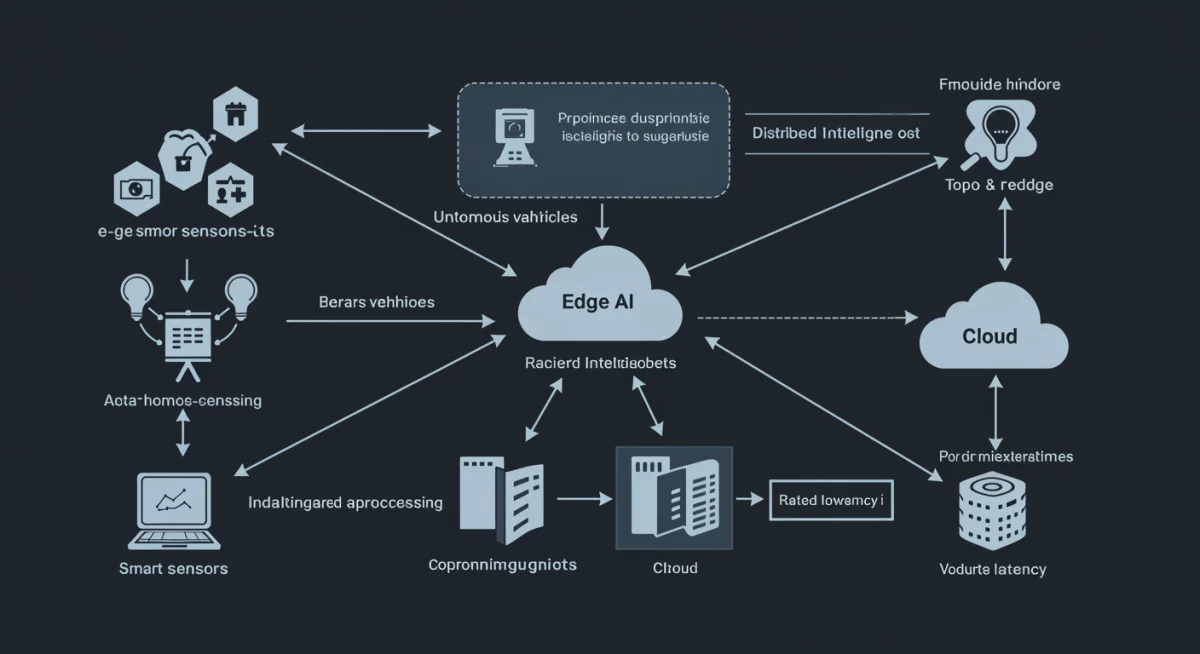
To fully appreciate the significance of Edge AI, it’s essential to compare it with its predecessor, Cloud AI. In a Cloud AI model, data collected by edge devices is transmitted to a central cloud server. This server, equipped with powerful GPUs and extensive storage, handles all the heavy lifting – training machine learning models, inferring insights, and sending commands back to the devices. This centralized approach offers immense computational power and scalability for complex tasks.
However, Cloud AI comes with inherent drawbacks. The reliance on network connectivity introduces latency, making real-time applications challenging. Bandwidth consumption can be significant, especially with high-volume data streams like video. Data privacy and security become paramount concerns as sensitive information travels across networks and resides in third-party data centers. Furthermore, continuous data transmission consumes considerable energy, impacting the battery life of portable devices.
Edge AI elegantly addresses these limitations. By bringing AI inference capabilities to the device itself, it minimizes or eliminates the need to send all data to the cloud. This results in:
- Reduced Latency: Decisions are made almost instantaneously, critical for applications like autonomous driving, robotics, and real-time anomaly detection.
- Lower Bandwidth Usage: Only processed insights or aggregated data are sent to the cloud, significantly reducing network traffic.
- Enhanced Data Privacy and Security: Sensitive data can be processed and stored locally, reducing exposure to cyber threats during transit and in centralized storage.
- Improved Reliability: Edge devices can continue to function and make intelligent decisions even when network connectivity is intermittent or unavailable.
- Lower Energy Consumption: Optimized edge processors can perform inference tasks more efficiently than constantly transmitting data to the cloud.
The shift towards Edge AI is not about replacing Cloud AI entirely, but rather about creating a more distributed and efficient intelligence architecture. Cloud AI will continue to play a vital role in model training, large-scale data analytics, and less time-sensitive tasks. Edge AI, on the other hand, empowers devices with immediate intelligence, forming a powerful symbiotic relationship.
The Drivers Behind 10x Faster Processing in Edge AI by 2026
Achieving a 10x increase in processing speed for smart devices by 2026 through practical Edge AI Solutions is an ambitious yet attainable goal. Several converging technological advancements are making this possible:
1. Specialized AI Hardware (AI Accelerators)
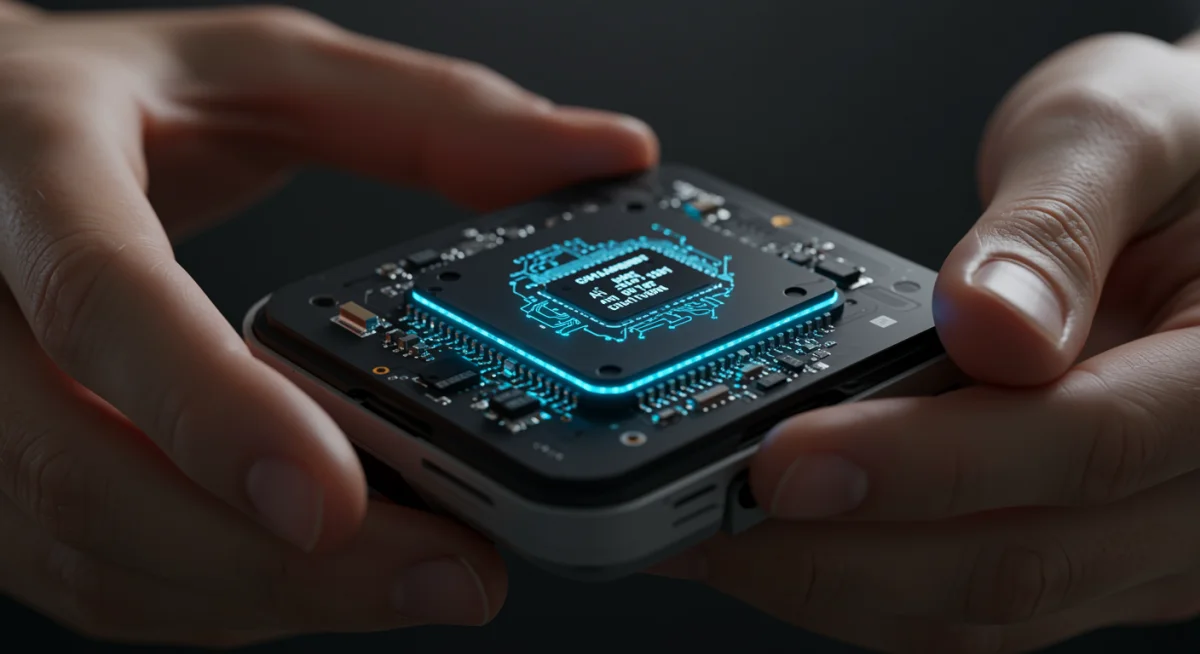
Traditional CPUs and even general-purpose GPUs, while powerful, are not always optimally designed for the specific computations required by AI models, particularly inference tasks. The emergence of specialized AI accelerators is a game-changer for Edge AI. These chips, often called Neural Processing Units (NPUs), Tensor Processing Units (TPUs), or Vision Processing Units (VPUs), are engineered to efficiently handle matrix multiplications and convolutions – the core operations of neural networks.
- Energy Efficiency: Designed for low power consumption, crucial for battery-operated edge devices.
- Optimized Architecture: Parallel processing capabilities tuned for AI workloads, leading to faster inference.
- Smaller Footprint: Can be integrated into compact form factors, enabling deployment in a wide range of devices.
Companies like NVIDIA, Intel, Google, and numerous startups are heavily investing in developing these purpose-built chips, pushing the boundaries of what’s possible at the edge.
2. Model Optimization and Quantization
AI models, especially those trained in the cloud, can be incredibly large and computationally intensive. For efficient deployment on resource-constrained edge devices, these models need to be optimized. This is where techniques like model quantization, pruning, and knowledge distillation come into play:
- Quantization: Reduces the precision of numerical representations (e.g., from 32-bit floating-point to 8-bit integers) without significant loss of accuracy. This dramatically shrinks model size and speeds up inference.
- Pruning: Removes redundant or less important connections (weights) in a neural network, making it smaller and faster.
- Knowledge Distillation: A smaller ‘student’ model learns from a larger, more complex ‘teacher’ model, distilling its knowledge into a more efficient form suitable for edge deployment.
These optimization techniques are fundamental to making complex AI models runnable on edge hardware with limited memory and processing power, directly contributing to faster execution times.
3. Advanced Software Frameworks and Libraries
The development of lightweight and efficient software frameworks and libraries specifically designed for edge deployment is another critical factor. Frameworks like TensorFlow Lite, PyTorch Mobile, and OpenVINO enable developers to convert and optimize their AI models for various edge hardware platforms. These frameworks provide tools for:
- Cross-platform Compatibility: Ensuring models can run on different operating systems and hardware architectures.
- Runtime Optimization: Efficient execution of models on device.
- Simplified Deployment: Streamlining the process of integrating AI into edge applications.
4. Distributed Machine Learning and Federated Learning
While traditional model training often occurs in the cloud, new paradigms like federated learning are emerging as powerful Edge AI Solutions. Federated learning allows models to be trained collaboratively by multiple edge devices, without the need to centralize raw data. Instead, only model updates (weights) are shared and aggregated in the cloud. This approach offers significant advantages:
- Enhanced Privacy: Raw data remains on the device.
- Reduced Data Transfer: Only small model updates are transmitted.
- Continuous Learning: Models can adapt and improve over time based on real-world data from edge devices.
This distributed intelligence contributes to faster, more robust, and more adaptive AI systems at the edge.
Practical Edge AI Solutions Across Industries
The potential applications of Edge AI Solutions are vast and span across virtually every industry. The ability to process data locally and make real-time decisions is unlocking new possibilities and transforming existing operations. Here are some key sectors benefiting from this technology:
1. Automotive and Autonomous Vehicles
Perhaps one of the most impactful applications of Edge AI is in the automotive sector. Autonomous vehicles rely heavily on real-time data processing from numerous sensors (cameras, lidar, radar) to perceive their environment, predict trajectories, and make instantaneous driving decisions. Cloud processing simply isn’t fast enough to ensure safety. Edge AI embedded in the vehicle allows for:
- Real-time Obstacle Detection: Identifying pedestrians, other vehicles, and road signs in milliseconds.
- Path Planning: Instantly calculating optimal routes and maneuvers.
- Driver Monitoring: Detecting driver fatigue or distraction on the fly.
The 10x faster processing promised by 2026 will be crucial for achieving Level 4 and Level 5 autonomy, where vehicles can operate safely without human intervention.
2. Manufacturing and Industrial IoT (IIoT)
In smart factories, Edge AI is revolutionizing operations through predictive maintenance, quality control, and enhanced automation. Industrial IoT devices equipped with Edge AI can:
- Anomaly Detection: Identify equipment malfunctions before they lead to costly downtime.
- Real-time Quality Inspection: Use computer vision to detect defects on production lines with high speed and accuracy.
- Optimized Robotics: Enable robots to adapt to changing conditions and collaborate more effectively.
By processing data at the source, factories can achieve unprecedented levels of efficiency and reduce operational costs.
3. Healthcare and Wearable Devices
Edge AI is transforming healthcare by bringing intelligent analytics closer to the patient. Wearable devices, smart medical sensors, and point-of-care diagnostics are prime beneficiaries:
- Personalized Health Monitoring: Real-time analysis of vital signs, activity levels, and sleep patterns to detect anomalies or predict health issues.
- Remote Patient Monitoring: Enabling constant surveillance of at-risk patients without constant data transmission to the cloud.
- Medical Imaging Analysis: Assisting clinicians with preliminary diagnoses directly on imaging devices, speeding up critical decisions.
The privacy-preserving nature of Edge AI is particularly valuable in healthcare, ensuring sensitive patient data remains localized.
4. Smart Cities and Surveillance
From traffic management to public safety, Edge AI is enhancing the capabilities of smart city infrastructure. Smart cameras and sensors can perform real-time analysis without constantly streaming video to a central server:
- Traffic Flow Optimization: Adjusting traffic signals based on real-time vehicle density.
- Public Safety: Detecting unusual activities, abandoned objects, or identifying individuals of interest while maintaining privacy by processing video frames on the edge and only sending alerts.
- Environmental Monitoring: Analyzing air quality or noise levels locally.
5. Consumer Electronics and Smart Homes
Your everyday devices are becoming smarter and more responsive thanks to Edge AI. Smartphones, smart speakers, security cameras, and home appliances are integrating Edge AI for:
- Voice Assistants: Faster, more accurate local processing of voice commands, improving responsiveness and privacy.
- Facial Recognition: Secure and instant authentication on devices without sending biometric data to the cloud.
- Personalized Experiences: Adapting device behavior based on user habits and preferences learned locally.
The push for 10x faster processing will make these interactions seamless and almost instantaneous, blurring the lines between human intent and device action.
Challenges and Considerations for Deploying Edge AI Solutions
While the benefits of Edge AI are compelling, deploying practical Edge AI Solutions comes with its own set of challenges that need to be carefully addressed:
1. Resource Constraints of Edge Devices
Edge devices typically have limited computational power, memory, and energy resources compared to cloud servers. This necessitates highly optimized AI models and efficient hardware designs. Developers must strike a delicate balance between model accuracy and its footprint on the device.
2. Model Training and Updates
While inference happens at the edge, model training often still requires significant computational resources, usually in the cloud. Keeping edge models updated with the latest data and ensuring their performance doesn’t degrade over time (model drift) requires robust MLOps (Machine Learning Operations) pipelines tailored for edge deployments. Federated learning offers a promising approach here, but its implementation introduces complexity.
3. Data Security and Privacy at the Edge
Although Edge AI enhances data privacy by keeping data local, it also introduces new security challenges. Securing individual edge devices from tampering, ensuring the integrity of models, and protecting local data storage are critical. Robust encryption, secure boot processes, and regular security updates are paramount.
4. Heterogeneous Hardware and Software Environments
The edge ecosystem is incredibly diverse, with a multitude of hardware architectures, operating systems, and software frameworks. Developing and deploying Edge AI Solutions that can run efficiently across this varied landscape requires significant effort and standardization. Compatibility and interoperability are key challenges.
5. Device Management and Orchestration
Managing and orchestrating thousands or even millions of geographically dispersed edge devices, each running potentially different AI models, presents a formidable operational challenge. Tools for remote monitoring, updating, troubleshooting, and scaling edge deployments are essential for successful implementation.
The Road Ahead: Edge AI in 2026 and Beyond
The trajectory of Edge AI is unequivocally upward. By 2026, the promise of 10x faster processing for smart devices through advanced Edge AI Solutions will not just be a benchmark but a foundational expectation. Several trends will shape this future:
1. Ubiquitous AI Accelerators
Specialized AI chips will become commonplace in nearly every new smart device, from the smallest sensors to powerful industrial controllers. These chips will offer even greater energy efficiency and processing density, allowing for more complex AI models to run locally.
2. AI-as-a-Service at the Edge
Cloud providers and specialized vendors will offer more sophisticated AI-as-a-Service platforms that extend directly to the edge. This will simplify the development, deployment, and management of Edge AI applications, making the technology accessible to a wider range of businesses and developers.
3. Enhanced Security and Trust
As Edge AI becomes more pervasive, the focus on security and trust will intensify. Innovations in hardware-level security, secure enclaves, and verifiable AI (ensuring models are fair and transparent) will become standard features.
4. Hyper-Personalization and Contextual Awareness
With faster processing and localized intelligence, edge devices will achieve unprecedented levels of contextual awareness and personalization. They will not only react to commands but anticipate needs, learn from subtle cues, and adapt their behavior to individual users and dynamic environments with remarkable precision.
5. Synergistic Cloud-Edge Architectures
The future is not purely edge or purely cloud, but a seamless integration of both. Hybrid architectures, where the edge handles real-time, privacy-sensitive tasks, and the cloud provides training, aggregation, and deep analytics, will become the norm. This synergy will unlock the full potential of AI across the entire spectrum of computing.
Conclusion: Embracing the Edge for a Smarter Future
The rise of Edge AI represents a pivotal moment in the evolution of artificial intelligence and connected devices. The ability to deploy practical Edge AI Solutions that enable smart devices to process information 10x faster by 2026 is not merely an incremental improvement; it’s a fundamental shift that will redefine our interaction with technology and the world around us.
From enhancing safety in autonomous vehicles to revolutionizing industrial efficiency, from personalizing healthcare to making our homes truly intelligent, Edge AI is the engine driving the next generation of innovation. While challenges remain, the rapid pace of hardware and software development, coupled with innovative deployment strategies, is quickly overcoming these hurdles.
For businesses, developers, and consumers alike, understanding and embracing Edge AI is no longer optional but essential. It’s about harnessing the power of decentralized intelligence to create more responsive, secure, efficient, and ultimately, smarter experiences. The edge is where the future of AI is being built, and the pace of progress indicates that this future is arriving sooner than we think.