Metaverse for Enterprise: 3 Key Business Applications in 2025

The metaverse for enterprise applications is set to transform US corporations by 2025, extending beyond entertainment to deliver immersive solutions for training, collaboration, and customer engagement.
The concept of the metaverse has largely been associated with gaming and social interaction, but its potential for profound business transformation is rapidly gaining traction. For US corporations looking ahead to 2025, understanding and leveraging the metaverse for enterprise applications is no longer just a futuristic vision but an imminent strategic imperative. This immersive digital realm promises to redefine how businesses operate, innovate, and connect with their stakeholders, moving far beyond mere entertainment.
Understanding the enterprise metaverse landscape
The enterprise metaverse represents a persistent, interconnected, and immersive digital environment where businesses can conduct a wide array of activities. It leverages technologies like virtual reality (VR), augmented reality (AR), artificial intelligence (AI), and blockchain to create rich, interactive experiences. Unlike consumer-focused metaverses, its primary goal is to enhance productivity, efficiency, and innovation within a corporate context.
This evolving landscape is not about replacing physical interactions entirely but augmenting them with digital capabilities. Companies are exploring how these virtual spaces can address real-world business challenges, from global team collaboration to intricate product development. The integration of various technologies ensures a robust and versatile platform for diverse corporate needs.
Key components of the enterprise metaverse
To truly grasp the capabilities of the enterprise metaverse, it’s essential to understand its foundational elements. These components work in synergy to create a seamless and functional digital environment for businesses.
- Virtual and augmented reality hardware: Devices like VR headsets and AR glasses provide the necessary interface for immersive experiences.
- Digital twins: Virtual replicas of physical assets, processes, or systems enable real-time monitoring and simulation.
- Blockchain and NFTs: These technologies facilitate secure digital ownership, transactions, and identity management within the metaverse.
- AI and machine learning: Powering intelligent agents, data analysis, and personalized experiences within the virtual space.
The enterprise metaverse is not a singular platform but an ecosystem of interconnected technologies and virtual worlds. Its adoption will necessitate significant investment in infrastructure, talent, and strategic planning, but the potential returns in terms of efficiency and competitive advantage are substantial. US corporations are already beginning to pilot solutions that demonstrate this transformative power.
Application 1: immersive training and development
One of the most compelling enterprise applications of the metaverse lies in its capacity to revolutionize corporate training and development. Traditional training methods, while effective to a degree, often fall short in providing hands-on, risk-free experiences for complex or hazardous tasks. The metaverse offers an unparalleled solution by creating highly realistic and interactive training simulations.
Imagine new employees undergoing orientation in a virtual corporate campus, or manufacturing workers practicing intricate assembly procedures on a digital twin of a machine. These immersive environments allow for repeated practice, immediate feedback, and the ability to simulate rare or dangerous scenarios without real-world consequences. This leads to faster skill acquisition, higher retention rates, and a safer training environment.
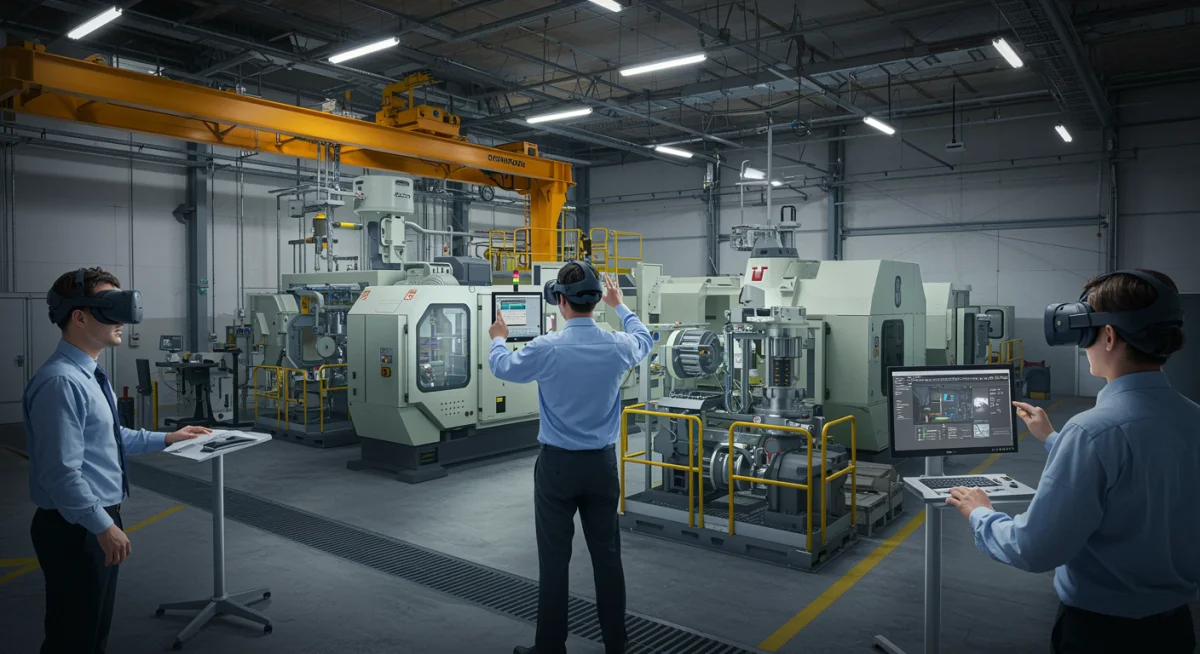
Companies can tailor training modules to specific roles and industries, ensuring that each employee receives relevant and engaging instruction. The ability to track progress and performance within these virtual environments also provides valuable data for optimizing training programs.
Benefits of metaverse-driven training
The advantages of adopting metaverse technology for training extend beyond just novelty. There are tangible benefits that directly impact a corporation’s bottom line and operational efficacy.
- Enhanced engagement and retention: Immersive experiences are inherently more engaging than traditional methods, leading to better knowledge retention.
- Cost reduction: Eliminating the need for physical setups, travel, and material waste for training, especially for large, distributed workforces.
- Risk mitigation: Practicing hazardous procedures in a safe, virtual environment reduces the chances of accidents and errors in real-world operations.
- Scalability and consistency: Training programs can be easily scaled to accommodate any number of employees globally, ensuring a consistent learning experience for all.
The adoption of immersive training platforms signifies a paradigm shift from passive learning to active, experiential engagement. By 2025, many US corporations will likely integrate these metaverse solutions into their standard training protocols, seeing them as essential tools for workforce development and operational excellence. This form of training is particularly beneficial for industries requiring precision and safety, such as healthcare, manufacturing, and aviation.
Application 2: virtual collaboration and remote work enhancement
The global shift towards remote and hybrid work models has underscored the need for more effective virtual collaboration tools. While video conferencing has become ubiquitous, it often lacks the spontaneity, spatial awareness, and non-verbal cues crucial for truly effective teamwork. The metaverse offers a compelling evolution, providing immersive virtual workspaces that bridge the gap between physical and digital interaction.
Imagine teams meeting in a persistent virtual office, where avatars can spontaneously interact, share ideas on 3D whiteboards, or review complex designs together in a shared digital space. This goes beyond simple screen sharing, allowing for a sense of presence and co-creation that mimics in-person interactions more closely. Such environments can foster stronger team cohesion and communication, regardless of geographical location.
These virtual collaboration platforms can host large-scale meetings, conferences, and even social events, creating a sense of community that is often challenging to cultivate in purely 2D virtual settings. The ability to customize these spaces to reflect corporate culture or project specific needs further enhances their utility.
Transforming remote work dynamics
The implications of metaverse-enabled collaboration for remote work are vast, promising to redefine how distributed teams function and innovate.
- Enhanced presence: Avatars and spatial audio create a stronger sense of being together in the same room, improving communication flow.
- Shared immersive environments: Teams can collaboratively interact with 3D models, data visualizations, and digital twins, making complex problem-solving more intuitive.
- Reduced travel needs: High-fidelity virtual meetings and events can significantly cut down on business travel costs and environmental impact.
- Global talent access: Corporations can seamlessly integrate talent from anywhere in the world, fostering diverse teams and broader perspectives.
By 2025, US corporations will increasingly leverage these metaverse capabilities to create more engaging and productive remote work experiences. This will not only improve employee satisfaction but also unlock new levels of innovation by facilitating richer, more intuitive collaborative processes. The enterprise metaverse will become a cornerstone for companies committed to flexible and globally distributed workforces.
Application 3: innovative customer engagement and marketing
Beyond internal operations, the metaverse presents unprecedented opportunities for US corporations to redefine customer engagement and marketing strategies. Traditional digital marketing, while effective, often lacks the immersive and interactive qualities that truly capture consumer attention. The metaverse allows brands to create unique, experiential interactions that build deeper connections with their audience.
Businesses can establish virtual storefronts, host product launches in immersive digital arenas, or create branded experiences where customers can interact with products and services in 3D. This goes beyond passive viewing; customers can virtually try on clothes, test drive cars, or explore real estate properties, receiving a richer sense of the product before making a purchase. The potential for personalized experiences is immense, allowing brands to cater to individual preferences in a highly engaging manner.
Furthermore, the metaverse enables new forms of advertising and content creation, where brand stories can be told through interactive narratives and gamified experiences. This shift from transactional interactions to experiential engagement is a powerful differentiator in a competitive market.
New frontiers in customer experience
The impact of the metaverse on customer engagement is poised to be transformative, offering novel ways to attract, retain, and understand consumers.
- Immersive brand experiences: Creating virtual worlds or interactive spaces where customers can explore and engage with a brand’s story and products.
- Virtual product trials: Allowing customers to ‘try before they buy’ in a realistic digital environment, enhancing confidence and reducing returns.
- New revenue streams: Selling virtual goods, NFTs, or premium access to exclusive metaverse experiences.
- Enhanced data insights: Collecting rich behavioral data on customer interactions within virtual spaces to refine marketing strategies.
By 2025, leading US corporations will be at the forefront of leveraging the metaverse to build loyal customer bases and generate new revenue streams. This innovative approach to marketing and sales will not only differentiate brands but also provide invaluable insights into consumer preferences and behaviors within a dynamic, interactive environment. The metaverse is set to become a vital channel for customer interaction, complementing and evolving traditional digital touchpoints.
Challenges and considerations for adoption
While the potential of the metaverse for enterprise applications is immense, its widespread adoption by US corporations is not without challenges. Navigating these hurdles will be crucial for successful integration and maximizing the benefits of this emerging technology. Companies must approach the metaverse with a clear strategy, understanding both its opportunities and its complexities.
One significant challenge is the substantial investment required in terms of hardware, software development, and specialized talent. Building and maintaining immersive virtual environments demands expertise in 3D modeling, game development, AI, and cybersecurity. Furthermore, interoperability between different metaverse platforms remains a hurdle, potentially fragmenting experiences and data.
Data privacy and security are also paramount concerns. As more sensitive corporate data and personal information are processed within virtual spaces, robust security protocols and clear ethical guidelines will be essential to build trust and ensure compliance. Addressing these challenges proactively will be key to unlocking the full potential of the enterprise metaverse.
Navigating the path to metaverse integration
To successfully integrate metaverse solutions, corporations must adopt a multi-faceted approach that addresses technological, operational, and human factors.
- Strategic planning: Developing a clear roadmap that aligns metaverse initiatives with overarching business goals and objectives.
- Talent development: Investing in training existing employees and recruiting new talent with expertise in metaverse technologies.
- Interoperability standards: Advocating for and adopting open standards to ensure seamless interaction across different virtual platforms.
- Robust security and privacy: Implementing advanced cybersecurity measures and adhering to strict data protection regulations.
The journey into the enterprise metaverse will be iterative, requiring continuous learning and adaptation. Corporations that embark on this path with a well-defined strategy and a commitment to innovation will be best positioned to reap the rewards. The challenges, while significant, are outweighed by the transformative potential that the metaverse offers for business growth and competitive advantage in the coming years.
Future outlook: beyond 2025
Looking beyond 2025, the evolution of the metaverse for enterprise applications is expected to accelerate, leading to even more sophisticated and integrated solutions. The initial applications discussed will mature, becoming standard practice in many industries, and new, unforeseen uses will undoubtedly emerge as the technology progresses and user familiarity grows. The convergence of AI, blockchain, and increasingly powerful computing will create an even more seamless and intelligent digital layer for business operations.
We can anticipate a future where the physical and digital worlds are virtually indistinguishable in many corporate contexts. Digital twins will become more prevalent, not just for individual assets but for entire factories, supply chains, and urban environments, enabling real-time management and predictive analytics on an unprecedented scale. This will lead to hyper-efficient operations and proactive problem-solving.
The regulatory landscape will also evolve, with governments and international bodies establishing frameworks for data governance, digital identity, and intellectual property within the metaverse. This will provide a more stable and secure environment for businesses to operate and innovate. The long-term vision is one of a fully integrated, pervasive enterprise metaverse that fundamentally reshapes global commerce and collaboration.
The pervasive impact on industries
The long-term impact of the enterprise metaverse will be felt across virtually every industry, from highly technical sectors to service-oriented businesses.
- Manufacturing: Enhanced digital twin capabilities for product design, prototyping, and remote maintenance.
- Healthcare: Immersive surgical training, patient simulations, and remote diagnostics and therapy.
- Retail: Personalized shopping experiences, virtual showrooms, and direct-to-avatar commerce.
- Education: Interactive learning environments and virtual field trips for corporate training and academic institutions.
The metaverse will not just change how businesses operate, but how they interact with their entire ecosystem—employees, customers, suppliers, and partners. Corporations that invest early in understanding and developing their metaverse strategies will gain a significant competitive edge, positioning themselves as leaders in the next era of digital transformation. The journey has just begun, but the destination promises a future brimming with innovation and opportunity.
| Key Application | Brief Description |
|---|---|
| Immersive Training | Virtual simulations for hands-on, risk-free employee skill development and enhanced knowledge retention. |
| Virtual Collaboration | Persistent virtual workspaces enabling enhanced presence and co-creation for remote and hybrid teams. |
| Customer Engagement | Interactive brand experiences, virtual product trials, and new digital revenue streams for consumers. |
Frequently asked questions (FAQ) about the enterprise metaverse
The primary difference lies in purpose. Consumer metaverses focus on entertainment, social interaction, and personal experiences, while enterprise metaverses are designed to enhance business operations, productivity, training, and collaboration within a corporate context.
Key foundational technologies include virtual reality (VR) and augmented reality (AR) for immersive interfaces, artificial intelligence (AI) for intelligent agents, digital twins for virtual representations, and blockchain for secure digital ownership and transactions.
The metaverse enhances training by offering immersive, risk-free simulations for complex tasks, leading to faster skill acquisition, higher knowledge retention, and significant cost reductions compared to traditional hands-on methods.
Virtual collaboration in the metaverse fosters a stronger sense of presence, enables intuitive co-creation with 3D assets, reduces travel needs, and allows for seamless integration of global talent, enhancing overall team productivity and innovation.
Corporations face challenges such as significant investment costs, the need for specialized talent, interoperability issues between platforms, and critical concerns regarding data privacy and cybersecurity within these expansive virtual environments.
Conclusion
The metaverse is rapidly evolving beyond its gaming origins to become a transformative force for US corporations, offering tangible benefits across various business functions. By 2025, immersive training, enhanced virtual collaboration, and innovative customer engagement will be three pivotal applications driving significant value. While challenges related to investment, talent, and security exist, the strategic advantages of early adoption are clear. Corporations that embrace the enterprise metaverse will not only optimize operations and foster innovation but also redefine their market presence, securing a competitive edge in the digital economy of the future.