The Middle East is currently a dynamic geopolitical landscape, where seven key scenarios are likely to unfold by 2025, profoundly shaping US interests, regional stability, and global energy markets.
The Middle East, a region perpetually at the crossroads of history and global power, is once again poised for significant transformations. As we look towards 2025, understanding the intricate web of regional dynamics and international interventions becomes paramount. This article delves into The Middle East in Flux: 7 Geopolitical Scenarios and US Interests in 2025, offering a comprehensive analysis of the forces at play and their potential impact on American foreign policy and strategic objectives.
The evolving US role and regional power vacuums
The United States’ role in the Middle East has undergone a notable shift in recent years, moving from direct military interventions to a more nuanced approach focused on strategic partnerships and counter-terrorism efforts. This recalibration has, however, created perceived power vacuums that regional actors and other global powers are eager to fill, leading to increased competition and complexity.
Many regional states, including Saudi Arabia, the UAE, and Turkey, are asserting greater independence in their foreign policy. They are diversifying alliances and pursuing their own strategic agendas, sometimes diverging from traditional US expectations. This dynamic environment necessitates a flexible and adaptive US strategy.
Redefining US engagement
The US is increasingly prioritizing diplomacy and economic leverage over military might, seeking to foster stability through indirect means. This includes supporting regional security initiatives and promoting economic development.
- Focus on counter-terrorism and preventing resurgence of extremist groups.
- Strengthening diplomatic ties with key partners, such as Israel and Gulf states.
- Promoting economic investment and trade to foster regional stability.
- Limiting direct military presence while maintaining strategic deterrence.
The reduction in direct US military footprint has led to questions about commitment, prompting allies to explore alternative security arrangements and partnerships with emerging global powers. This necessitates a clear communication strategy from Washington to reassure partners and deter adversaries.
The evolving US role in the Middle East is a delicate balancing act, aiming to protect vital interests without getting entangled in every regional conflict. The challenge lies in maintaining influence and ensuring stability amidst a landscape of shifting alliances and assertive regional powers.
Scenario 1: Escalating regional proxy conflicts
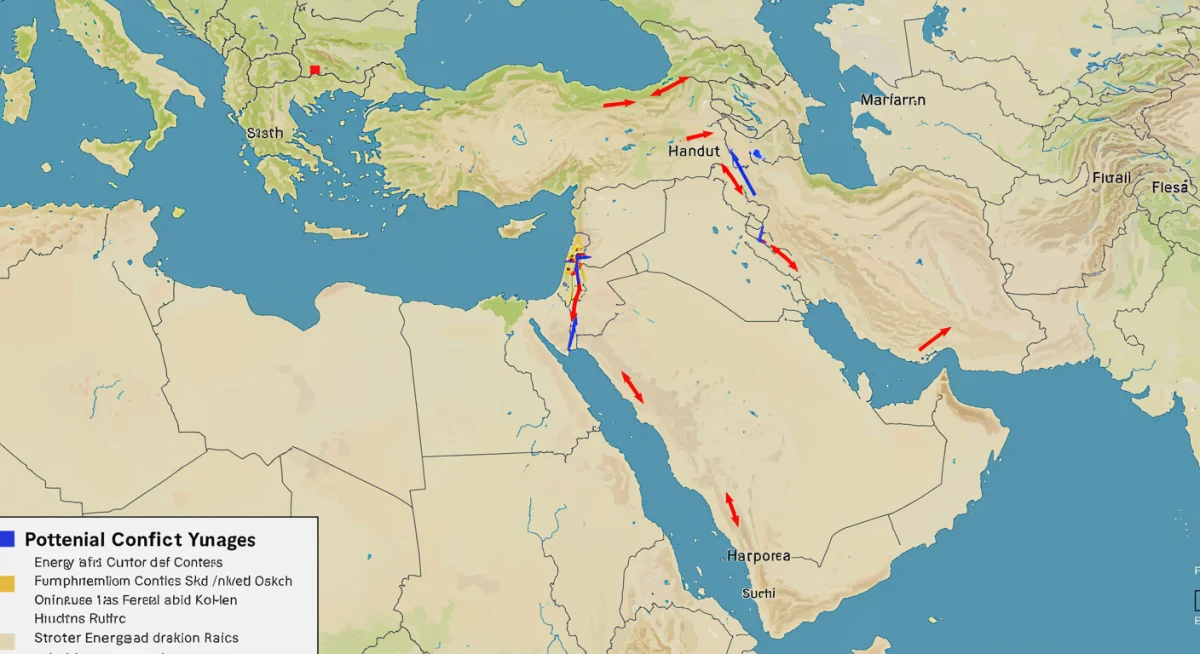
One of the most concerning scenarios for 2025 involves a significant escalation of existing proxy conflicts across the Middle East. These conflicts, often fueled by geopolitical rivalries between Iran and its adversaries, manifest in various forms, from Yemen to Lebanon and Iraq.
The ongoing competition for influence between regional hegemons could intensify, drawing in non-state actors and further destabilizing fragile states. This scenario poses substantial risks to global energy supplies and international shipping lanes.
Key flashpoints and actors
Several areas are particularly vulnerable to increased proxy warfare. Yemen remains a critical humanitarian crisis and a battleground for regional powers. Lebanon’s internal political fragility makes it susceptible to external manipulation, while Iraq continues to grapple with sectarian tensions and the lingering threat of extremist groups.
- Yemen: Continued civil war with regional backing, impacting Red Sea security.
- Lebanon: Deepening economic crisis and political deadlock, increasing Hezbollah’s influence.
- Iraq: Persistent sectarian divisions and external interference, hindering stability.
- Syria: Fragmented control and ongoing international involvement, prolonging conflict.
The US interest in this scenario centers on preventing these conflicts from spiraling out of control, which could lead to broader regional wars, disrupt oil markets, and create new havens for terrorist organizations. Diplomatic efforts and targeted sanctions are key tools to mitigate these risks, alongside supporting local governance and humanitarian aid.
An escalation of proxy conflicts would severely test the limits of regional stability and global diplomacy. The interconnectedness of these conflicts means a flare-up in one area could quickly trigger instability elsewhere, requiring coordinated international responses to prevent widespread chaos.
Scenario 2: Iran nuclear deal and regional reactions
The status of the Iran nuclear deal, or any potential renegotiation, remains a pivotal factor shaping the Middle East’s geopolitical trajectory. By 2025, the outcome of these discussions will significantly influence regional security dynamics and US foreign policy.
Should a revived or new agreement emerge, it could temper regional anxieties, though skepticism will likely persist among Gulf states and Israel. Conversely, a failure to reach an accord might accelerate Iran’s nuclear program, leading to heightened tensions and potential military confrontations.
The US faces a complex challenge balancing its non-proliferation goals with the need to de-escalate regional tensions and reassure allies. Any path forward must consider the perspectives of all regional stakeholders, not just Tehran and Washington.
Implications of a revived deal
A successful nuclear deal could lead to a temporary de-escalation of tensions, allowing for more diplomatic engagement. However, concerns about Iran’s ballistic missile program and regional behavior would likely remain.
- Potential easing of sanctions, boosting Iran’s economy.
- Reduced immediate risk of nuclear proliferation.
- Continued regional mistrust from Gulf states and Israel.
- Focus shifts to Iran’s non-nuclear regional activities.
Should negotiations fail, the region could face increased uncertainty, with Iran potentially accelerating its nuclear activities. This would necessitate a robust US and international response, possibly involving stricter sanctions and increased military posturing.
The Iran nuclear deal scenario highlights the delicate balance between non-proliferation, regional stability, and the complex web of alliances and rivalries in the Middle East. The US strategy must be carefully calibrated to navigate these interconnected challenges.
Scenario 3: Shifting alliances and new regional blocs
The Middle East is witnessing a notable trend towards the formation of new alliances and regional blocs, often driven by shared security concerns or economic interests, sometimes independent of traditional US influence. This scenario could see a reordering of regional power dynamics by 2025.
States are increasingly pragmatic, forming partnerships that serve their immediate interests, even if those interests diverge from historical alignments. This flexibility can lead to both opportunities for stability and new sources of friction.
Emergence of new partnerships
The Abraham Accords marked a significant shift, normalizing relations between Israel and several Arab nations. This has opened doors for new security and economic cooperation, potentially creating a counter-balance to Iranian influence.
- Increased cooperation between Israel and Gulf states on security and technology.
- Turkey’s assertive foreign policy leading to new partnerships and rivalries.
- China and Russia expanding their economic and security footprints in the region.
- Regional states seeking greater autonomy from external powers.
The US interest lies in understanding and influencing these evolving alliances. While some new blocs may align with US interests, others could challenge established security frameworks. Washington must adapt its diplomatic efforts to engage with these new configurations effectively.
The formation of new regional blocs underscores a more multipolar Middle East. The US needs to navigate this complex landscape by fostering dialogue, promoting inclusive security frameworks, and adapting its strategic partnerships to reflect the new realities on the ground.
Scenario 4: Economic diversification and energy transition
The global push for energy transition and the region’s efforts towards economic diversification are creating profound shifts in the Middle East. By 2025, these trends will significantly impact the geopolitical landscape, particularly for oil-rich nations.
Many Gulf states are actively investing in non-oil sectors, renewable energy, and technology to secure their long-term economic future. This diversification aims to reduce reliance on hydrocarbons and create more sustainable economies.
Impact on global energy markets
While the world transitions to cleaner energy, the Middle East remains a crucial supplier of oil and gas. Any disruptions in this region can have immediate and severe global economic consequences. The balance between maintaining current production and investing in future energy sources is delicate.
- Saudi Arabia’s Vision 2030 and UAE’s economic transformation initiatives.
- Increased investment in renewable energy projects across the GCC.
- Potential for new energy export routes and partnerships.
- Challenges of climate change impacting water scarcity and agricultural viability.
US interests in this scenario are multifaceted. Ensuring stable energy markets remains a priority, while also encouraging regional partners to invest in sustainable energy solutions and diversify their economies. This supports long-term stability and reduces the region’s vulnerability to oil price fluctuations.
The economic diversification and energy transition scenario presents both opportunities and challenges. The US must engage with Middle Eastern partners to support their economic reforms, promote sustainable development, and ensure global energy security during this transitional period.
Scenario 5: Internal stability and governance challenges
Many Middle Eastern nations continue to face significant internal stability and governance challenges, which could intensify by 2025. Issues such as youth unemployment, corruption, and demands for greater political participation can lead to social unrest and destabilize regimes.
The lingering effects of the Arab Spring, coupled with demographic pressures and economic disparities, create fertile ground for internal dissent. Governments are constantly balancing reforms with maintaining authority, often with varying degrees of success.
Addressing underlying grievances
Governments are increasingly aware of the need to address these underlying grievances through social and economic reforms. However, the pace and scope of these reforms often fall short of public expectations, leading to continued frustration.
- High youth unemployment rates contributing to social discontent.
- Corruption and lack of transparency eroding public trust.
- Demands for greater political freedoms and representation.
- Impact of climate change on food and water security, exacerbating existing tensions.
The US has a keen interest in promoting good governance and stability within these nations. Instability can create vacuums exploited by extremist groups or lead to humanitarian crises requiring international intervention. Supporting civil society and encouraging inclusive reforms are key aspects of US policy.
The scenario of internal stability and governance challenges highlights the importance of domestic factors in shaping regional geopolitics. The US must support initiatives that foster resilient societies and accountable governments to ensure long-term stability in the Middle East.
Scenario 6: Great power competition in the region
The Middle East is increasingly becoming an arena for great power competition, with China and Russia expanding their influence alongside the traditional US presence. By 2025, this competition could intensify, leading to a more complex and multipolar regional environment.
Both China and Russia offer alternative models of engagement, often without the political conditionalities that sometimes accompany Western partnerships. This appeals to some regional states seeking to diversify their international relations.
Expanding influence of China and Russia
- China’s growing economic investment and trade dominance.
- Russia’s military presence and strategic partnerships.
- Competition for arms sales and security cooperation.
- Implications for regional states balancing relationships with multiple global powers.
US interests are to counter malign influence and ensure that its allies are not drawn into partnerships that undermine regional security or US strategic objectives. This requires robust diplomatic engagement, economic incentives, and maintaining a credible security presence.
The great power competition scenario underscores the need for the US to articulate a compelling vision for its continued engagement in the Middle East. It must demonstrate its value as a reliable partner while adapting to a more competitive international landscape.
Scenario 7: Technological advancements and cyber warfare
The rapid advancement of technology and the growing threat of cyber warfare represent a significant geopolitical scenario for the Middle East by 2025. Nations in the region are both embracing new technologies for development and grappling with their security implications.
Cyber attacks on critical infrastructure, disinformation campaigns, and the use of AI in military applications are becoming more prevalent. This creates new vulnerabilities and challenges for regional stability and international security.
Cybersecurity threats and opportunities
Governments and critical industries are increasingly targets of sophisticated cyber attacks, often attributed to state-sponsored actors. Protecting digital infrastructure is paramount for economic stability and national security.
- Increased investment in cybersecurity infrastructure and capabilities.
- Rise of state-sponsored cyber espionage and attacks.
- Potential for AI and advanced surveillance technologies to reshape warfare.
- Challenges of regulating emerging technologies and preventing their misuse.
US interests include collaborating with regional partners to enhance cybersecurity capabilities, sharing intelligence, and developing international norms for responsible state behavior in cyberspace. Preventing the proliferation of offensive cyber capabilities is also a critical concern.
The scenario of technological advancements and cyber warfare emphasizes the evolving nature of threats in the Middle East. The US must lead efforts to build a secure digital environment, fostering both innovation and resilience against malicious cyber activities.
| Key Scenario | Brief Description |
|---|---|
| Proxy Conflicts | Escalation of regional proxy wars, notably in Yemen, Lebanon, and Iraq, threatening stability and global energy. |
| Iran Nuclear Deal | Uncertainty around the nuclear agreement’s fate, impacting proliferation risks and regional tensions. |
| Shifting Alliances | Emergence of new regional blocs and partnerships, redefining traditional power dynamics. |
| Great Power Competition | Intensified rivalry between US, China, and Russia for influence and strategic positioning in the region. |
Frequently asked questions about Middle East geopolitics
Primary US interests include ensuring regional stability, preventing the proliferation of weapons of mass destruction, combating terrorism, securing global energy flows, and protecting key allies. These interests guide diplomatic and security strategies in the face of evolving threats.
A successful nuclear deal could de-escalate immediate tensions regarding Iran’s nuclear program. Conversely, its failure might lead to increased proliferation risks and heightened military posturing, potentially sparking broader conflicts and instability across the region.
Economic diversification aims to reduce reliance on oil and gas, fostering more stable and sustainable economies. This shift can influence regional power dynamics, create new international partnerships, and reduce vulnerabilities to global energy market fluctuations, impacting long-term stability.
Great power competition, primarily between the US, China, and Russia, is creating a multipolar environment. It leads to regional states diversifying their alliances, increased arms sales, and competition for economic influence, complicating traditional security architectures and US strategic planning.
Internal challenges include high youth unemployment, endemic corruption, demands for greater political participation, and the increasing impact of climate change on resources. These issues can fuel social unrest and threaten the stability of governments, requiring comprehensive reform efforts.
Conclusion
The Middle East in 2025 presents a complex and dynamic geopolitical landscape, shaped by a confluence of internal pressures, regional rivalries, and global power competition. The seven scenarios outlined underscore the region’s volatility and its profound implications for US interests. Navigating these challenges will require a sophisticated and adaptable US foreign policy, balancing diplomatic engagement with strategic deterrence, and fostering partnerships that promote long-term stability and security. Understanding these potential futures is not just an academic exercise; it is an imperative for effective policymaking in a world where the Middle East remains central to global affairs.