Proxy Warfare Tactics: Shaping US Counter-Strategies for the Next 12 Months
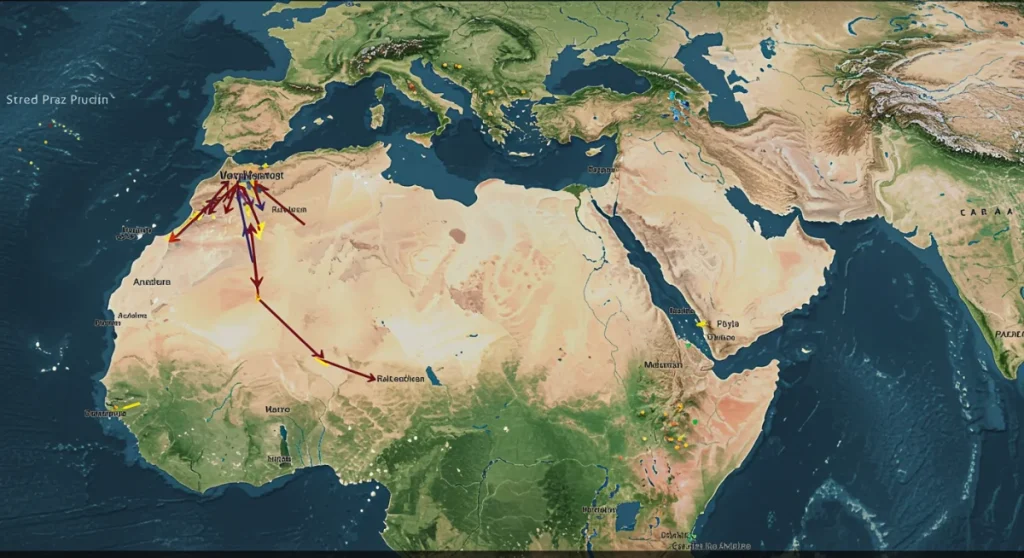
Recent intelligence on proxy warfare tactics in two regional conflicts is profoundly influencing US counter-strategies, necessitating adaptive approaches to address evolving geopolitical challenges over the next 12 months.
The geopolitical landscape is in constant flux, with indirect conflicts becoming increasingly prevalent. Understanding the latest intelligence on proxy warfare tactics in key regional flashpoints is crucial for grasping how the United States is recalibrating its defense and foreign policy for the coming year.
The evolving nature of proxy warfare
Proxy warfare, a conflict where major powers instigate or support belligerents without directly engaging each other, has always been a complex aspect of international relations. However, recent developments suggest a significant evolution in these tactics, driven by technological advancements, asymmetric capabilities, and a shifting global power balance. This evolution demands a nuanced understanding from policymakers and strategists.
In today’s interconnected world, proxy conflicts are rarely isolated. They often intersect with broader geopolitical rivalries, economic interests, and ideological clashes, creating a web of intricate dependencies and unpredictable outcomes. The use of non-state actors, cyber warfare, and disinformation campaigns has further blurred the lines between traditional conflict and indirect engagement.
Technological integration in proxy conflicts
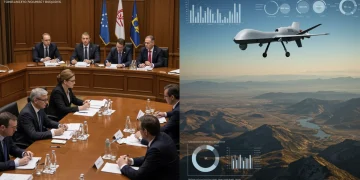
One of the most striking changes is the integration of advanced technology. Drones, sophisticated surveillance systems, and encrypted communication channels are now standard tools for proxy forces. This technological edge allows smaller, less conventional groups to exert significant influence and challenge more established military powers, fundamentally altering the battlefield dynamics.
- Drone warfare: Unmanned aerial vehicles provide reconnaissance, precision strikes, and logistical support, often with deniability for state sponsors.
- Cyber operations: Disrupting critical infrastructure, spreading propaganda, and stealing sensitive information are integral parts of modern proxy conflicts.
- Advanced weaponry: State sponsors increasingly supply sophisticated arms, including anti-tank and anti-air systems, empowering proxy groups to inflict greater damage.
- Information warfare: Social media and digital platforms are weaponized to shape narratives, recruit fighters, and destabilize adversaries from within.
The implications of this technological leap are profound. It enables proxy actors to operate with greater autonomy and lethality, making them more effective instruments of state policy while simultaneously complicating efforts to de-escalate conflicts or enforce international norms. The challenge for the US lies in developing counter-strategies that can effectively neutralize these technologically enhanced threats without direct military intervention.
Regional conflict 1: The Middle East’s persistent proxy battles
The Middle East remains a crucible of proxy warfare, characterized by long-standing rivalries and shifting alliances. Recent intelligence highlights how external powers continue to leverage local actors to advance their strategic interests, often exacerbating humanitarian crises and regional instability. The intricate web of state and non-state actors makes identifying and countering these tactics particularly challenging for the US.
In one prominent conflict, a major regional power has intensified its support for a non-state armed group, providing advanced weaponry, training, and financial aid. This support has enabled the proxy group to expand its territorial control and launch cross-border attacks, directly threatening US allies and strategic interests in the region. The tactics employed by this proxy include asymmetric warfare, targeting critical infrastructure, and exploiting local grievances to gain popular support.
Analyzing the evolving threat landscape
Intelligence reports indicate a significant upgrade in the proxy group’s capabilities, including the deployment of precision-guided munitions and sophisticated improvised explosive devices (IEDs). These advancements suggest a level of state sponsorship that goes beyond mere logistical support, pointing to a deliberate strategy to project power indirectly and challenge regional stability without direct confrontation.
- Targeted assassinations: High-value targets are increasingly being eliminated through sophisticated methods, often with external intelligence support.
- Naval harassment: Disrupting maritime trade routes and targeting commercial vessels have become tactics to exert economic pressure and destabilize shipping.
- Cross-border missile attacks: Long-range missiles and drones are used to strike targets in neighboring countries, testing regional defenses and international resolve.
- Exploitation of local grievances: Proxy groups skillfully manipulate ethnic, sectarian, and economic resentments to recruit fighters and maintain local legitimacy.
The US response to these evolving tactics has involved a multi-faceted approach, combining diplomatic pressure, targeted sanctions, and enhanced security assistance to regional partners. However, the indirect nature of the conflict and the deniability afforded to state sponsors make it difficult to achieve decisive outcomes. The challenge is to disrupt the flow of support to these proxy groups without escalating the conflict into a broader regional confrontation.
Regional conflict 2: Eastern Europe’s hybrid warfare frontier
Eastern Europe presents a different, yet equally complex, front for proxy warfare, often characterized by hybrid tactics that blend conventional military actions with cyberattacks, disinformation campaigns, and economic coercion. Recent intelligence indicates a sustained effort by a major power to destabilize neighboring countries and undermine their sovereignty through indirect means, posing a direct challenge to NATO’s eastern flank and US interests in the region.
In this conflict, the aggressor state utilizes a combination of overt and covert operations. Paramilitary groups, often referred to as “little green men,” operate without clear insignia, sowing confusion and denying direct state involvement. These actions are frequently preceded or accompanied by large-scale cyberattacks targeting critical infrastructure, government networks, and media outlets, designed to disrupt, demoralize, and misinform the population.
Countering disinformation and cyber threats
A key element of these tactics is the extensive use of disinformation and propaganda. State-sponsored media outlets and troll farms flood social media with false narratives, aiming to erode public trust, create social divisions, and delegitimize pro-Western governments. This information warfare is highly sophisticated, often tailored to specific demographics and designed to exploit existing societal tensions.
- Cyber espionage: Infiltrating government systems to steal sensitive data and influence policy decisions.
- Critical infrastructure attacks: Targeting energy grids, transportation networks, and communication systems to cause widespread disruption.
- Election interference: Manipulating public opinion and electoral processes through sophisticated online campaigns.
- Support for separatist movements: Providing material and ideological backing to groups seeking to break away from sovereign nations.
The US and its allies are responding by strengthening cyber defenses, enhancing intelligence sharing, and supporting independent media initiatives to counter disinformation. Furthermore, military exercises and increased troop deployments in the region serve as a deterrent against further aggression. The long-term strategy involves building resilience within affected nations and fostering stronger alliances to resist external pressures.
US counter-strategies: Adaptation and innovation
The evolving nature of proxy warfare necessitates a continuous adaptation of US counter-strategies. Traditional military responses are often insufficient or counterproductive in conflicts characterized by deniability, hybrid tactics, and non-state actors. Instead, the US is focusing on a more integrated approach that combines diplomatic, economic, informational, and military tools.
One core component of this adaptation is enhanced intelligence gathering and analysis. Understanding the intricate networks of proxy groups, their funding sources, command structures, and technological capabilities is paramount. This requires closer collaboration with international partners and the development of advanced analytical tools to process vast amounts of data from diverse sources.
Strengthening partnerships and capacity building
Building the capacity of local partners is another critical element. By providing training, equipment, and intelligence support, the US aims to empower countries to defend themselves against proxy threats, reducing the need for direct US military involvement. This approach fosters long-term stability and aligns with the principle of shared responsibility.
- Security sector reform: Assisting partner nations in developing professional, accountable security forces capable of countering diverse threats.
- Counter-terrorism cooperation: Sharing intelligence and coordinating operations against extremist groups that often serve as proxies.
- Economic development initiatives: Addressing underlying grievances that make populations vulnerable to recruitment by proxy groups.
- Diplomatic engagement: Working with international bodies and allies to isolate state sponsors of proxy warfare and impose costs.
Innovation in military doctrine and technology is also crucial. This includes developing new capabilities for countering drones, improving cyber warfare defenses, and enhancing the ability to detect and attribute disinformation campaigns. The goal is to stay ahead of adversaries who are constantly seeking new ways to exploit vulnerabilities and achieve their objectives indirectly.
The role of intelligence in shaping future responses
Intelligence remains the cornerstone of effective US counter-strategies against proxy warfare. The ability to anticipate threats, understand adversary motivations, and identify emerging tactics is vital for proactive and adaptive responses. Recent updates in intelligence gathering have highlighted several key areas that will shape US strategy over the next 12 months.
Firstly, there’s a growing emphasis on human intelligence (HUMINT) to penetrate complex, clandestine networks of proxy actors. While signals intelligence (SIGINT) and open-source intelligence (OSINT) provide valuable data, the nuances of local dynamics, ideological motivations, and leadership intentions often require direct human insight. This is particularly true in regions where cultural and linguistic barriers are significant.
Anticipating future proxy warfare trends
Secondly, intelligence analysis is increasingly focused on predictive modeling. By leveraging artificial intelligence and machine learning, analysts are attempting to forecast where and how proxy conflicts might emerge or escalate. This involves analyzing historical patterns, current geopolitical stressors, and the capabilities of potential state sponsors and proxy groups.
- Early warning systems: Developing robust systems to detect nascent proxy activities before they escalate into full-blown conflicts.
- Attribution capabilities: Enhancing the ability to definitively link proxy actions to their state sponsors, crucial for diplomatic and legal responses.
- Vulnerability assessments: Identifying countries and regions most susceptible to proxy influence and destabilization.
- Technological forecasting: Predicting the next generation of tools and methods that proxy groups and their sponsors might adopt.
Finally, intelligence sharing with allies is becoming more critical than ever. The transnational nature of many proxy conflicts means that no single nation can effectively counter them alone. Collaborative intelligence efforts not only pool resources but also provide diverse perspectives, leading to more comprehensive and effective strategies. The next 12 months will likely see further investments in these intelligence capabilities to maintain a strategic edge.
Challenges and considerations for the next 12 months
Looking ahead, the US faces several significant challenges in refining its counter-strategies against proxy warfare. The dynamic evolution of tactics, the increasing sophistication of state sponsors, and the complex interplay of regional and global interests demand constant vigilance and adaptability. These challenges are not merely military but encompass diplomatic, economic, and informational dimensions.
One major consideration is the risk of escalation. While proxy warfare is designed to avoid direct confrontation between major powers, miscalculations or unintended consequences can quickly lead to broader conflicts. The US must carefully calibrate its responses to deter aggression without inadvertently triggering a more direct and dangerous confrontation with state sponsors.
Navigating ethical and legal dilemmas
Another challenge involves navigating the ethical and legal complexities of engaging with proxy forces. Issues such as accountability for human rights abuses, adherence to international humanitarian law, and the long-term implications of arming non-state actors require careful consideration. The US must ensure its actions align with its values and international obligations, even in the murky waters of indirect conflict.
- Maintaining international legitimacy: Ensuring that counter-proxy operations are perceived as legitimate and necessary by the global community.
- Preventing blowback: Guarding against the unintended consequences of supporting certain proxy groups, which could turn against US interests in the future.
- Resource allocation: Balancing the need for significant investment in counter-proxy capabilities with other pressing national security priorities.
- Public perception management: Communicating effectively with domestic and international audiences about the rationale and objectives of US engagement in proxy conflicts.
The next 12 months will be a critical period for testing and refining these strategies. The ability of the US to effectively counter proxy warfare will depend on its capacity for continuous learning, strategic flexibility, and robust international cooperation. The stakes are high, with regional stability and global security hanging in the balance, demanding a sophisticated and measured approach to these complex challenges.
| Key Aspect | Brief Description |
|---|---|
| Evolving Tactics | Proxy warfare now heavily integrates drones, cyber operations, and advanced weaponry, blurring traditional conflict lines. |
| Middle East Focus | Persistent regional power support for non-state actors using asymmetric warfare and advanced munitions. |
| Eastern Europe Hybrid | State-sponsored destabilization through paramilitary forces, cyberattacks, and extensive disinformation campaigns. |
| US Counter-Strategies | Adaptive approaches combining diplomatic, economic, informational, and military tools, focusing on intelligence and partnerships. |
Frequently Asked Questions About Proxy Warfare
Proxy warfare involves major powers supporting belligerents in a conflict without directly engaging each other. This indirect approach allows states to advance their strategic interests while minimizing direct military and political costs, often leveraging local actors.
Technology has revolutionized proxy warfare through the integration of drones, cyber operations, advanced surveillance, and sophisticated weaponry. These tools enhance the lethality and deniability of proxy forces, complicating traditional military responses and intelligence gathering.
The Middle East and Eastern Europe are currently prominent regions for proxy conflicts. The Middle East sees indirect engagement through armed groups, while Eastern Europe experiences hybrid warfare tactics including cyberattacks and disinformation campaigns.
US counter-strategies aim to enhance intelligence, strengthen partnerships, build local capacity, and innovate military doctrine. The objective is to deter aggression, disrupt proxy networks, and prevent escalation without direct military confrontation.
The US faces challenges such as the risk of escalation, ethical and legal dilemmas of engaging with non-state actors, and the need for continuous adaptation to evolving tactics. Maintaining international legitimacy and managing public perception are also critical.
Conclusion
The landscape of proxy warfare is continually shifting, presenting complex and multifaceted challenges to global security and US foreign policy. Recent intelligence underscores the urgent need for adaptive, integrated counter-strategies that go beyond traditional military responses. By focusing on enhanced intelligence, robust partnerships, capacity building, and technological innovation, the United States aims to navigate these intricate conflicts effectively over the next 12 months. The successful implementation of these strategies will be crucial in mitigating regional instability and safeguarding broader international interests, demanding continuous vigilance and a flexible approach in an increasingly interconnected world.