Russia’s 2025 Geopolitical Playbook: US Response Strategies
Understanding Russia’s likely geopolitical playbook in 2025 is essential for the United States to develop proactive and effective response strategies, ensuring stability and protecting its global interests.
Understanding Russia’s 2025 Geopolitical Playbook: 3 Critical US Response Strategies is paramount for global stability. As the geopolitical landscape continues to evolve, anticipating Russia’s strategic moves becomes a core component of informed foreign policy. This article delves into the potential trajectories of Russian influence and offers actionable strategies for the United States to consider.
Assessing Russia’s Strategic Calculus in 2025
By 2025, Russia’s geopolitical objectives will likely remain centered on reasserting its influence in its near abroad, challenging the unipolar global order, and diversifying its international partnerships. These ambitions are shaped by a complex interplay of internal political dynamics, economic pressures, and perceived external threats. A clear understanding of these foundational elements is crucial for developing any effective counter-strategy.
Russia’s approach is often characterized by a blend of military assertiveness, diplomatic maneuvering, and informational warfare. This multifaceted strategy aims to create strategic ambiguity and exploit perceived weaknesses in Western alliances. Analyzing these patterns helps predict future actions and prepare appropriate responses.
Key Drivers of Russian Policy
Several factors will continue to drive Russia’s foreign policy decisions. These include a desire to protect its perceived historical sphere of influence and a deep-seated suspicion of NATO expansion. Economic considerations, particularly related to energy exports and the need to circumvent sanctions, also play a significant role.
- Energy Dominance: Russia leverages its vast energy resources to exert political influence, particularly in Europe.
- Anti-Western Sentiment: A narrative of resisting Western hegemony is a cornerstone of domestic and foreign policy.
- Military Modernization: Continuous investment in advanced weaponry and hybrid warfare capabilities.
- Information Warfare: Extensive use of propaganda and disinformation campaigns to sow discord and influence public opinion globally.
Understanding these drivers allows for a more nuanced prediction of Russia’s actions. Ignoring them risks misinterpreting Moscow’s intentions and underestimating its capabilities. The long-term goals often involve weakening transatlantic ties and promoting a multipolar world order where Russia holds significant sway.
Russia’s Expanding Influence in Post-Soviet States
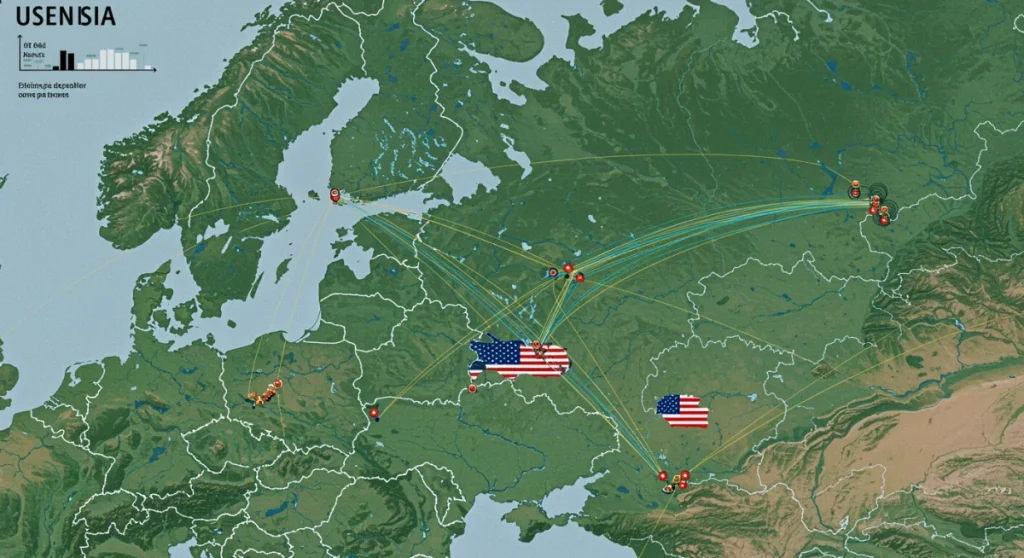
A primary focus for Russia in 2025 will undoubtedly remain its immediate periphery, particularly the post-Soviet states. Moscow views this region as its legitimate sphere of influence and will employ various tools to maintain and expand its control. This includes military presence, economic leverage, and political interference, often under the guise of protecting Russian-speaking populations or fostering regional stability.
The situation in Ukraine, Belarus, and the Caucasus will be particularly critical. Russia’s actions in these areas directly challenge the sovereignty of independent nations and test the resolve of the international community. The US response must consider the delicate balance between deterring aggression and avoiding direct confrontation.
Tactics for Regional Hegemony
Russia employs a range of tactics to assert its dominance in its neighborhood. These are often tailored to the specific vulnerabilities and political landscapes of each country. The goal is to prevent these nations from aligning with Western institutions like NATO or the European Union.
- Military Pressure: Maintaining troops in breakaway regions and conducting large-scale military exercises near borders.
- Economic Coercion: Using energy supplies, trade restrictions, and investment as political tools.
- Political Subversion: Supporting pro-Russian factions, exploiting internal divisions, and engaging in cyber interference.
- Cultural and Linguistic Ties: Promoting Russian language and culture to foster affinity and influence.
The US must focus on bolstering the resilience of these nations through economic aid, security assistance, and diplomatic support. Strengthening democratic institutions and promoting good governance can help these countries resist Russian pressures. A coordinated international effort is essential to present a united front against coercive tactics.
Strategic Competition in the Arctic and Beyond
Beyond its traditional sphere of influence, Russia is increasingly asserting itself in new strategic theaters, notably the Arctic. The melting ice caps are opening new shipping lanes and access to vast natural resources, transforming the Arctic into a region of significant geopolitical competition. Russia’s substantial investment in military infrastructure and icebreaker fleets underscores its determination to dominate this crucial area.
Furthermore, Russia continues to seek opportunities to project power in regions like the Middle East, Africa, and Latin America. These efforts are often aimed at undermining US influence, securing new markets, and diversifying its diplomatic ties. The global nature of this competition demands a comprehensive and adaptable US strategy.

The digital domain also represents a critical battleground. Russian cyber capabilities are highly sophisticated, posing significant threats to critical infrastructure, democratic processes, and economic stability worldwide. Protecting against these threats requires robust cybersecurity measures and international cooperation.
Global Power Projection
Russia’s global ambitions extend beyond its immediate borders and traditional areas of influence. It seeks to establish itself as a major player on the world stage, capable of challenging the established order and shaping global narratives. This involves a mix of military, diplomatic, and economic initiatives.
- Arctic Dominance: Developing military bases and economic infrastructure to control key Arctic shipping routes and resources.
- Middle East Engagement: Maintaining influence in Syria and expanding ties with other regional actors.
- African Partnerships: Offering security assistance and resource deals to gain footholds and challenge Western presence.
- Cyber Operations: Conducting sophisticated cyberattacks and disinformation campaigns globally.
The US strategy must therefore be globally oriented, combining deterrence with engagement. This means strengthening alliances, supporting international norms, and countering Russian destabilizing activities wherever they occur. Collaborative efforts with allies are vital to effectively address these dispersed challenges.
Critical US Response Strategy 1: Bolstering Allied Resilience
The first critical US response strategy to Understanding Russia’s 2025 Geopolitical Playbook is to significantly bolster the resilience of its allies, particularly those on Russia’s periphery and within NATO. A strong, unified alliance acts as the most effective deterrent against Russian aggression and coercion. This strategy involves more than just military readiness; it encompasses economic, political, and informational resilience.
Investing in the long-term security and stability of frontline states reduces their vulnerability to Russian pressure. This includes enhancing their defensive capabilities, strengthening their democratic institutions, and supporting their economic development. A resilient ally is less likely to be swayed by Moscow’s overtures or threats.
Enhancing NATO’s Eastern Flank
Strengthening NATO’s eastern flank is a cornerstone of allied resilience. This involves increased troop deployments, advanced military exercises, and investment in modern defense technologies. The goal is to send an unmistakable signal of collective defense and deter any potential Russian incursions.
- Forward Presence: Maintaining a robust and visible military presence in Eastern European NATO member states.
- Interoperability: Ensuring seamless coordination and operational capability among allied forces.
- Missile Defense: Deploying and upgrading missile defense systems to counter potential threats.
- Cyber Defense: Collaborating on advanced cybersecurity measures to protect critical infrastructure.
Beyond military aspects, fostering political cohesion within NATO is equally important. Russia often seeks to exploit divisions within the alliance, making unity a vital asset. Regular consultations, shared intelligence, and coordinated policy responses are essential to maintaining a strong and unified front.
Critical US Response Strategy 2: Strategic Economic Countermeasures
The second critical US response strategy involves deploying strategic economic countermeasures to limit Russia’s capacity for geopolitical adventurism. While sanctions have been a primary tool, their effectiveness can be enhanced through more targeted application, international coordination, and long-term economic diversification initiatives. This strategy aims to reduce Russia’s revenue streams and increase the cost of its aggressive actions.
Economic pressure must be carefully calibrated to avoid unintended consequences for global markets while maximizing impact on the Russian economy. This requires a sophisticated understanding of Russia’s financial systems and its key economic vulnerabilities. The goal is to impose a significant economic burden that incentivizes a change in behavior.
Targeted Sanctions and Energy Diversification
Future economic countermeasures should focus on targeted sanctions that impact specific sectors or individuals responsible for aggressive policies. Simultaneously, supporting global energy diversification efforts can reduce Europe’s dependence on Russian energy, thereby diminishing Moscow’s economic leverage.
- Sectoral Sanctions: Imposing restrictions on key Russian industries, such as technology, finance, and defense.
- Export Controls: Limiting Russia’s access to advanced technologies essential for its military and industrial development.
- Energy Alternatives: Promoting renewable energy and alternative gas suppliers to reduce reliance on Russian hydrocarbons.
- Financial Isolation: Working with international partners to limit Russia’s access to global financial markets.
Developing long-term strategies to support alternative energy sources and supply chains will be crucial. This not only weakens Russia’s economic power but also strengthens the energy security of US allies. Economic statecraft, when applied strategically and consistently, can be a powerful tool in shaping geopolitical outcomes.
Critical US Response Strategy 3: Countering Disinformation and Hybrid Threats
The third critical US response strategy for Understanding Russia’s 2025 Geopolitical Playbook focuses on actively countering Russian disinformation campaigns and hybrid threats. In the modern information age, the battlefield extends far beyond conventional military engagements. Russia’s sophisticated use of propaganda, cyberattacks, and political interference seeks to undermine trust, sow discord, and destabilize democracies from within.
An effective counter-strategy requires a multi-pronged approach that combines robust intelligence gathering, public education, technological solutions, and international collaboration. Protecting democratic institutions and the integrity of information is paramount in this evolving threat landscape. Transparency and factual accuracy are the most powerful antidotes to disinformation.
Building Information Resilience
Building information resilience involves empowering citizens with media literacy, supporting independent journalism, and developing technologies to detect and counter malicious online activity. This proactive approach helps to inoculate societies against the corrosive effects of foreign interference.
- Media Literacy Programs: Educating the public on how to identify and critically assess sources of information.
- Support for Independent Media: Funding and protecting independent news organizations, especially in vulnerable regions.
- Cyber Threat Intelligence: Sharing intelligence on cyber threats and developing joint defense capabilities with allies.
- Strategic Communication: Clearly articulating US values and policies to counter false narratives.
International cooperation is vital in this domain. Sharing best practices, coordinating responses to cyberattacks, and collectively calling out disinformation campaigns can amplify the impact of individual efforts. A unified front against hybrid threats is essential for preserving democratic integrity and maintaining global stability.
The Path Forward: Sustained Engagement and Adaptability
Navigating Russia’s geopolitical playbook in 2025 demands a strategy of sustained engagement and constant adaptability from the United States. The challenge is not static; Russia’s tactics and objectives will continue to evolve, requiring a flexible and responsive approach from Washington and its allies. The strategies outlined—bolstering allied resilience, implementing strategic economic countermeasures, and vigorously countering disinformation—are interdependent and must be pursued concurrently for maximum effect.
Long-term success hinges on a commitment to international law, democratic values, and multilateral cooperation. Unilateral action is rarely effective against a global adversary, making alliances and partnerships indispensable assets. The US must continue to lead efforts to uphold a rules-based international order while deterring aggression.
Key Principles for US Engagement
Several guiding principles should inform the US approach to Russia. These principles emphasize a balanced strategy that combines strength with diplomacy, and deterrence with the possibility of de-escalation when appropriate. Maintaining open lines of communication, even during times of tension, is crucial to managing potential crises.
- Diplomatic Pressure: Utilizing diplomatic channels to de-escalate tensions and seek areas of common interest where possible.
- Deterrence through Strength: Maintaining a credible military posture and strong alliances to deter aggression.
- Values-Based Foreign Policy: Promoting democracy, human rights, and the rule of law globally.
- Technological Edge: Investing in advanced technologies to maintain a strategic advantage in defense and intelligence.
Ultimately, the US strategy must be proactive rather than reactive, anticipating Russian moves and shaping the geopolitical environment. This requires robust intelligence capabilities, expert analysis, and a political will to make difficult decisions. The future of global security in 2025 and beyond will largely depend on the effectiveness of these strategic responses.
| Key Strategy | Brief Description |
|---|---|
| Bolster Allied Resilience | Strengthen NATO and frontline states through military, economic, and political support. |
| Strategic Economic Countermeasures | Implement targeted sanctions and support global energy diversification to limit Russia’s economic leverage. |
| Counter Disinformation & Hybrid Threats | Combat Russian propaganda, cyberattacks, and political interference through intelligence, education, and tech. |
Frequently Asked Questions About Russia’s 2025 Geopolitical Playbook
Russia’s main objectives include reasserting influence in its near abroad, challenging the unipolar global order, and diversifying international partnerships. This involves maintaining security and economic dominance in its perceived sphere of influence and countering Western expansion.
Russia projects power through military presence, economic leverage, and diplomatic maneuvering in regions like the Arctic, Middle East, Africa, and Latin America. It also heavily utilizes cyber operations and disinformation campaigns to undermine rivals and secure new alliances.
Economic sanctions aim to limit Russia’s capacity for geopolitical adventurism by targeting key sectors and individuals. Their effectiveness is enhanced through international coordination and by simultaneously supporting global energy diversification to reduce Russia’s economic leverage.
Countering disinformation is crucial because Russia uses propaganda, cyberattacks, and political interference to sow discord and destabilize democracies. Building information resilience through media literacy and supporting independent journalism helps protect democratic institutions and maintain societal trust.
The US can bolster allied resilience by enhancing NATO’s eastern flank with increased troop deployments and exercises, investing in modern defense technologies, and strengthening democratic institutions in frontline states. This comprehensive approach deters aggression and fosters stability.
Conclusion
The intricate tapestry of global geopolitics demands a nuanced and proactive approach from the United States in anticipating and responding to Russia’s strategic maneuvers in 2025. By understanding the core drivers of Russian policy, its expanding regional and global influence, and the critical domains of competition, the US can formulate effective counter-strategies. Bolstering allied resilience, implementing strategic economic countermeasures, and vigorously countering disinformation and hybrid threats are not merely reactive measures but foundational pillars for safeguarding international stability and promoting democratic values. The path forward requires sustained commitment, adaptability, and unwavering international cooperation to navigate the complexities of the evolving geopolitical landscape and ensure a more secure future.