Africa’s Geopolitical Landscape: US Engagement Strategies for 2025

The United States aims to strengthen economic stability across Africa’s complex geopolitical landscape by 2025 through four strategic engagement pillars: enhancing trade, bolstering security, promoting good governance, and investing in human capital.
As the global stage continues to evolve, understanding Africa’s Geopolitical Landscape: 4 US Engagement Strategies for Economic Stability by 2025 becomes paramount. This continent, rich in resources and human potential, stands at a critical juncture, and the nature of its international partnerships will undoubtedly shape its future. What approaches will the United States adopt to foster economic stability and mutual growth?
Understanding Africa’s Evolving Geopolitical Landscape
Africa’s geopolitical landscape is a dynamic tapestry woven with diverse cultures, economies, and political systems. It is a continent experiencing rapid demographic shifts, urbanization, and increasing connectivity, yet simultaneously grappling with complex challenges such as climate change, conflict, and economic disparities. The region’s strategic importance has grown exponentially, attracting attention from global powers vying for influence, resources, and partnerships. This evolving environment necessitates a nuanced and adaptive approach from external actors, particularly the United States, which seeks to promote stability and prosperity.
Key Drivers of Change in Africa
Several factors are fundamentally reshaping Africa’s geopolitical trajectory. Understanding these drivers is crucial for formulating effective engagement strategies. The continent’s youthful population, for instance, represents both a demographic dividend and a potential source of instability if not adequately engaged and provided with opportunities. Natural resources, while a boon for economic development, also present governance challenges and can become flashpoints for competition.
- Demographic Shifts: Africa is home to the world’s youngest and fastest-growing population, presenting immense labor potential but also demanding significant investment in education and job creation.
- Resource Competition: The continent’s vast natural resources, from minerals to arable land, attract global interest, leading to both opportunities for development and risks of exploitation or conflict.
- Climate Change Impacts: Africa is disproportionately affected by climate change, threatening agricultural productivity, water security, and exacerbating existing vulnerabilities.
- Rise of Regional Blocs: African nations are increasingly forming and strengthening regional economic communities and political unions, enhancing their collective bargaining power and regional stability.
Furthermore, the increased presence of other global powers, notably China, Russia, and the European Union, adds layers of complexity to Africa’s international relations. These actors bring different models of engagement, investment priorities, and diplomatic approaches, creating a multi-polar environment where African nations have more choices but also face increased pressure. Navigating this intricate landscape requires the US to articulate and implement strategies that are not only beneficial to its own interests but also genuinely supportive of Africa’s long-term development goals.
Strategy 1: Bolstering Economic Partnerships and Trade
Central to US engagement in Africa by 2025 is the enhancement of economic partnerships and trade. This strategy moves beyond traditional aid models, focusing instead on fostering sustainable economic growth through mutual benefit. The goal is to move African economies up the value chain, creating jobs and opportunities that directly contribute to stability and prosperity. This involves a multi-faceted approach that addresses trade barriers, promotes investment, and supports regional economic integration.
Facilitating Fair and Equitable Trade
One of the primary objectives is to facilitate more fair and equitable trade relationships. This includes re-evaluating existing trade agreements and exploring new avenues that allow African products greater access to US markets. The African Growth and Opportunity Act (AGOA) has been a cornerstone of US trade policy with Africa, but its effectiveness can be further enhanced through modernization and expansion to cover a wider range of goods and services. The focus should be on empowering African businesses to compete globally.
- Modernizing AGOA: Updating and expanding the scope of AGOA to include emerging sectors and provide more certainty for investors.
- Reducing Trade Barriers: Working with African nations to identify and reduce tariff and non-tariff barriers that hinder trade flows.
- Promoting Value-Added Exports: Supporting initiatives that help African countries process raw materials locally, increasing their export value and creating more domestic jobs.
Beyond trade, encouraging American private sector investment in Africa is crucial. This means creating a more predictable and transparent investment climate, leveraging US development finance institutions, and fostering public-private partnerships. Such investments can bring not only capital but also technology, expertise, and best practices, which are vital for economic diversification and resilience. The US aims to position itself as a preferred partner for African nations seeking sustainable and responsible investment.
Strategy 2: Enhancing Security and Stability
Security and stability are foundational to economic development. Without a secure environment, investments falter, trade routes are disrupted, and human potential is stifled. The US engagement strategy for Africa by 2025 therefore places significant emphasis on enhancing security capabilities and promoting regional stability. This involves a holistic approach that includes counter-terrorism efforts, maritime security, and strengthening democratic institutions to address root causes of conflict.
Counter-Terrorism and Regional Security Initiatives
The rise of extremist groups in various parts of Africa poses a significant threat to regional and global security. The US will continue to support African partners in their counter-terrorism efforts through training, intelligence sharing, and provision of equipment. However, the approach is evolving to be more localized and focused on building the capacity of African forces to address these threats independently. This also includes strengthening regional security architectures like the G5 Sahel Joint Force and the Multinational Joint Task Force.
- Capacity Building: Training and equipping African security forces to effectively combat terrorism and other security threats.
- Intelligence Sharing: Facilitating the exchange of critical intelligence to prevent attacks and disrupt extremist networks.
- Regional Cooperation: Supporting and participating in regional security initiatives to ensure a coordinated response to cross-border threats.
Furthermore, addressing the underlying drivers of instability, such as poverty, weak governance, and social exclusion, is equally important. The US aims to integrate security assistance with development programs, ensuring that efforts to enhance security also contribute to long-term economic stability and social cohesion. This involves supporting initiatives that promote good governance, rule of law, and inclusive development, which are essential for preventing conflicts and fostering lasting peace.
Strategy 3: Supporting Good Governance and Democratic Institutions
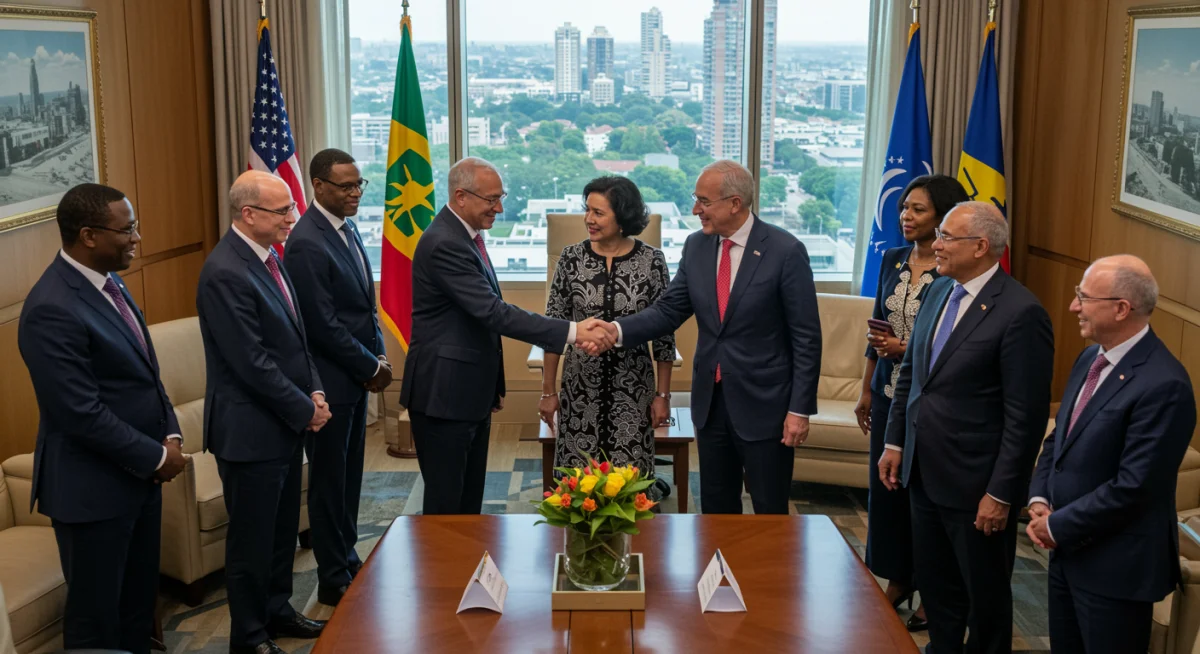
Good governance and strong democratic institutions are indispensable for sustainable economic development and long-term stability. The US strategy for Africa by 2025 recognizes this fundamental link and aims to bolster efforts that promote transparency, accountability, and the rule of law across the continent. This involves supporting civil society, strengthening electoral processes, and combating corruption, which are all vital for creating an environment conducive to investment and prosperity.
Promoting Transparency and Accountability
One key aspect of this strategy is to champion transparency and accountability in governance. Corruption erodes public trust, diverts resources intended for development, and deters foreign investment. The US will continue to work with African governments and civil society organizations to implement anti-corruption measures, strengthen judicial systems, and promote fiscal transparency. This includes supporting independent media and watchdog organizations that play a crucial role in holding power accountable.
- Anti-Corruption Initiatives: Assisting African nations in developing and implementing robust anti-corruption policies and institutions.
- Judicial Reform: Supporting efforts to strengthen judicial independence and ensure fair and impartial legal processes.
- Civic Space Protection: Advocating for and protecting the space for civil society organizations and independent media to operate freely.
Beyond combating corruption, the US will also focus on strengthening democratic processes. This involves providing technical assistance for credible elections, supporting parliamentary oversight, and promoting citizen participation in governance. The aim is to help African nations build resilient democratic institutions that can withstand political pressures and ensure peaceful transitions of power. Investing in democratic governance is seen as a long-term investment in stability and economic growth.
Strategy 4: Investing in Human Capital and Social Development
The future of Africa lies in its people. Therefore, a critical component of the US engagement strategy by 2025 is investing in human capital and social development. This involves improving access to quality education, healthcare, and fostering innovation and entrepreneurship. Empowering individuals through these sectors not only enhances their quality of life but also drives economic productivity and societal progress, creating a more resilient and prosperous continent.
Education, Health and Innovation
Improving access to quality education is paramount. The US supports programs that strengthen educational systems from primary to tertiary levels, focusing on STEM fields, vocational training, and digital literacy. These initiatives aim to equip the African workforce with the skills needed for the 21st-century economy. Furthermore, addressing health challenges remains a priority, building on successes in combating diseases like HIV/AIDS and malaria. The focus is now expanding to strengthening health systems, improving maternal and child health, and enhancing pandemic preparedness.
- Educational Access and Quality: Supporting initiatives that expand access to quality education, including scholarships and teacher training programs.
- Health System Strengthening: Investing in healthcare infrastructure, training medical professionals, and improving access to essential medicines.
- Innovation Ecosystems: Fostering environments that encourage technological innovation and entrepreneurship, particularly among youth.
Beyond formal education and health, supporting innovation and entrepreneurship is key to unlocking Africa’s economic potential. The US seeks to connect African entrepreneurs with mentorship, funding, and market opportunities, fostering a vibrant startup ecosystem. This also includes promoting digital transformation and ensuring that African nations can fully participate in the global digital economy. By investing in its people, Africa can harness its demographic dividend and achieve sustainable economic growth, leading to a more stable and prosperous future.
Addressing Challenges and Seizing Opportunities
While the four strategies outlined above provide a robust framework for US engagement, their successful implementation will depend on effectively addressing existing challenges and capitalizing on emerging opportunities. Africa is a continent of immense diversity, and a one-size-fits-all approach will not suffice. Tailored strategies, respecting local contexts and priorities, are essential. The US must also remain agile, adapting its approaches as the geopolitical landscape continues to shift and new challenges or opportunities arise.
Navigating Complexities and Building Trust
One significant challenge is navigating the complex web of relationships African nations have with other global powers. The US strategy must differentiate itself by emphasizing genuine partnership, mutual respect, and long-term sustainable development, rather than transactional relationships. Building trust requires consistent engagement, listening to African voices, and delivering on commitments. This also means acknowledging and addressing past missteps in foreign policy, fostering a renewed sense of partnership.
- Contextualized Engagement: Developing and implementing strategies that are specific to the needs and priorities of individual African nations or regions.
- Emphasis on Partnership: Prioritizing collaborative efforts and shared decision-making with African partners over unilateral actions.
- Transparency and Accountability: Ensuring that US engagement is transparent, accountable, and adheres to high ethical standards.
Furthermore, the US must seize opportunities presented by Africa’s growing economic dynamism and increasing regional integration. Supporting initiatives like the African Continental Free Trade Area (AfCFTA) can unlock significant economic potential, creating a vast single market that benefits both African nations and their international partners. By focusing on areas where the US has a comparative advantage, such as technology, innovation, and democratic governance, it can solidify its role as a preferred partner for Africa’s future.
Looking Towards 2025 and Beyond
The commitment to Africa’s Geopolitical Landscape: 4 US Engagement Strategies for Economic Stability by 2025 is not merely a short-term endeavor but rather a long-term investment in a continent with immense potential. The strategies discussed—bolstering economic partnerships, enhancing security, supporting good governance, and investing in human capital—are interconnected and mutually reinforcing. Their success hinges on sustained commitment, adaptability, and a genuine partnership approach that respects African agency and priorities. The path to 2025 and beyond will be shaped by how effectively these strategies are implemented and how responsive they are to the evolving needs of the continent.
Measuring Impact and Adapting Strategies
To ensure the effectiveness of these strategies, continuous monitoring, evaluation, and adaptation are crucial. The US must work with African partners to establish clear metrics for success and regularly assess the impact of its engagement. This iterative process allows for adjustments to be made in response to changing circumstances, ensuring that resources are allocated efficiently and that interventions remain relevant and impactful. The goal is to build resilient, prosperous, and self-reliant African nations.
- Performance Indicators: Establishing measurable indicators to track progress in economic growth, security, governance, and social development.
- Regular Review: Conducting periodic reviews of strategies and programs to identify areas for improvement and adaptation.
- African-Led Solutions: Prioritizing and supporting solutions and initiatives that are conceived and led by African stakeholders.
Ultimately, the US vision for Africa is one of shared prosperity, security, and democratic values. By focusing on these four core engagement strategies, the United States aims to foster a strong, stable, and economically vibrant Africa that is a vital partner in addressing global challenges and seizing future opportunities. This forward-looking approach seeks to build enduring relationships based on mutual respect and shared interests, contributing to a more stable and prosperous world.
| Key Engagement Strategy | Brief Description |
|---|---|
| Economic Partnerships & Trade | Enhancing fair trade, boosting private investment, and supporting regional economic integration for sustainable growth. |
| Security & Stability | Strengthening counter-terrorism efforts, maritime security, and addressing root causes of conflict through democratic institutions. |
| Good Governance & Democracy | Promoting transparency, accountability, rule of law, and strengthening electoral processes to foster stable environments. |
| Human Capital & Social Development | Investing in quality education, healthcare systems, and fostering innovation and entrepreneurship to empower individuals. |
Frequently Asked Questions
Africa’s growing population, vast natural resources, and increasing global influence make it a critical region for US strategic interests. Stability and prosperity in Africa contribute to global security, economic growth, and shared democratic values, impacting US foreign policy and economic opportunities.
The US aims to enhance economic partnerships by modernizing trade agreements like AGOA, reducing trade barriers, promoting value-added exports, and encouraging private sector investment. The focus is on fostering sustainable growth and creating mutual benefits rather than solely relying on traditional aid.
Security is fundamental for economic stability. The US strategy includes bolstering African nations’ counter-terrorism capabilities, enhancing maritime security, and supporting regional security initiatives. This integrates security assistance with development programs to address root causes of conflict and promote lasting peace.
The US supports good governance by promoting transparency and accountability, combating corruption, and strengthening democratic institutions. This involves assisting with judicial reforms, protecting civic space, and providing technical aid for credible elections, all vital for a stable and predictable environment.
Investing in human capital is crucial because a skilled, healthy population drives economic productivity and innovation. The US supports quality education, improved healthcare, and entrepreneurship initiatives to empower individuals, address demographic challenges, and unlock Africa’s full economic potential for sustained growth.
Conclusion
The United States’ engagement with Africa, particularly in addressing Africa’s Geopolitical Landscape: 4 US Engagement Strategies for Economic Stability by 2025, reflects a comprehensive and forward-thinking approach. By prioritizing economic partnerships, enhancing security, bolstering good governance, and investing in human capital, the US aims to cultivate a relationship built on mutual respect and shared objectives. The success of these strategies will not only contribute to Africa’s enduring prosperity and stability but also reinforce global security and economic resilience, solidifying the continent’s pivotal role on the international stage.