US-China Tech Rivalry: 5 Critical Geopolitical Strategies for 2025
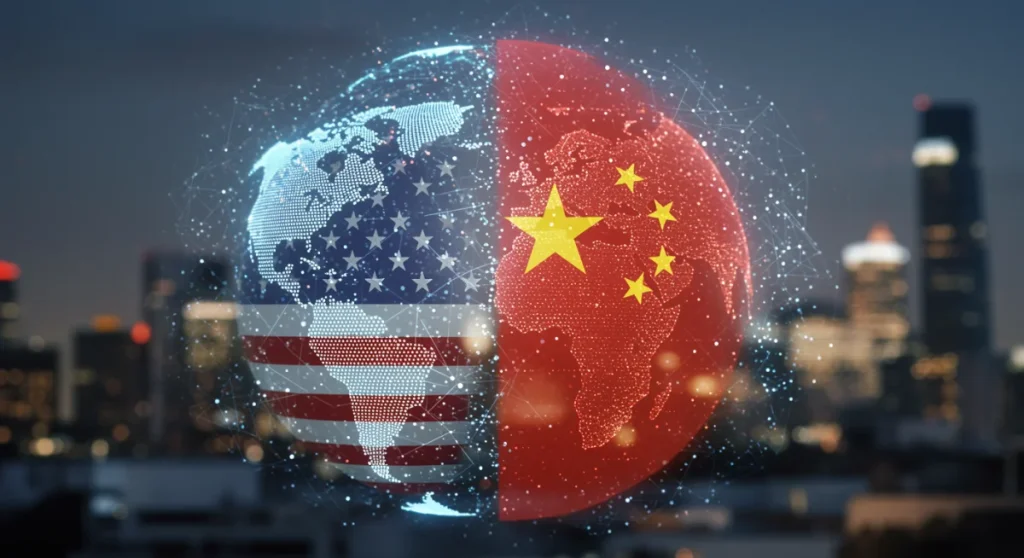
The US-China tech rivalry: 5 critical geopolitical strategies for 2025 focuses on semiconductor dominance, AI leadership, resilient supply chains, robust cybersecurity, and strategic international alliances, fundamentally reshaping global technological and economic landscapes.
The intensifying competition between the United States and China in the technological domain is arguably the most significant geopolitical dynamic of our era. As we approach 2025, understanding the five critical geopolitical strategies driving the US-China tech rivalry: 5 critical geopolitical strategies for 2025 becomes paramount. This struggle extends beyond economic dominance, touching on national security, global influence, and the very future of innovation.
The Quest for Semiconductor Supremacy
The battle for semiconductor supremacy stands at the forefront of the US-China tech rivalry. Semiconductors are the bedrock of modern technology, powering everything from smartphones and AI systems to advanced military hardware. Control over their design, manufacturing, and supply chains grants immense strategic leverage and economic power.
Both nations recognize the critical importance of this sector. The United States, historically a leader in chip design and intellectual property, has implemented stringent export controls to limit China’s access to advanced semiconductor technology. China, in turn, is pouring vast resources into developing its indigenous semiconductor industry, aiming for self-sufficiency and reducing its reliance on foreign suppliers.
Strategic Investments and Export Controls
- US CHIPS Act: The US has enacted legislation like the CHIPS and Science Act, allocating billions of dollars to boost domestic semiconductor manufacturing and research. This aims to reshore production and reduce vulnerabilities in the global supply chain.
- Chinese National Champions: China is nurturing national champions in the semiconductor sector, providing substantial government subsidies, tax breaks, and research grants to accelerate their growth and technological advancement.
- Export Restrictions: The US has imposed increasingly tight export controls on advanced chip-making equipment and designs, targeting key Chinese companies to slow their progress in critical technological areas.
The geopolitical implications of this struggle are profound. A nation that dominates semiconductor production can dictate terms in the global technology landscape, influencing everything from economic growth to military capabilities. The ability to produce cutting-edge chips is not just an economic advantage; it is a national security imperative. The ongoing efforts by both sides to secure this advantage will continue to shape global trade relations and technological development into 2025 and beyond.
Artificial Intelligence: The New Frontier of Power
Artificial intelligence (AI) is rapidly emerging as another critical battleground in the US-China tech rivalry. This transformative technology promises to revolutionize industries, enhance military capabilities, and reshape societal structures. Both Washington and Beijing view AI leadership as essential for future economic prosperity and national security.
The US currently holds a strong position in AI research and development, particularly in foundational models and ethical frameworks. However, China has made significant strides, leveraging its vast data resources and robust government support to accelerate AI adoption and innovation across various sectors. The race to develop and deploy cutting-edge AI applications, from autonomous systems to advanced surveillance, is intense.
Developing Ethical AI Frameworks
- US Focus on Responsible AI: The US emphasizes the development of AI with strong ethical guidelines, focusing on fairness, transparency, and accountability to ensure public trust and address potential societal impacts.
- China’s Practical Application: China prioritizes the practical application of AI in areas like smart cities, healthcare, and national security, often with a focus on efficiency and control, which raises concerns about data privacy and human rights.
- International Norms: Both nations are vying to set international norms and standards for AI governance, influencing how this powerful technology will be developed and used globally.
The competition in AI is not merely about technological prowess; it’s about shaping the future of governance, warfare, and economic models. The nation that achieves a decisive lead in AI will possess a significant advantage in intelligence gathering, economic competitiveness, and military superiority. As 2025 approaches, the strategies employed by both countries will increasingly focus on securing talent, fostering innovation ecosystems, and controlling critical AI infrastructure to gain an edge.
Building Resilient Supply Chains
The COVID-19 pandemic starkly exposed the vulnerabilities inherent in global supply chains, particularly in the technology sector. For both the US and China, building resilient supply chains, especially for critical technologies, has become a paramount geopolitical strategy. This involves reducing over-reliance on single points of failure and diversifying sources of essential components and raw materials.
The US is actively pursuing strategies to ‘de-risk’ its supply chains from China, encouraging domestic production and sourcing from allied nations. This involves incentivizing companies to relocate manufacturing and investing in new production capabilities. China, similarly, aims to reduce its dependence on foreign technology and components, striving for greater self-reliance and internal circulation within its economy.
Diversification and Domestic Production
- Friend-Shoring: The US is promoting ‘friend-shoring,’ moving supply chains to trusted allied countries, thereby strengthening economic and geopolitical partnerships while reducing risks associated with geopolitical adversaries.
- Strategic Reserves: Both nations are considering or implementing strategic reserves for critical technological components and raw materials to buffer against potential disruptions and ensure continuity of essential services.
- Localized Manufacturing: Efforts are underway to increase localized manufacturing capacities for key components, reducing transit times and external dependencies, although this often comes with higher costs.
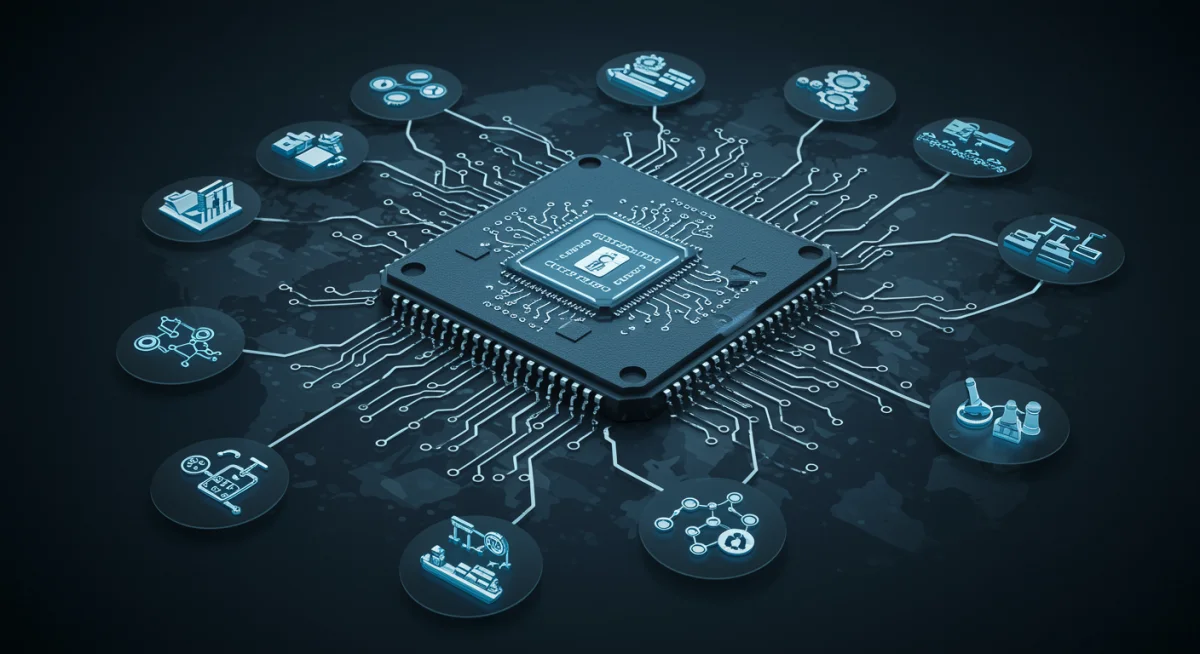
The drive for supply chain resilience is a complex undertaking, requiring significant investment and international cooperation. It involves a delicate balance between economic efficiency and national security. By 2025, the landscape of global tech supply chains is expected to be significantly reconfigured, reflecting a more fragmented yet, ideally, more robust system designed to withstand future shocks and geopolitical pressures.
Cybersecurity and Digital Sovereignty
In an increasingly interconnected world, cybersecurity has become a cornerstone of national security and economic stability. The US-China tech rivalry extends fiercely into the digital realm, where both nations are engaged in a continuous struggle to protect their critical infrastructure, intellectual property, and sensitive data from state-sponsored cyberattacks, espionage, and disruption. This strategic imperative also encompasses the broader concept of digital sovereignty.
Digital sovereignty refers to a nation’s ability to control its digital future, including data governance, internet infrastructure, and the technologies used within its borders. Both the US and China are implementing policies to assert greater control over their digital ecosystems, albeit through different approaches. The US emphasizes an open, secure, and reliable internet, while China prioritizes centralized control and data localization for national security and social stability.
Securing Critical Infrastructure
- Enhanced Cyber Defenses: Both countries are heavily investing in advanced cyber defense capabilities, including AI-powered threat detection and rapid response systems, to safeguard government networks, utilities, and financial systems.
- Information Sharing: The US government encourages greater information sharing between public and private sectors to bolster collective cybersecurity, while China maintains strict controls over data flow and censorship.
- International Cyber Norms: The US advocates for international norms of responsible state behavior in cyberspace, aiming to prevent cyber warfare and enhance global digital stability. China, while participating in some discussions, often emphasizes national sovereignty over open internet principles.
The battle for cybersecurity and digital sovereignty is a continuous, evolving challenge. As technology advances, so do the methods of attack and defense. By 2025, robust cybersecurity measures and strategies for asserting digital control will be fundamental to protecting national interests and maintaining strategic advantage in the ongoing tech rivalry. The ability to secure digital assets and maintain control over one’s digital space is critical for economic stability and national defense.
Forging Strategic Alliances and Partnerships
Recognizing that no single nation can navigate the complexities of the tech rivalry alone, both the US and China are actively forging strategic alliances and partnerships. These collaborations are designed to pool resources, share expertise, strengthen technological ecosystems, and counter the influence of the rival power. The formation of these blocs is reshaping global geopolitical alignments.
The US has been particularly active in strengthening its alliances with like-minded democracies, including those in Europe, Japan, South Korea, and Australia. These partnerships aim to create a united front on issues such as technology standards, supply chain resilience, and cybersecurity. China, in turn, is deepening its ties with countries in the Global South and through initiatives like the Belt and Road, seeking to expand its technological footprint and influence.
Multilateral Engagement and Tech Diplomacy
- Quad and AUKUS: The US is leveraging platforms like the Quad (US, Japan, India, Australia) and AUKUS (Australia, UK, US) to enhance technological cooperation, particularly in critical and emerging technologies like AI, quantum computing, and advanced defense capabilities.
- Digital Silk Road: China’s Digital Silk Road initiative aims to build digital infrastructure in developing countries, often using Chinese technology and standards, thereby extending its technological influence and market access.
- Standard-Setting Bodies: Both nations are actively competing within international standard-setting organizations to ensure their technological frameworks become globally adopted, influencing future innovation and interoperability.
The success of these alliances will be crucial in determining the future trajectory of the tech rivalry. Collaborative research, joint ventures, and coordinated policy approaches can amplify the strengths of partners and mitigate individual vulnerabilities. As we look to 2025, the ability to build and sustain effective strategic alliances will be a decisive factor in shaping the global technological order and the balance of power.
The Economic and Geopolitical Impact
The US-China tech rivalry has far-reaching economic and geopolitical impacts that extend beyond the immediate competition between the two superpowers. This struggle is fundamentally reshaping global trade patterns, investment flows, and the very architecture of the international system. The bifurcation of technological ecosystems, often referred to as ‘decoupling,’ carries significant implications for businesses, governments, and individuals worldwide.
Economically, companies are increasingly forced to choose sides or navigate a complex web of regulations and restrictions. This can lead to increased costs, reduced innovation through fragmented markets, and a less efficient global economy. Geopolitically, the rivalry is exacerbating existing tensions and creating new ones, as nations are pressured to align with either the US or China, particularly in critical technology domains. This dynamic fuels an environment of strategic competition and uncertainty.
Navigating Decoupling and Interdependence
- Trade Barriers and Tariffs: The imposition of tariffs and non-tariff barriers on technological goods and services is disrupting established trade relationships and forcing companies to re-evaluate their global strategies.
- Investment Scrutiny: Foreign direct investment in sensitive technology sectors is facing increased scrutiny from both sides, impacting cross-border mergers, acquisitions, and venture capital flows.
- Innovation Ecosystems: The rivalry is driving the creation of parallel innovation ecosystems, where different standards, platforms, and intellectual property regimes emerge, potentially hindering global collaboration on pressing challenges.
The long-term consequences of this tech rivalry are still unfolding. While some argue that decoupling offers greater security and resilience for individual nations, others warn of the dangers of a fragmented global economy and the potential for technological stagnation. By 2025, the economic and geopolitical landscape will continue to be defined by these tensions, requiring careful navigation and strategic foresight from all international actors. The stakes are incredibly high, influencing everything from economic growth to global stability.
| Key Strategy | Brief Description |
|---|---|
| Semiconductor Supremacy | Control over chip design and manufacturing is crucial for technological and military advantage. |
| AI Leadership | Dominance in artificial intelligence is key for future economic prosperity and national security. |
| Supply Chain Resilience | Reducing reliance on single sources and diversifying critical tech component supply chains. |
| Strategic Alliances | Forging partnerships to pool resources, share expertise, and counter rival influence. |
Frequently Asked Questions About the US-China Tech Rivalry
The primary driver is the competition for global technological leadership, particularly in critical sectors like semiconductors, artificial intelligence, and quantum computing. Both nations see dominance in these areas as essential for future economic growth, military superiority, and geopolitical influence.
Semiconductor export controls imposed by the US aim to slow China’s technological advancement by limiting its access to advanced chip-making equipment and designs. This forces China to accelerate its indigenous development, intensifying the race for self-sufficiency and creating supply chain disruptions.
AI leadership is crucial because it powers advancements across virtually all sectors, from defense and healthcare to economy and surveillance. The nation that leads in AI development and deployment will gain significant advantages in innovation, strategic intelligence, and military capabilities, fundamentally reshaping global power dynamics.
International alliances are vital for pooling resources, sharing expertise, and establishing common technological standards. For the US, partners help counter China’s influence and build resilient supply chains. For China, alliances expand its technological footprint and market access, making these partnerships key to strategic advantage.
The economic consequences include increased trade barriers, bifurcated technological ecosystems, and heightened scrutiny on foreign investments. This can lead to higher costs for businesses, reduced global innovation due to fragmented markets, and a less efficient global economy as nations prioritize security over pure economic efficiency.
Conclusion
The US-China tech rivalry: 5 critical geopolitical strategies for 2025 represents a defining challenge of our time, shaping not just the future of technology but also the global geopolitical order. From the relentless pursuit of semiconductor supremacy and the race for AI leadership to the imperative of building resilient supply chains, fortifying cybersecurity, and forging strategic alliances, both nations are employing multifaceted approaches to secure their technological and national interests. The implications of this competition are profound, influencing economic stability, national security, and the very architecture of international relations. As 2025 unfolds, the world will continue to closely watch these strategic maneuvers, understanding that the outcome will have lasting effects on global power dynamics and the trajectory of technological advancement for decades to come.