The United States is actively developing robust geopolitical defense strategies to counter seven critical emerging threats in cyber warfare by 2025, focusing on advanced technological and collaborative approaches.
As the digital landscape evolves, so do the threats lurking within it. Understanding US cyber defense strategies in the face of escalating cyber warfare is crucial for national security, especially when looking ahead to 2025 and the seven emerging threats that loom large.
The evolving landscape of cyber warfare in 2025
The year 2025 is anticipated to be a pivotal point in cyber warfare, marked by increased sophistication and broader impact. Nation-states and non-state actors alike are continually refining their capabilities, turning cyberspace into a primary domain for geopolitical competition. This evolution necessitates a dynamic and proactive defense posture from the United States.
The shift from traditional kinetic warfare to digital skirmishes presents unique challenges, as attacks can originate from anywhere, cross borders instantly, and have far-reaching consequences without physical confrontation. Protecting critical infrastructure, intellectual property, and democratic processes becomes paramount.
Advanced persistent threats (APTs) and their global reach
- Sophisticated Espionage: APTs will continue to be a primary tool for intelligence gathering, targeting government agencies, defense contractors, and research institutions.
- Supply Chain Compromises: Adversaries will increasingly exploit vulnerabilities in software and hardware supply chains to gain access to sensitive systems.
- Long-term Infiltration: APT groups aim for sustained access, allowing them to monitor, exfiltrate data, or prepare for disruptive attacks at a later stage.
The interconnected nature of global systems means that a cyberattack on one nation can quickly ripple across international borders, affecting allies and adversaries alike. This demands a collective defense strategy and robust intelligence sharing among partner nations. The US recognizes that no single entity can effectively combat these pervasive threats alone.
The complexity of attributing cyberattacks remains a significant hurdle, often allowing perpetrators to operate with a degree of impunity. This ambiguity complicates retaliation and deterrence efforts, making prevention and resilience even more critical components of defense. The US is investing heavily in advanced attribution technologies and international legal frameworks to address this challenge.
Threat 1: AI-driven autonomous cyber attacks
The dawn of AI-driven autonomous cyber attacks marks a significant escalation in the cyber threat landscape for 2025. These attacks, capable of self-learning, adapting, and executing complex strategies without human intervention, pose an unprecedented challenge to traditional defense mechanisms. Their speed and scale can overwhelm existing security protocols.
The US is acutely aware of the potential for AI to be weaponized, not just for offensive purposes but also for defense. The strategic imperative is to develop AI-powered defenses that can match, and ideally preempt, AI-powered attacks. This involves a race for technological superiority in artificial intelligence applications for cybersecurity.
US defense strategies against AI-powered threats
- AI-Enhanced Threat Detection: Deploying AI and machine learning to identify anomalous behavior and predict attack patterns faster than human analysts.
- Automated Response Systems: Developing systems that can autonomously respond to attacks, isolating compromised systems and neutralizing threats in real-time.
- Ethical AI Development: Investing in research for ethical AI development, ensuring that defensive AI systems are robust, transparent, and do not introduce new vulnerabilities.
The development of these autonomous systems also raises complex ethical and legal questions regarding accountability and control. The US is engaging in international dialogues to establish norms and regulations for the responsible use of AI in cyber warfare, aiming to prevent a chaotic arms race. This includes fostering collaboration with allies on AI research and development.
Furthermore, training cybersecurity professionals to understand and manage AI-driven systems is critical. The human element remains indispensable in overseeing, refining, and strategizing alongside AI tools, ensuring that technology serves as an enabler rather than a sole decision-maker. This blended approach is key to an effective defense.
Threat 2: Quantum computing’s cryptographic challenge
Quantum computing, while still in its nascent stages, presents a monumental cryptographic challenge that could fundamentally undermine current encryption standards by 2025. The immense processing power of quantum computers has the potential to break widely used encryption algorithms, rendering secure communications and data vulnerable to interception and decryption. This threat demands immediate and strategic attention.
For the US, this means a race against time to develop and implement post-quantum cryptography (PQC) solutions before adversaries possess fully capable quantum computers. The integrity of classified information, financial transactions, and critical infrastructure communications hinges on this transition. The implications for national security are profound, touching every aspect of digital interaction.
Preparing for a post-quantum world
- PQC Research and Development: Significant investment in developing new cryptographic algorithms that are resistant to quantum attacks.
- Standardization Efforts: Collaborating with NIST and international bodies to standardize PQC algorithms for widespread adoption.
- Inventory and Transition Planning: Identifying critical systems and data that rely on vulnerable encryption and planning a phased transition to PQC.
The transition to post-quantum cryptography is not merely a technical upgrade; it’s a monumental undertaking that requires extensive coordination across government, industry, and academia. The US is proactively engaging with these sectors to ensure a smooth and secure migration, minimizing potential disruption and exposure.
Education and awareness are also vital components of this strategy. Cybersecurity professionals and IT departments need to understand the implications of quantum computing and be prepared to implement the new cryptographic standards as they become available. This foresight will be crucial in safeguarding sensitive information in the coming years.
Threat 3: Weaponization of disinformation and deepfakes
The weaponization of disinformation and deepfakes represents a pervasive and insidious threat to democratic processes and societal stability, projected to intensify by 2025. Adversaries can leverage sophisticated AI-generated content to sow discord, manipulate public opinion, and undermine trust in institutions. This form of cyber warfare targets the cognitive domain, making it difficult to distinguish truth from fabrication.
The US government recognizes that these tactics can have real-world consequences, from influencing elections to inciting social unrest. Countering this threat requires not only technological solutions but also a robust public awareness campaign and strong media literacy initiatives. Protecting the information ecosystem is as critical as protecting digital networks.
Strategies to combat cognitive warfare
- Fact-Checking and Verification Technologies: Developing AI-powered tools to rapidly detect and identify deepfakes and disinformation campaigns.
- Public Awareness Campaigns: Educating citizens on how to identify and critically evaluate information, fostering resilience against manipulation.
- Cross-Platform Collaboration: Working with social media companies and technology platforms to implement policies and tools that limit the spread of harmful content.
The legal and ethical dimensions of combating disinformation are complex. Striking a balance between freedom of speech and preventing the spread of harmful falsehoods is a delicate act. The US is exploring legislative frameworks and international agreements to address these challenges without stifling legitimate discourse.
International cooperation is also essential, as disinformation campaigns often originate outside US borders and target global audiences. Sharing intelligence and best practices with allies can strengthen collective defenses against these pervasive and often culturally tailored attacks. This collaborative effort aims to build a more resilient global information environment.
Threat 4: Critical infrastructure targeting
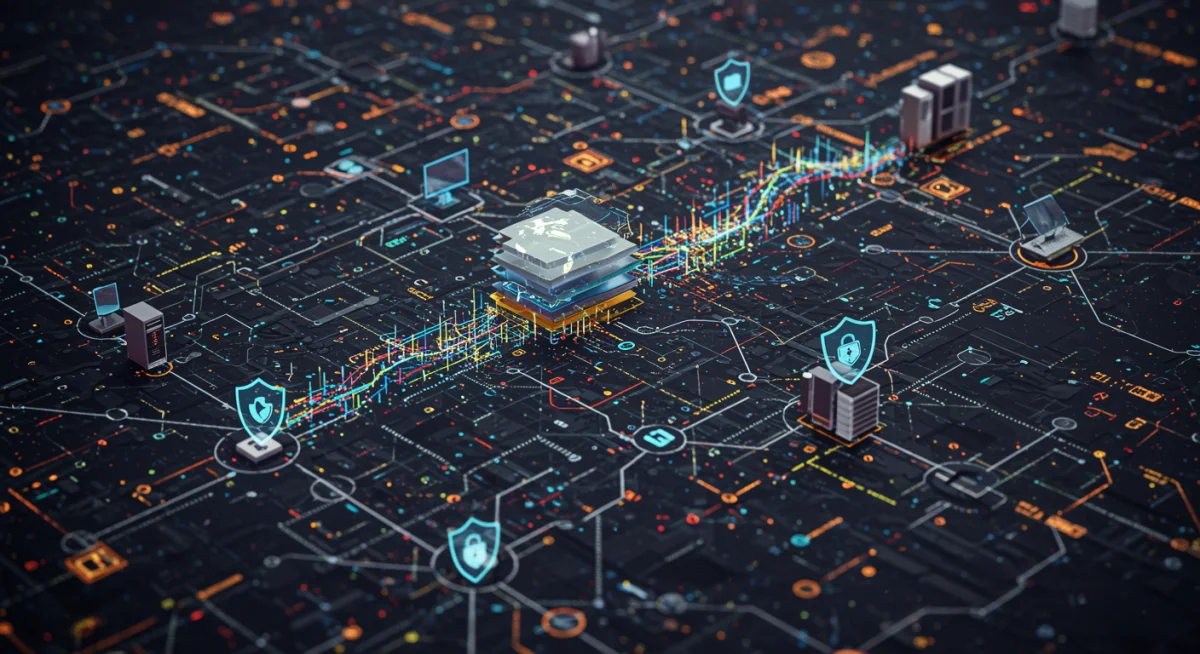
The targeting of critical infrastructure, encompassing energy grids, water systems, transportation networks, and healthcare facilities, remains a paramount concern for US cyber defense in 2025. Attacks on these vital systems can have catastrophic real-world consequences, disrupting essential services, endangering lives, and crippling economic activity. The increasing digitalization of these systems makes them more efficient but also more vulnerable to sophisticated cyberattacks.
The US government is implementing a multi-layered defense strategy to protect these assets, recognizing that a single point of failure could have widespread repercussions. This involves a combination of enhanced technological safeguards, improved intelligence sharing, and rigorous incident response planning. The resilience of these systems is not just a matter of cybersecurity but also national security.
Strengthening the resilience of vital systems
- Sector-Specific Cybersecurity Standards: Developing and enforcing tailored cybersecurity standards for different critical infrastructure sectors.
- Public-Private Partnerships: Fostering collaboration between government agencies and private sector operators of critical infrastructure to share threat intelligence and best practices.
- Redundancy and Recovery Planning: Implementing robust backup systems and comprehensive disaster recovery plans to minimize downtime and impact in the event of an attack.
Regular vulnerability assessments and penetration testing are crucial to identify and remediate weaknesses before they can be exploited by adversaries. The US is encouraging critical infrastructure operators to adopt a proactive security posture, moving beyond compliance to achieve true cyber resilience. This includes investing in advanced threat detection and prevention technologies.
Furthermore, workforce development is a key component of this strategy. Ensuring a skilled cybersecurity workforce capable of protecting and responding to threats against critical infrastructure is essential. This involves training programs, recruitment initiatives, and fostering a culture of cybersecurity awareness across all levels of these vital organizations.
Threat 5: Supply chain vulnerabilities and exploitation
Supply chain vulnerabilities represent a growing and complex threat, projected to be a major vector for cyberattacks by 2025. Adversaries are increasingly targeting less secure links within the global supply chain to compromise a more prominent target, such as a government agency or a large corporation. This indirect approach exploits the trust inherent in business relationships and the vast number of interconnected vendors.
The US government recognizes that a single compromised component or software update can create a backdoor into countless systems, making traditional perimeter defenses insufficient. Protecting the integrity of the supply chain requires a holistic approach, extending security beyond an organization’s immediate boundaries to its entire ecosystem of partners and suppliers.
Securing the digital pipeline
- Vendor Risk Management: Implementing rigorous processes to assess the cybersecurity posture of all third-party vendors and suppliers.
- Software Bill of Materials (SBOMs): Requiring and utilizing SBOMs to provide transparency into the components of software products, enabling better vulnerability management.
- Secure Development Practices: Encouraging and mandating secure coding and development practices across the software supply chain to reduce inherent vulnerabilities.
International cooperation is vital in addressing supply chain vulnerabilities, as global supply chains are inherently interconnected. The US is working with allies to establish common standards and best practices for supply chain security, promoting a collective defense against these pervasive threats. This collaborative effort helps to raise the bar for security across the board.
Continuous monitoring and auditing of supply chain components are also crucial. The threat landscape evolves rapidly, and what is secure today may not be tomorrow. Regular assessments help to identify new risks and ensure that security measures remain effective against emerging threats. Proactive vigilance is the cornerstone of a resilient supply chain.
Threat 6: The expanding attack surface of IoT and 5G
The widespread proliferation of Internet of Things (IoT) devices and the rollout of 5G networks are significantly expanding the digital attack surface, presenting a formidable challenge for US cyber defense in 2025. IoT devices, ranging from smart home gadgets to industrial sensors, often lack robust security features, making them easy targets for exploitation. 5G networks, with their increased speed and connectivity, enable a massive expansion of these devices, creating a more interconnected but also more vulnerable environment.
Adversaries can leverage compromised IoT devices to launch large-scale distributed denial-of-service (DDoS) attacks, conduct espionage, or gain unauthorized access to more sensitive networks. The sheer volume and diversity of these devices make them difficult to secure and monitor effectively. The US is grappling with how to secure this vast and rapidly growing ecosystem.
Mitigating risks in a hyper-connected world
- IoT Security Standards: Developing and promoting mandatory security standards for IoT devices to ensure a baseline level of protection from the design phase.
- Secure 5G Infrastructure: Working with telecommunications providers to ensure the deployment of secure and resilient 5G networks, free from untrusted vendors.
- Network Segmentation: Implementing network segmentation to isolate IoT devices from critical systems, limiting the potential impact of a compromise.
Consumer education is also critical, as many IoT devices are purchased and deployed by individuals who may not be aware of the associated security risks. Raising public awareness about best practices for securing IoT devices can help to reduce the overall attack surface. This includes promoting strong passwords and regular software updates.
Furthermore, research and development into new security architectures for 5G and IoT are ongoing. This includes exploring concepts like zero-trust networking and blockchain-based security solutions to build inherently more secure systems. The goal is to embed security deeply into the fabric of these emerging technologies, rather than adding it as an afterthought.
Threat 7: Insider threats and human error
Despite the focus on external, technologically advanced threats, insider threats and human error continue to be significant vulnerabilities for US cyber defense in 2025. Whether malicious or unintentional, actions by individuals with authorized access can compromise sensitive data, disrupt operations, or inadvertently open doors for external adversaries. The human element remains the weakest link in many security chains.
The US government understands that even the most sophisticated technological defenses can be undermined by a single careless click or a disgruntled employee. Addressing this threat requires a multifaceted approach that combines robust security protocols with comprehensive training, psychological profiling, and a culture of vigilance. Trust must be balanced with verification.
Fortifying against internal vulnerabilities
- Enhanced Training and Awareness: Implementing continuous cybersecurity awareness training programs for all personnel, focusing on identifying phishing attempts and safe computing practices.
- Access Control and Monitoring: Implementing strict access controls based on the principle of least privilege and continuous monitoring of user activity for anomalous behavior.
- Behavioral Analytics: Utilizing AI and machine learning to detect unusual patterns in employee behavior that might indicate an insider threat or compromised account.
Creating a positive security culture where employees feel comfortable reporting suspicious activities without fear of reprisal is essential. Anonymous reporting mechanisms and clear communication channels can help to surface potential threats before they escalate. This fosters a collective responsibility for cybersecurity.
Regular security audits and incident response drills for insider threats are also crucial. These exercises help to test the effectiveness of existing controls and identify areas for improvement, ensuring that the organization is prepared to respond swiftly and effectively to internal breaches. Proactive measures are key to mitigating these often-overlooked risks.
| Key Threat | US Defense Strategy |
|---|---|
| AI-driven Attacks | AI-enhanced detection and automated response systems. |
| Quantum Cryptography | PQC research, standardization, and transition planning. |
| Disinformation & Deepfakes | Fact-checking tech, public awareness, and platform collaboration. |
| Critical Infrastructure | Sector-specific standards and public-private partnerships. |
Frequently asked questions about US cyber defense
The primary focus is on developing proactive and adaptive measures to counter sophisticated, AI-driven attacks, protecting critical infrastructure, and combating information warfare. This includes a strong emphasis on international collaboration and technological innovation.
The US is heavily investing in post-quantum cryptography (PQC) research and development. Efforts are underway to standardize new algorithms and plan a phased transition for critical systems, ensuring data integrity against future quantum attacks.
Public-private partnerships are crucial, especially for critical infrastructure protection and supply chain security. They facilitate intelligence sharing, joint threat analysis, and the development of shared defense strategies, leveraging expertise from both sectors.
The strategy involves a combination of advanced fact-checking technologies, robust public awareness campaigns to enhance media literacy, and collaboration with social media platforms to curb the spread of malicious content effectively.
Insider threats remain critical because individuals with authorized access can intentionally or unintentionally compromise systems. Defense strategies focus on continuous training, strict access controls, and behavioral analytics to mitigate these human-centric risks effectively.
Conclusion
The landscape of cyber warfare in 2025 presents an intricate web of challenges, demanding a multifaceted and adaptive approach from the United States. From the looming threat of AI-driven autonomous attacks and quantum computing’s cryptographic challenge to the pervasive weaponization of disinformation and vulnerabilities in critical infrastructure and supply chains, the US is actively fortifying its defenses. By combining technological innovation, robust public-private partnerships, international collaboration, and a keen focus on human factors, the nation aims to maintain its strategic advantage and safeguard its digital sovereignty against an ever-evolving array of threats. The commitment to proactive defense and resilience will be paramount in securing the future.