U.S. Countermeasures: Reducing Economic Coercion Vulnerability by 15% in 2026

The U.S. government is actively deploying a comprehensive set of countermeasures by 2026 to address economic coercion, projecting a significant 15% reduction in national vulnerability through strategic policy adjustments and international collaboration.
In an increasingly interconnected yet fractured global landscape, the strategic deployment of economic coercion countermeasures by the United States is becoming paramount. As geopolitical tensions rise, nations are increasingly weaponizing economic tools to exert influence, disrupt rivals, and achieve strategic objectives. This article delves into the proactive measures the U.S. is implementing by 2026 to mitigate these threats, with an ambitious goal of reducing vulnerability by 15%.
The evolving landscape of economic coercion
Economic coercion, once a subtle undercurrent in international relations, has escalated into a prominent and often overt geopolitical tool. Nations employ various tactics, from targeted tariffs and export controls to supply chain disruptions and investment restrictions, to pressure other states into compliance. These actions can have profound effects on national security, economic stability, and technological advancement.
Understanding the multifaceted nature of these threats is the first step toward developing effective countermeasures. The tactics are constantly evolving, requiring continuous adaptation and innovation in policy responses. The U.S. recognizes that traditional diplomatic and military responses are often insufficient or inappropriate for these economic challenges.
Defining economic coercion
Economic coercion involves a state using its economic power to compel another state to take or refrain from a particular action. This can range from explicit threats to more subtle, yet equally damaging, pressures. The goal is often to change another country’s policy or behavior without resorting to direct military force.
- Trade restrictions: Imposing tariffs, quotas, or outright bans on imports and exports.
- Investment controls: Blocking foreign direct investment or divestment in key sectors.
- Supply chain weaponization: Disrupting the flow of critical goods or components.
- Sanctions: Targeting individuals, entities, or entire sectors of an economy.
The increasing frequency and sophistication of tactics
The past decade has seen a noticeable increase in both the frequency and sophistication of economic coercive tactics. Adversaries are learning to exploit vulnerabilities in global supply chains, financial systems, and technological dependencies. This trend necessitates a robust and dynamic response from the U.S. to protect its interests and those of its allies.
The U.S. government is focusing on predictive analytics and intelligence gathering to anticipate potential coercive actions before they materialize. This proactive approach aims to build resilience into the system rather than merely reacting to crises. The interconnectedness of the global economy means that a coercive act against one nation can have ripple effects worldwide.
U.S. strategic framework for 2026
By 2026, the U.S. aims to significantly enhance its strategic framework for countering economic coercion. This framework is built upon several pillars: strengthening domestic economic resilience, diversifying international partnerships, and developing agile policy tools. The overarching goal is not just to defend against coercive acts but to deter them altogether.
This comprehensive approach involves collaboration across government agencies, engagement with the private sector, and coordinated efforts with allies. The U.S. is moving beyond a purely defensive posture to one that includes offensive capabilities, albeit economic ones, to create disincentives for coercive behavior.
Pillar 1: domestic economic resilience
Building domestic economic resilience is foundational to reducing vulnerability. This involves identifying critical sectors and supply chains where dependencies could be exploited and then implementing measures to strengthen them. The focus is on reducing reliance on single sources and fostering domestic production capabilities.
- Critical infrastructure protection: Safeguarding essential services from economic disruption.
- Strategic stockpiling: Ensuring reserves of crucial materials and components.
- Investment in domestic manufacturing: Incentivizing the return of key industries to the U.S.
- Cybersecurity enhancements: Protecting economic data and infrastructure from digital attacks.
Pillar 2: diversifying international partnerships
The U.S. recognizes that it cannot tackle economic coercion alone. Strengthening existing alliances and forging new partnerships are crucial. This involves working with like-minded countries to create collective deterrence mechanisms and alternative supply routes.
Diplomatic initiatives play a vital role in building consensus and coordinating responses. The U.S. is actively engaging in multilateral forums to develop shared norms and rules against economic coercion, seeking to establish a united front against predatory economic practices.
Key U.S. countermeasures and initiatives
Several concrete countermeasures are being implemented or are under development to achieve the 15% reduction in vulnerability. These initiatives span various domains, including trade policy, technological protection, and financial sector safeguards. Each measure is designed to address specific aspects of economic coercion.
The effectiveness of these countermeasures will depend on their strategic integration and consistent application. They are not isolated actions but rather components of a larger, coordinated strategy to protect U.S. economic interests and global stability.
Trade policy adjustments
The U.S. is re-evaluating its trade policies to better insulate itself from coercive actions. This includes exploring new trade agreements that prioritize resilience and diversification, as well as strengthening enforcement mechanisms against unfair trade practices.
Reforming existing trade laws to allow for more agile responses to economic coercion is also a priority. This may involve expedited review processes for retaliatory measures or new authorities to sanction entities involved in coercive acts.
Technological protection and innovation
Protecting critical technologies from theft and forced transfer is a cornerstone of the U.S. strategy. This involves robust export controls, investment screening mechanisms, and accelerated domestic innovation to maintain a technological edge.
Investing in research and development for emerging technologies, such as artificial intelligence and quantum computing, is essential. This ensures that the U.S. remains at the forefront of innovation, reducing reliance on potential adversaries for advanced capabilities.
Strengthening supply chain resilience
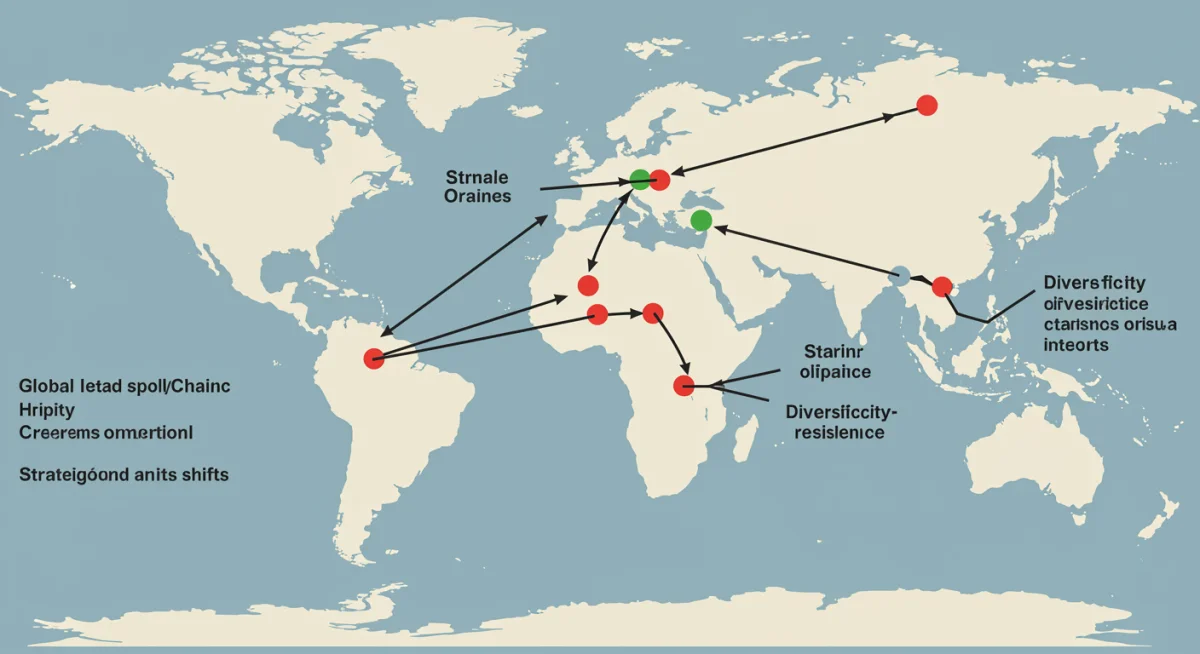
One of the most potent forms of economic coercion involves disrupting critical supply chains. The U.S. is investing heavily in mapping, monitoring, and diversifying these chains to reduce points of vulnerability. This includes incentivizing reshoring and friend-shoring of production.
The goal is to create a more robust and adaptable supply network that can withstand shocks, whether from natural disasters or deliberate coercive actions. This requires close collaboration between government and industry to identify critical dependencies and develop mitigation strategies.
Mapping critical supply chains
A detailed understanding of global supply chains for essential goods, from semiconductors to pharmaceuticals, is crucial. This involves identifying key nodes, potential choke points, and alternative sources of supply. Data analytics and artificial intelligence are being deployed to create dynamic maps of these complex networks.
- Semiconductor independence: Promoting domestic chip manufacturing and diversifying international suppliers.
- Pharmaceutical security: Ensuring reliable access to essential medicines and active pharmaceutical ingredients.
- Rare earth minerals: Developing alternative sourcing and processing capabilities.
Incentivizing diversification and friend-shoring
The U.S. government is offering incentives, such as tax breaks and subsidies, to encourage companies to diversify their supply chains and relocate production to allied nations (friend-shoring). This strategy aims to reduce reliance on adversarial countries and build a more secure economic ecosystem.
These initiatives are not just about economic security; they also contribute to national security by reducing the leverage that potential adversaries can exert through control over critical goods. The long-term benefits of resilient supply chains far outweigh the initial costs of diversification.
International cooperation and alliance building
Confronting economic coercion effectively requires a united front. The U.S. is actively engaging with allies and partners to develop common strategies, share intelligence, and coordinate responses. Collective action amplifies deterrence and minimizes the impact of coercive acts.
Multilateral institutions and international forums serve as crucial platforms for these discussions. By establishing shared principles and mechanisms, the international community can create a more predictable and rules-based global economic order, making it harder for states to engage in coercive behavior with impunity.
G7 and Quad initiatives
Groups like the G7 and the Quad (Quadrilateral Security Dialogue) are central to these efforts. These alliances are working to identify common vulnerabilities, share best practices, and develop joint strategies to counter economic coercion. Their combined economic weight provides significant leverage.
Through these forums, the U.S. and its partners are exploring mechanisms for rapid response and mutual assistance in the face of economic pressure. This includes coordinated sanctions, trade relief measures, and joint investment in critical sectors.
Developing international norms and frameworks
Beyond specific initiatives, the U.S. is advocating for the development of stronger international norms against economic coercion. This involves clearly defining what constitutes coercive behavior and establishing mechanisms for accountability.
The goal is to delegitimize economic coercion as a tool of statecraft, much like the international community has sought to delegitimize the use of chemical weapons. A robust international framework can provide a legal and moral basis for collective action against perpetrators.
Projected 15% reduction in vulnerability by 2026
The ambitious target of a 15% reduction in U.S. vulnerability to economic coercion by 2026 is based on a comprehensive assessment of current risks and the expected impact of the implemented countermeasures. This projection is not merely aspirational but is backed by detailed analysis and strategic planning.
Achieving this goal will require sustained effort, continuous adaptation, and close collaboration across all sectors. The reduction in vulnerability will be measured through a combination of metrics, including diversified trade flows, reduced dependence on single suppliers for critical goods, and enhanced resilience of financial systems.
Measuring success and ongoing adjustments
Tracking progress towards the 15% reduction involves key performance indicators (KPIs) that monitor various aspects of economic resilience. These include metrics related to supply chain diversification, technological independence, and the robustness of international partnerships.
- Supply chain diversity index: Quantifying the breadth of sourcing for critical components.
- Technological autonomy score: Assessing reliance on foreign entities for key technologies.
- Trade partner risk assessment: Evaluating the stability and reliability of trade relationships.
Long-term implications for U.S. economic security
The success of these countermeasures will have profound long-term implications for U.S. economic security and geopolitical standing. A more resilient U.S. economy will be better positioned to navigate future global challenges and maintain its leadership role. This proactive stance sends a clear message to potential adversaries that economic coercion will not succeed.
Furthermore, increased resilience will foster greater confidence among U.S. businesses and investors, encouraging innovation and economic growth. The ability to withstand external economic pressure is a vital component of comprehensive national security in the 21st century.
Challenges and future outlook
Despite the ambitious goals and strategic initiatives, the path to reducing vulnerability to economic coercion is not without challenges. The dynamic nature of geopolitical competition means that adversaries will continually seek new ways to exert pressure. Maintaining vigilance and adaptability will be crucial.
The global economic environment is constantly shifting, influenced by technological advancements, climate change, and evolving political landscapes. The U.S. must remain agile in its response, continuously evaluating its strategies and adjusting them as new threats emerge and existing ones evolve.
Overcoming implementation hurdles
Implementing such a broad range of countermeasures across various government agencies and private sectors presents significant logistical and coordination challenges. Ensuring consistent policy application and fostering effective public-private partnerships will be key to success.
The need for ongoing investment in intelligence gathering, data analytics, and technological innovation cannot be overstated. These tools provide the foresight necessary to anticipate and mitigate future coercive actions, ensuring the U.S. remains one step ahead.
The role of innovation and private sector engagement
Innovation, particularly from the private sector, will be a critical enabler of resilience. Companies are often the first to identify vulnerabilities and develop solutions. Government policies must foster an environment that encourages private sector investment in secure supply chains and critical technologies.
Engaging with businesses, from small enterprises to multinational corporations, is essential for understanding their needs and incorporating their insights into policy development. A collaborative approach will yield more effective and sustainable solutions to the challenge of economic coercion.
| Key Aspect | Brief Description |
|---|---|
| Strategic Goal | Reduce U.S. vulnerability to economic coercion by 15% by 2026. |
| Core Pillars | Domestic resilience, diversified partnerships, agile policy tools. |
| Key Initiatives | Supply chain mapping, technological protection, international cooperation. |
| Measurement | KPIs focusing on trade diversity, tech autonomy, and partner reliability. |
Frequently asked questions about economic coercion countermeasures
Economic coercion refers to the use of economic tools, such as trade restrictions or investment controls, by one state to pressure another into changing its policies or actions. It’s a non-military method of exerting influence and achieving strategic objectives.
This target reflects a strategic effort to significantly enhance national security and economic resilience against growing global threats. The 15% goal is based on assessments of current vulnerabilities and the anticipated impact of comprehensive countermeasures being implemented.
The strategy rests on three main pillars: strengthening domestic economic resilience, diversifying international partnerships, and developing agile policy tools. These pillars work synergistically to create a robust defense and deterrence framework.
By diversifying sources, promoting domestic production, and friend-shoring, the U.S. reduces reliance on single suppliers, especially from adversarial nations. This makes it harder for any single actor to weaponize critical goods or components against the U.S. economy.
International alliances are crucial for collective deterrence and coordinated responses. By working with partners like the G7 and Quad, the U.S. can amplify its economic leverage, share intelligence, and establish common norms against coercive economic practices globally.
Conclusion
The U.S. commitment to reducing its vulnerability to economic coercion by 15% by 2026 signifies a critical shift in geopolitical strategy. By systematically implementing countermeasures focused on domestic resilience, diversified partnerships, and agile policy tools, the nation is building a more secure and stable economic future. This proactive approach not only protects U.S. interests but also strengthens the global economic order against predatory practices, underscoring the importance of vigilance and cooperation in an increasingly complex world.