This analysis provides a data-backed comparison of two distinct US engagement approaches to regional conflict resolution, evaluating their historical efficacy and projecting their effectiveness by 2025.
Understanding the nuances of US engagement analysis in regional conflict resolution is crucial for anticipating global stability. This article delves into two primary approaches, examining their past effectiveness and projecting their potential impact by 2025, offering a critical perspective on America’s role on the world stage.
The Evolution of US Foreign Policy in Conflict Zones
The United States’ approach to regional conflicts has never been static, evolving significantly through various administrations and global shifts. From the Cold War’s grand strategy of containment to post-9/11 counter-terrorism efforts, each era has shaped the toolkit and philosophy behind American intervention. This historical context is vital for understanding the current landscape and forecasting future trends.
Historically, US engagement has swung between robust multilateralism, emphasizing alliances and international institutions, and more unilateral, direct interventionist postures. These shifts are often a response to perceived threats, domestic political priorities, and the changing nature of international power dynamics. Data from past decades reveals consistent patterns in the outcomes associated with each approach, providing a foundation for our current comparative analysis.
From Cold War Containment to Post-9/11 Interventions
The Cold War era saw the US primarily focused on containing Soviet expansion, often through proxy wars and robust alliance building. This period laid the groundwork for many contemporary diplomatic and military strategies. Post-9/11, the focus dramatically shifted, leading to prolonged engagements in Afghanistan and Iraq, characterized by:
- Direct military intervention
- Nation-building efforts
- Counter-insurgency operations
- Significant financial investment in security assistance
These experiences, while costly, have provided invaluable data on the complexities and limitations of large-scale military interventions in culturally diverse and politically fragile regions.
The Rise of Hybrid Warfare and Cyber Threats
As the global security environment evolves, so too do the nature of conflicts. The emergence of hybrid warfare, combining conventional, irregular, and cyber tactics, presents new challenges for traditional US engagement models. Cyber threats, in particular, complicate attribution and response, demanding innovative approaches to deterrence and defense.
In conclusion, the historical evolution of US foreign policy in conflict zones underscores a continuous adaptation to new global realities. While past strategies offer valuable lessons, the current environment demands a forward-looking perspective to assess the effectiveness of engagement approaches in 2025.
Approach 1: Multilateral Diplomacy and Capacity Building
One prominent approach to regional conflict resolution involves extensive multilateral diplomacy coupled with capacity-building initiatives. This strategy emphasizes working through international organizations like the United Nations, NATO, and regional blocs, leveraging collective resources and shared responsibility. The core idea is to build sustainable peace by empowering local actors and fostering regional stability through collaborative efforts rather than unilateral imposition.
This approach often involves significant investment in diplomatic negotiations, peace talks, and the establishment of international frameworks for conflict prevention. Data suggests that multilateral efforts, while often slower, can lead to more durable solutions by securing broader buy-in and legitimacy. The US role in this context is often that of a facilitator, a major donor, and a strategic partner, rather than a sole enforcer.
Strengthening International Institutions
A key pillar of multilateral diplomacy is the strengthening of international institutions. By supporting and reforming bodies like the UN Security Council and regional economic communities, the US aims to create more effective platforms for conflict resolution. This involves:
- Providing financial and logistical support
- Promoting adherence to international law
- Facilitating consensus among member states
- Deploying diplomatic expertise to mediate disputes
These efforts are designed to establish a more predictable and rules-based international order, reducing the likelihood of conflicts escalating uncontrollably.
Investing in Local Capacity Building
Capacity building focuses on enhancing the ability of local governments, civil society organizations, and security forces to manage and resolve conflicts internally. This can include training programs, equipment provision, and institutional development. The objective is to reduce reliance on external intervention and foster self-sufficiency.
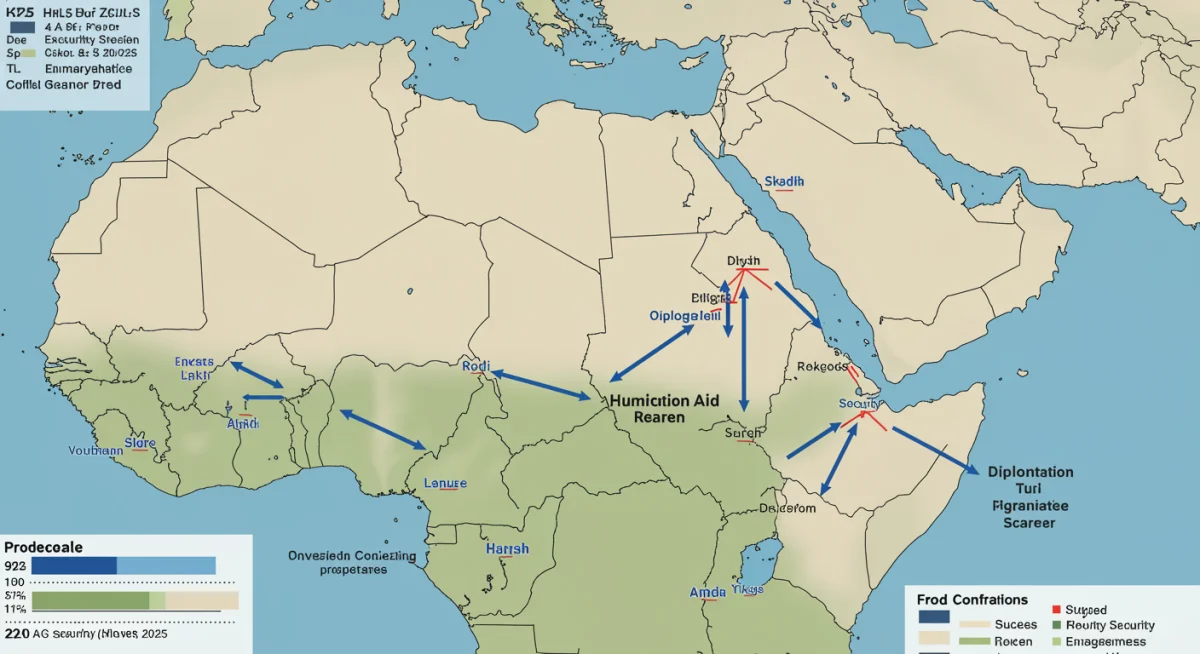
Data indicates that successful capacity-building initiatives are often long-term investments, yielding results over years rather than months. However, when effective, they can significantly reduce the need for costly and prolonged foreign military presence. The challenge lies in tailoring programs to specific local contexts and ensuring genuine transfer of knowledge and resources.
In summary, multilateral diplomacy and capacity building represent a patient, collaborative approach that seeks to address the root causes of conflict through international cooperation and local empowerment. Its effectiveness by 2025 will hinge on sustained commitment and adaptability to emerging global challenges.
Approach 2: Targeted Intervention and Deterrence
Conversely, the targeted intervention and deterrence approach prioritizes the swift, decisive use of military, economic, or cyber power to achieve specific foreign policy objectives, often with a more unilateral bent. This strategy is typically employed when multilateral efforts are deemed too slow, ineffective, or when immediate threats to US interests or allies arise. It emphasizes projecting strength and deterring adversaries through a credible threat of force or severe consequences.
This approach can manifest in various ways, from precision airstrikes and special operations forces deployments to imposing stringent economic sanctions or launching cyber operations. The underlying principle is to alter the calculus of state and non-state actors by demonstrating a willingness and capability to act decisively. The data on targeted interventions is mixed, showing instances of both swift success and unintended escalation.
Precision Military Operations
Precision military operations, such as drone strikes or special forces raids, are hallmarks of this approach. They aim to neutralize specific threats with minimal collateral damage and political footprint. While often effective in achieving immediate tactical goals, their long-term impact on regional stability and extremist recruitment remains a subject of ongoing debate.
The effectiveness of such operations is heavily dependent on accurate intelligence and a clear understanding of the operational environment. Miscalculations can lead to increased anti-US sentiment and further destabilization, underscoring the high stakes involved in this form of engagement.
Economic Sanctions and Cyber Warfare
Beyond military action, targeted intervention often utilizes economic sanctions and cyber warfare as potent tools. Economic sanctions aim to cripple an adversary’s financial resources, compelling them to change behavior. Cyber warfare can disrupt critical infrastructure, disseminate propaganda, or gather intelligence, offering a low-visibility, high-impact option.
- Economic Sanctions: Can impose significant costs on target regimes but may also harm civilian populations and lead to humanitarian crises.
- Cyber Operations: Offer strategic advantages in stealth and deniability, but carry risks of escalation and unintended consequences.
- Deterrence Theory: Relies on convincing potential adversaries that the costs of aggression outweigh the benefits.
In conclusion, targeted intervention and deterrence offer a powerful, albeit risky, set of tools for managing regional conflicts. Its projected effectiveness by 2025 will depend on the US’s ability to refine its intelligence, minimize unintended consequences, and navigate the complex ethical considerations inherent in these strategies.
Data-Backed Efficacy: Historical Performance Review
A rigorous data-backed comparison of these two approaches reveals distinct patterns in their historical efficacy. Analyzing decades of conflict resolution efforts, we can identify strengths, weaknesses, and the conditions under which each approach tends to be more successful. This review moves beyond anecdotal evidence, focusing on quantifiable metrics such as conflict duration, casualty rates, peace agreement longevity, and regional stability indicators.
For multilateral diplomacy, data often shows a slower initial impact but a greater likelihood of long-term stability and reduced recurrence of conflict. This is often attributed to the inclusive nature of such processes, which build consensus and address underlying grievances. Conversely, targeted interventions can achieve rapid, decisive outcomes in specific situations, but often at the risk of creating power vacuums or fueling resentment that can lead to future instability.
Measuring Success in Diplomacy
Measuring the success of diplomatic initiatives can be challenging, but key indicators include:
- The number and longevity of peace agreements
- Reduction in violent incidents post-agreement
- Increased trade and economic cooperation between former adversaries
- Growth in democratic institutions and civil society engagement
Data from various regions, such as peace processes in Northern Ireland or the Balkans, suggests that sustained diplomatic engagement, often spanning years, is critical for achieving lasting peace. The US, as a key player, often contributes significantly to these outcomes through financial aid, mediation, and political pressure.
Assessing Intervention Outcomes
The outcomes of targeted interventions are often measured by more immediate, tactical metrics:
- Elimination of high-value targets
- Disruption of terrorist networks
- Prevention of imminent threats
- Restoration of territorial integrity
However, a broader assessment must also consider unintended consequences, such as civilian casualties, refugee flows, and the potential for radicalization in response to foreign military presence. The war in Iraq, for instance, showed a swift initial military victory followed by a prolonged period of insurgency and instability, highlighting the complexities of defining ‘success’ in interventionist policies.
In conclusion, historical data emphasizes that neither approach is a panacea. The most effective strategies often involve a judicious blend, with the choice of approach tailored to the specific context and long-term objectives. A nuanced understanding of these historical trends is paramount for projecting future effectiveness.
Projected Effectiveness by 2025: Multilateral Diplomacy
Looking ahead to 2025, the effectiveness of multilateral diplomacy and capacity building as a US engagement strategy is projected to increase, albeit with significant challenges. The evolving geopolitical landscape, characterized by rising great power competition and transnational threats, necessitates a more collaborative approach. No single nation, not even the US, can unilaterally address issues like climate change, pandemics, or complex regional conflicts effectively.
The renewed emphasis on alliances and partnerships under the current US administration signals a strategic pivot towards this approach. By strengthening existing international bodies and forging new coalitions, the US aims to share the burden of global security and leverage diverse perspectives and resources. This strategy is particularly well-suited for conflicts with deep-seated historical grievances or those requiring extensive humanitarian and development aid.
Challenges to Multilateralism
Despite its advantages, multilateral diplomacy faces several significant hurdles:
- Veto Power: The structure of the UN Security Council can impede decisive action due to the veto power of permanent members.
- Sovereignty Concerns: Member states often prioritize national sovereignty, limiting the scope and enforceability of international mandates.
- Funding Shortfalls: International organizations frequently suffer from underfunding, hampering their operational capacity.
- Bureaucratic Inefficiencies: Large international bodies can be slow and bureaucratic, delaying timely responses to crises.
Overcoming these challenges will require sustained US leadership, diplomatic innovation, and a willingness to compromise. The effectiveness of this approach by 2025 will largely depend on the US’s ability to rally international support and navigate these institutional obstacles.
Opportunities for Enhanced Effectiveness
Conversely, there are considerable opportunities for multilateral diplomacy to enhance its impact:
- Increased global connectivity and information sharing can facilitate faster, more coordinated responses.
- The growing recognition of shared global threats can foster greater willingness to collaborate.
- Technological advancements can improve the efficiency of aid delivery and peace monitoring.
In conclusion, while hurdles remain, the multilateral diplomacy approach is poised for increased effectiveness by 2025, driven by global necessity and renewed US commitment. Its success will be measured by its ability to foster collective action and build resilient local capacities.
Projected Effectiveness by 2025: Targeted Intervention
The projected effectiveness of targeted intervention and deterrence by 2025 presents a more complex picture. While the US will undoubtedly retain its capacity for swift, decisive action, the strategic utility and political viability of such interventions are likely to face increasing scrutiny. The global appetite for unilateral military action has waned, and the costs, both human and financial, of prolonged engagements are being re-evaluated.
Advancements in military technology, particularly in precision strike capabilities and autonomous systems, will continue to enhance the tactical efficacy of targeted interventions. However, the strategic environment is becoming more contested, with potential adversaries developing sophisticated anti-access/area denial capabilities and employing asymmetric tactics. This will complicate the execution and increase the risks associated with direct intervention.
Evolving Nature of Threats
The threats necessitating intervention are also evolving. While traditional state-on-state conflicts remain a concern, the rise of sophisticated non-state actors, cyber warfare, and information operations demands a more adaptive and nuanced response than conventional military force alone can provide. The challenge for 2025 will be to integrate targeted interventions within a broader strategy that includes diplomatic, economic, and informational tools.
Furthermore, the domestic political landscape in the US and international public opinion will continue to shape the willingness to deploy forces abroad. The legacy of past interventions, particularly those perceived as unsuccessful, influences current policy debates and public support. This means that even highly effective tactical interventions may face significant strategic and political headwinds.
Balancing Risk and Reward
The ability of targeted intervention to remain an effective tool by 2025 will depend on a careful balancing act between risk and reward. Decision-makers will need to:
- Clearly define objectives and exit strategies before intervention.
- Minimize civilian harm and unintended consequences.
- Integrate interventions with broader diplomatic and development efforts.
- Maintain strong alliances to share burdens and enhance legitimacy.
In summary, while technological advancements will sharpen the tools of targeted intervention, its overall effectiveness by 2025 will be constrained by evolving threats, political sensitivities, and the imperative for strategic integration. The future will likely see fewer large-scale, prolonged interventions and more focus on precise, limited actions in support of broader diplomatic goals.
Hybrid Approaches and Future Implications
As we assess US engagement in regional conflict resolution towards 2025, it becomes clear that a purely binary choice between multilateral diplomacy and targeted intervention is insufficient. The complexities of modern conflicts demand hybrid approaches that strategically blend elements of both. This means leveraging diplomatic pressure and capacity building when appropriate, while retaining the option for decisive, targeted action when vital interests are at stake or humanitarian crises demand immediate response.
The most effective US foreign policy in the coming years will likely be characterized by adaptability, flexibility, and a deep understanding of specific regional contexts. This requires robust intelligence gathering, agile decision-making processes, and a willingness to learn from both successes and failures of past engagements. The goal is to maximize positive outcomes while minimizing unintended consequences and resource expenditure.
Strategic Integration of Tools
Future US engagement will increasingly rely on the strategic integration of various tools:
- Diplomatic Pressure: Utilizing negotiations, sanctions, and international forums to de-escalate tensions.
- Economic Incentives: Employing aid, trade agreements, and investment to foster stability and development.
- Security Assistance: Providing training and equipment to build local security sector capacity.
- Targeted Military Action: Reserving precision strikes and special operations for critical threats.
- Information Warfare: Countering disinformation and shaping narratives to support strategic objectives.
This integrated approach allows for a tailored response that can be scaled up or down depending on the evolving nature of the conflict. It moves beyond a one-size-fits-all mentality, recognizing that each regional conflict has unique drivers and requires a bespoke solution.
The Role of Technology and AI
By 2025, technology and artificial intelligence will play an even more significant role in shaping US engagement. AI can enhance intelligence analysis, improve predictive modeling for conflict escalation, and optimize logistical support for humanitarian aid. However, ethical considerations surrounding autonomous weapons systems and the potential for AI-driven disinformation campaigns will also need careful navigation.
Ultimately, the future of US engagement in regional conflict resolution will be defined by its ability to innovate, collaborate, and adapt to an increasingly complex and interconnected world. The hybrid approach, combining the strengths of diplomacy, capacity building, and targeted intervention, offers the most promising path towards achieving sustainable peace and protecting US interests by 2025.
| Key Approach | Brief Description and 2025 Outlook |
|---|---|
| Multilateral Diplomacy | Emphasizes international cooperation, alliances, and capacity building. Projected to increase effectiveness by 2025 due to global interconnectedness. |
| Targeted Intervention | Focuses on swift, decisive use of military, economic, or cyber power. Tactical effectiveness high, but strategic utility faces increasing scrutiny and political constraints by 2025. |
| Hybrid Approaches | Combines elements of both diplomacy and intervention, tailored to specific contexts. Seen as the most adaptable and effective strategy for complex conflicts by 2025. |
| Data-Backed Efficacy | Historical data shows multilateralism leads to longer-term stability, while interventions offer rapid but often less sustainable outcomes. Crucial for future strategic decisions. |
Frequently Asked Questions About US Engagement
Multilateral diplomacy involves working with multiple nations and international bodies to achieve consensus and build local capacity for conflict resolution. Targeted intervention, conversely, relies on direct, often unilateral, application of military, economic, or cyber force to address specific threats quickly.
Data analysis provides insights into the historical efficacy of different approaches, measuring factors like conflict duration, casualty rates, and peace agreement longevity. This evidence helps policymakers understand what strategies have worked best under various circumstances and project future outcomes.
By 2025, multilateral diplomacy will continue to face challenges such as veto power in international bodies, national sovereignty concerns impeding collective action, and potential funding shortfalls. Bureaucratic inefficiencies can also slow timely responses to emerging crises.
While technologically more advanced, large-scale targeted interventions may become less common by 2025 due to waning global appetite for unilateral action, increased costs, and evolving, more complex threats. Focus may shift to precise, limited actions supporting broader diplomatic goals.
Hybrid approaches are vital because modern conflicts demand adaptable, flexible responses that integrate diplomatic, economic, and security tools. This allows for tailored solutions that address the unique drivers of each regional conflict, maximizing positive outcomes while minimizing costs and unintended consequences.
Conclusion
The comparative analysis of US engagement in regional conflict resolution highlights a critical juncture for American foreign policy. As the world approaches 2025, the data overwhelmingly suggests that a nuanced, adaptable strategy, blending robust multilateral diplomacy with the judicious application of targeted intervention, will be paramount. The era of one-size-fits-all solutions is over; future effectiveness hinges on understanding context, leveraging diverse tools, and fostering genuine international collaboration to navigate an increasingly complex global security landscape.